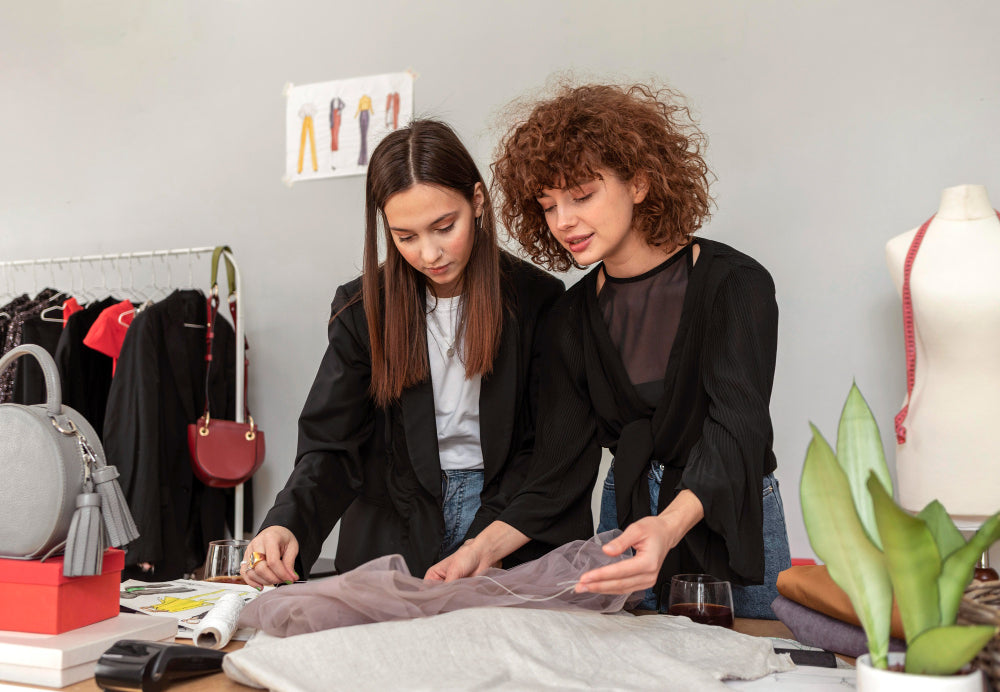
To start or grow a fashion label in Santa Fe, New Mexico, you need more than just creativity. You also need a trusted apparel manufacturer who knows about quality, deadlines, sustainability, and the needs of today's fashion business. As competition and the need for ethical, small-batch, and tech-enabled production grow, designers must look beyond their own country to producers worldwide. Fashion brands today depend on smart sourcing systems, data-driven production, and low-MOQ manufacturing options. Choosing a partner is therefore a critical strategic choice.
This article will teach you how to pick the best Apparel Manufacturer for Your Fashion Label in Santa Fe, New Mexico, and why many designers also look into global manufacturing platforms for more adaptability and growth.
The Rise of Independent Fashion Labels in Santa Fe, New Mexico
Culture, art, and modern style all work well together in Santa Fe, which has become a creative hub. There are more independent designers, boutique brands, and ethical fashion projects in the city now than there were ten years ago. But because there aren't many factories in their area, many artists find it hard to make more than one item at a time.
Santa Fe fashion founders often ask:
- Should I manufacture locally or partner with a regional supplier?
- How do I maintain quality and uniqueness while scaling?
- Can I find a low MOQ clothing manufacturer who supports small batches?
Because of these problems, designers need to understand the market thoroughly before choosing a production partner they can trust.

Key Factors to Consider When Choosing an Apparel Manufacturer
Designers have to think about many things before they start making something: quality, communication, skills, sustainability, pricing, and scalability. Each of these things has a direct effect on the long-term success of your fashion company.
Here are the main things you need to look at:
1. Production Capabilities & Expertise
First, make sure the manufacturer can produce your category to the standard level you need. If a plant only makes denim or outerwear, it might not be able to make resortwear, luxury dresses, or kids' clothes with the level of detail needed.
A qualified producer should be able to show:
- Technical understanding of your garment category.
- Skilled workforce with category-specific expertise.
- Experience with patterns, fits, trims, and finishing.
- Ability to produce consistent quality at scale.
This keeps your company from being hurt by poorly aligned work.
2. Minimum Order Quantities (MOQ)
Many Santa Fe names, especially new and small labels, make only a limited number of items when they first come out. This makes MOQ freedom very important. Many U.S. factories have high MOQs, which makes small brands look for low-MOQ clothing suppliers who can:
- 50–200 pcs per style
- Small-batch capsule collections
- Seasonal sampling-only runs
Low MOQs lower the risk of running out of stock and let designers try markets before going big.
3. Quality Standards & Compliance
A strong manufacturer must use industry-standard quality control systems, such as AQL (Acceptable Quality Limit). This ensures the product is the same across all large orders.
This is what your partner should do:
- Fabric inspection
- Shrinkage & GSM testing
- Stitching accuracy
- Colorfastness verification
- Final QC reports
These standards keep your brand's image intact and prevent costly returns.
4. Communication & Transparency
Communication is one of the most important, yet often-ignored, parts. Misalignment between the creator and the manufacturer leads to unnecessary mistakes, delays, and costs.
Choose a person who can:
- Transparent timelines
- Clear production updates
- Visual QC documentation
- Dedicated account managers
Good conversation reduces stress and builds trust that lasts.
5. Pricing Structure & Cost Breakdown
Santa Fe brands need to figure out how to be artsy and make money at the same time. The best one gives you a clear price list with:
- Fabric cost
- Labor and stitching
- Printing or dyeing
- Trims and accessories
- Packaging
- Logistics
This helps you plan your margins and retail prices correctly.
6. Sustainability & Ethical Compliance
Modern people in New Mexico and around the world select brands that are good for society. If you care about the environment, your provider should offer:
- Organic or recycled fabrics
- Eco-friendly dyeing
- Low-waste cutting techniques
- Fair labor practices
- Traceable supply chains
This has to be done if your business supports conscious fashion.
7. Scalability & Long-Term Partnership Potential
Many small fashion brands in Santa Fe start small but grow quickly through wholesale, online sales, and tourist markets. The company that made your product should:
- Gradual scaling
- Increased volume year after year
- Consistent fabric availability
- Long-term repeat production
You don't have to switch companies in the middle if you have a scalable partner.

Local vs Regional vs Global Manufacturing: What's Best for Santa Fe Designers?
Before picking a partner, Santa Fe artists need to understand the fundamental differences in how things are made. Everyone has their own pros and cons.
1. Local Manufacturing (Santa Fe & New Mexico Region)
People are interested in the local industry because it is convenient and communication is faster. The industrial ecosystem in Santa Fe is still growing, though.
Strengths:
- Easy in-person meetings
- Faster sampling
- Supports the local economy
- Better creative control
Limitations:
- Limited fabric options
- Higher production cost
- Higher MOQs
- Limited category expertise
Making things locally can work for homemade or handcrafted goods, but not always for fashion brands that want to produce large volumes.
2. Regional U.S. Manufacturing (LA, NYC, Dallas, Phoenix)
Nearby U.S. towns have improved production facilities and strong clothing networks.
Strengths:
- Access to trims, notions, and fabrics.
- Quicker logistics.
- Approved by wholesale buyers.
- Skilled technical development teams.
Limitations:
- Still higher cost compared to global markets.
- Some low-MOQ limitations.
- Limited sustainable processing options.
Most mid-sized brands choose regional U.S. partners for faster demand cycles.
3. Global Manufacturing Partners (India, Vietnam, Bangladesh, Turkey)
Many Santa Fe designers ultimately choose global clothing manufacturing because it offers:
- Lower costs.
- High-quality craftsmanship.
- Better fabric variety.
- Ethically certified factories.
- Full customization.
- Ability to buy fabric swatches before bulk order.
- Complete sampling + QC + logistics support.
Depending on the brand's needs, global partners can also be custom clothing manufacturers, private label clothing manufacturers, and sustainable garment manufacturers.
This gives artists in Santa Fe more freedom to be creative and make money.
Manufacturing Workflow & What Designers Must Consider
This part combines the step-by-step production process with the real-world considerations every Santa Fe designer needs to think about before signing a purchase order. This short guide will help you go more smoothly from the sample stage to shipping.
Workflow (brief, practical)
- Fabric sourcing & swatches: Place an order for fabric samples to check the color, feel, and weight. It is essential to work with wholesale fabric suppliers or sites that let you buy fabric swatches before bulk order. This will allow you to check the fabric's color, print, and shrinkage.
- Customization & development: Decide early on the Pantone-matched dyeing, printing method (digital printing, screen printing, block printing), and finishing treatments; it costs a lot to make changes after the sample.
- Technical specs & sampling: Make fit samples, tech packs, and graded patterns from drawings. Approve pre-production samples (PPS) to make sure that measures and trims are correct.
- Bulk production & monitoring: Insist on inline checks and mid-run QC reports for stitching, GSM, and color accuracy. Use suppliers that make production updates clear.
- Final QC, branding & logistics: Demand AQL checks, photographic proof of quality control, and clear packing and labeling instructions. Check the delivery terms and the paperwork needed for customs.
What to evaluate (checklist)
- MOQ flexibility (50–200 pcs for small brands).
- Detailed cost breakdown (fabric, labor, trims, shipping).
- Fabric traceability and sustainable material options (organic, recycled).
- Sampling policy (how many samples, turnaround).
- QC & reporting (AQL, photographic records).
- Lead time guarantees and penalty clauses for delays.
- Ability to buy swatches and test prints before bulk runs.
Common pitfalls to avoid
- Approving samples without wash/shrink tests.
- Choosing the cheapest fabric option without testing the hand or durability.
- Not confirming Pantone/dye lot tolerances for repeat runs.
- Skipping inline QC and assuming final inspection will catch everything.

Fabriclore: A Strategic Manufacturing Partner for Santa Fe Designers
Many Santa Fe designers end up seeking global manufacturing partners to expand their choices beyond their own country. Fabriclore is unique because it is a hybrid ecosystem that combines fabric sourcing, custom dyeing and printing, sampling, and full-scale apparel manufacturing into a single, clear system.
1 Fabric Sourcing & Textile Engineering
Fabriclore has one of the biggest collections of hand-picked textiles, which includes:
- RFD fabrics
- Greige bases
- Dyed materials
- Organic & recycled fabrics
- Designer textiles
So they can make better choices, designers can buy fabric swatches before bulk order.
2 Custom Fabric Development
The brand specializes in:
- Pantone matching
- Reactive & pigment dyeing
- Digital & screen printing
- Custom textures & finishes
This ensures that each brand has unique fabrics that fit their style.
3 Technical Development & Sampling
Fabriclore provides:
- Pattern making
- CAD development
- Size grading
- Fit sampling
- Pre-production testing
This makes sure that the results of production are always correct.
4. Apparel Manufacturing Categories
|
Category |
Subcategories |
Common Fabrics |
MOQ |
|
Men’s Wear |
Shirts, Co-ords, Jackets, Bottoms |
Cotton, Linen, PV blends |
50–200 pcs |
|
Women’s Wear |
Dresses, Kurtas, Tops, Loungewear |
Rayon, Modal, Crepe, Tencel |
50–200 pcs |
|
Kidswear |
Sets, T-shirts, Onesies |
Cotton, Jersey, Muslin |
50–200 pcs |
|
Home Textiles |
Cushions, Curtains, Bedding |
Cotton, Linen |
Custom |
5. Sustainability & Ethical Standards
Fabriclore integrates:
- Low-waste cutting
- Sustainable dyeing
- Ethical labor compliance
- Organic fabric sourcing
This supports conscious designers in Santa Fe.
6. QC & Global Logistics
Fabriclore ensures:
- Detailed QC reports
- Visual inspection files
- Secure packaging
- Worldwide delivery
This gives designers complete peace of mind.
Conclusion
One of the most essential choices you will ever make is picking the right Right Apparel Manufacturer for Your Fashion Label in Santa Fe, New Mexico. Brands can avoid costly mistakes and build long-term success by learning about production capabilities, minimum order quantities (MOQs), technical know-how, and communication standards. Designers need to work with manufacturers who support creativity, quality, and scalability, whether they are making things locally, regionally, or worldwide.
Platforms like Fabriclore provide reliable global options for people wanting more choices, flexible minimum order quantities, and streamlined fabric-to-fashion processes. They combine sourcing, customization, sampling, and full apparel production to help fashion brands grow in New Mexico and beyond.
FAQs
1. What Should Santa Fe Designers Look For In An Apparel Manufacturer?
They should look at factors such as production capacity, quality standards, low MOQs, sustainability, communication, and price clarity. Some designers also work with global partners that offer complete solutions from buying to stitching to give them more choices.
2. Are There Low-MOQ Manufacturers Suitable For Santa Fe Startups?
Yes. Some companies in the U.S. and around the world make 50 to 200 of each style. Platforms like Fabriclore enable small-batch production, complete tailoring, and access to high-quality fabrics.
3. Is U.S.-Based Manufacturing Better Than Global Manufacturing?
Both are good in some ways. The U.S. gives closeness and speed, while global partners offer better prices, more fabric choices, environmentally friendly processes, and full-service support.
4. How Important Is Sustainability For Santa Fe Fashion Brands?
Really important. Customers today want environmentally friendly materials and fair pricing. Brands can build trust by partnering with manufacturers that offer organic fabrics, non-toxic dyes, and supply lines that can be tracked.
5. Do Global Manufacturers Support Private Label Production?
Yes. Fabriclore is one of many global partners that offer private-label manufacturing, custom printing, dying, labeling, packing, and end-to-end production for both new and well-known brands.
We also happen to be a magnet for suggestions, and would love to catch yours….throw us yours on hello@fabriclore.com
Learn, Create & Grow with us