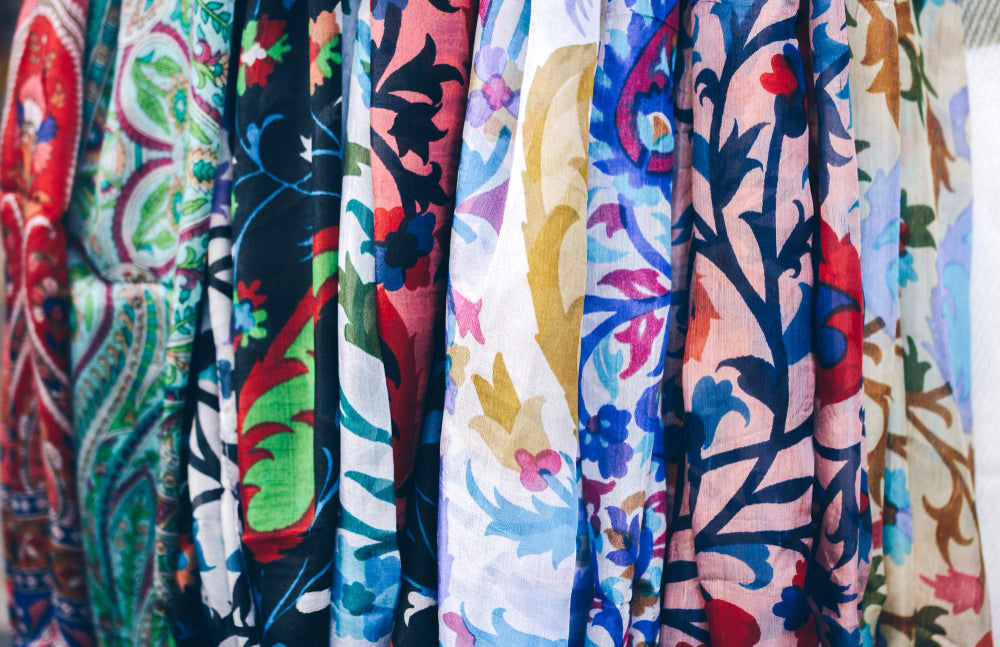
Custom fabric is the difference between selling what everyone else sells — and selling something unmistakably yours.
For most of fashion history, exclusive custom digital printed fabrics demanded 500-yard minimums, 16-week lead times, and warehouse space for what didn't sell. That model worked for large brands. It excluded everyone else.
That exclusivity barrier no longer exists.
Today, fashion brands, independent designers, and boutiques can order custom digitally printed fabric from as little as 100 meters, receive production-ready yardage in three to four weeks, and scale the same design to 20,000 meters per month — through one partner, with consistent color across every run.
This guide covers everything fashion businesses need to know about custom digital fabric printing in 2026 — ink systems, fabric selection, MOQ tiers, bulk manufacturing economics, and choosing the right production partner.
At a Glance
What are custom digital printed fabrics for fashion brands? Custom digital printed fabrics are textiles printed with brand-specific designs using inkjet-based digital printing technology. Unlike screen printing, digital printing requires no physical screens, supports unlimited color complexity, and is viable from as little as 1 yard (POD) or 100 meters (boutique and full-stack suppliers). Fashion brands use custom digital printing to create exclusive prints for apparel, accessories, and home textiles — at MOQs that range from single-sample quantities to large-scale bulk manufacturing programs exceeding 20,000 meters per month.
Why Fashion Brands Are Shifting to Custom Digital Fabric Printing
The global digital textile printing market was valued at approximately USD 2.9 billion in 2023 and is projected to grow at a CAGR of over 12% through 2030 (Grand View Research). The primary driver is fashion brands — from indie labels to mid-market retailers — adopting custom digital fabric printing as their standard production model.
The shift is structural, not cyclical. Three forces are accelerating it:
1. Consumer demand for exclusivity at every price point. Customers increasingly expect brands to offer something distinctive. Off-the-shelf stock fabric — the same poplin, the same floral, the same stripe that three other brands are using — no longer differentiates. Custom-printed fabric is the most direct path to a unique product identity.
2. The overproduction crisis. The fashion industry produces an estimated 92 million tonnes of textile waste annually (Global Fashion Agenda, 2023). Brands that overproduce contribute directly to that number — and face the financial consequences in end-of-season markdowns and inventory write-downs. On-demand fabric printing and low MOQ digital printing are structurally designed to eliminate overproduction at the source.
3. There is now technology-driven accessibility for high-quality custom fabric printing in amounts that were not possible ten years ago because of improvements in inkjet printhead technology, ink chemistry, and digital file workflows. What used to need at least 1,000 yards can now be made at 100 meters without losing quality or colour clarity.
Custom Digital Fabric Printing Methods: Which Is Right for Your Brand?

Choosing the right digital textile printing method is the first technical decision every fashion brand must make. The method is determined by the fabric — not by preference.
1. Reactive Inkjet Printing
Reactive ink printing is the gold standard for natural fiber fabrics — cotton, linen, viscose, modal, and silk blends. Reactive dyes form a permanent chemical bond with the cellulose or protein fiber, producing rich, saturated color with outstanding washfastness (AATCC 4–5).
- Best for: Fashion apparel, home textiles, quilting fabric, children's wear
- Key advantage: Color becomes structurally part of the fiber — not a surface coating
- Production requirement: Alkaline pre-treatment (RFD), post-print steaming, washing
2. Dye Sublimation Printing
Sublimation printing is the dominant technology for synthetic fabrics. Heat converts solid dye to gas, which permanently embeds into polyester fibers — making it ideal for all-over print (AOP) activewear, sportswear, and performance textiles.
- Best for: 100% polyester and blends (65%+ poly), nylon
- Key advantage: Color is permanent inside the fiber — no surface coating to crack, peel, or fade
- Production requirement: 100% polyester or high-poly blend; heat press fixation
3. Pigment Ink Printing
Pigment printing spreads colour on the surface so that it sticks to most fibre types without needing to be treated first or steamed afterward. It has the widest range of substrates and the least complicated production process.
- Best for: Multi-fiber blends, low MOQ on-demand production, and branded textiles.
- Key advantage: No pre-treatment required — fastest production path.
- Trade-off: Slightly lower color vibrancy than reactive or sublimation; can affect hand feel at heavy coverage.
4. Acid Ink Printing
Acid inks are engineered for protein fibers — silk, wool, cashmere, and nylon — producing the deepest, most luminous color results available in textile printing.
- Best for: Luxury fashion, silk scarves, lingerie, evening wear
- Production requirement: Acid-based fixation bath, steam fixation, cold wash
Method Comparison at a Glance
|
Method |
Best Fiber |
MOQ Entry |
Color Vibrancy |
Washfastness |
Cost Level |
|
Reactive Inkjet |
Cotton, Linen, Modal, Viscose |
100m |
★★★★☆ |
★★★★★ |
Medium–High |
|
Dye Sublimation |
Polyester, Nylon |
1 yard |
★★★★★ |
★★★★★ |
Medium |
|
Pigment Inkjet |
Most fibers |
1 yard |
★★★☆☆ |
★★★☆☆ |
Low–Medium |
|
Acid Ink |
Silk, Wool, Nylon |
5–20 yards |
★★★★★ |
★★★★☆ |
High |
Understanding MOQ: From Custom Sampling to Bulk Manufacturing

Minimum order quantity (MOQ) is the most consequential production variable for fashion brands — and the one most misunderstood at the early stage. Here is how MOQ tiers work in custom digital fabric printing, and what each tier is designed for.
MOQ Tiers for Custom Digital Fabric Printing
|
Order Tier |
Quantity |
Cost/Meter (Est.) |
Best Strategic Use |
|
Print-on-demand |
1–10 yards |
$15–$40/yard |
Design validation, POD retail |
|
Small batch |
10–50 yards |
$8–$18/yard |
Capsule collections, market testing |
|
Low MOQ production |
100–300m |
Competitive wholesale |
Debut collections, brand launches |
|
Mid-run |
300–800m |
Scaled pricing |
Growth-stage brand production |
|
Bulk manufacturing |
800m–20,000m+ |
Best per-meter economics |
Established brands, retail programs |
The Strategic Logic of Starting at Low MOQ
Low MOQ custom fabric printing is not a compromise forced on small brands — it is the strategically correct production model at the early stage of brand development.
If a brand starts with 100 meters of custom digitally printed cotton fabric and makes 50–70 outfits, they have enough stock to test the market, get customer feedback on print quality and colourway preferences, and choose which designs to scale based on that data.
That same brand, if it had launched with a 500-yard screen printing minimum, would have 250–350 garments it cannot return, cannot exchange, and must mark down or write off if the design underperforms.
The per-meter cost is higher at low MOQ — but the risk-adjusted economics are overwhelmingly superior.
When to Scale to Bulk Manufacturing
Move from low MOQ to bulk digital fabric printing when:
- A design achieves 70%+ sell-through within 60–90 days of launch
- Wholesale buyers are placing repeat orders
- Per-meter cost needs to fall below a commercial margin threshold
- Design is fully locked — no further color or repeat changes anticipated
- You can forecast 3–6 months of inventory demand with reasonable confidence
Cost breakpoint: For most fashion brands, the transition from low MOQ to bulk economics becomes financially compelling at 300–500 meters per design per colorway.
Fabrics Available for Custom Digital Printing
The substrate determines the ink system, the production process, the final hand feel, and the washfastness of the finished fabric. Here is how the most commercially important fabrics perform in custom digital printing for fashion applications.
1. Cotton
The most widely used substrate for custom digital printed fabric in fashion. Reactive inks bond permanently to the cellulose fiber — producing rich color, soft hand feel, and AATCC 4–5 washfastness. Available in constructions from sheer voile to heavy canvas.
Best for: Apparel, quilting, home textiles, children's wear, tote bags
2. Polyester and Performance Blends
The dominant substrate for sublimation printing — producing the most vibrant, permanent color available in textile printing. Performance properties (stretch, moisture-wicking, UV resistance) are completely unaffected by the sublimation process.
Best for: Activewear, sportswear, swimwear, team uniforms, home decor
3. Viscose and Modal
Fashion's preferred substrates for fluid, draped garments. Reactive inks produce rich, saturated prints on the smooth fiber surface, with superior softness and drape compared to cotton. LENZING™ Modal and EcoVero™ viscose add sustainable credentials.
Best for: Dresses, blouses, resort wear, lingerie, evening wear
4. Silk
The prestige substrate for acid ink digital printing — producing luminous, deep color results that no synthetic fabric can replicate. Charmeuse, crepe de chine, habotai, twill, and organza are all excellent choices.
Best for: Luxury fashion, scarves, lingerie, occasion wear
5. Linen and Linen Blends
Reactive inks on linen produce an intentionally organic, textured print aesthetic. Linen-cotton blends (70/30) deliver better print consistency while retaining linen's characteristic texture and breathability.
Best for: Resort wear, summer fashion, home decor, artisan and craft textile markets
6. Chiffon and Georgette
Available in both natural fiber (silk, viscose) and synthetic (polyester) versions. The ink system depends on the fiber content. Used extensively for custom printed fabric in evening wear, occasion wear, and layered fashion.
Best for: Overlay garments, evening and occasion wear, scarves, draped fashion
The Custom Digital Fabric Printing Production Workflow
Understanding the end-to-end production process helps fashion brands set realistic timelines, prepare files correctly, and avoid the most common quality failures.
Step 1: Design and File Preparation
- File format: TIFF or PNG (lossless; JPEG not recommended)
- Resolution: 300 DPI at final print size (150 DPI minimum)
- Color mode: sRGB for most digital textile workflows
- Repeat type: Confirm half-drop, full-drop, brick, or diamond with your supplier
- Bleed: 0.5–1 inch beyond design edges for cut-and-sew applications
Step 2: CAD Approval and Strikeoff
Before production begins, the supplier creates a CAD (digital layout) for brand approval. A physical strikeoff — 1–3 meters — is then printed and sent to the brand for color, sharpness, and hand feel sign-off. No production order should proceed without strikeoff approval.
Step 3: Fabric Pre-Treatment (RFD)
RFD (Ready for Dyeing) pre-treatment removes impurities from the fabric and applies a substrate-specific coating to ensure even color absorption. This step is critical for reactive and acid ink printing — it is what separates professional-grade custom digital printed fabric from inferior results.
Step 4: Digital Printing
High-fidelity inkjet printing heads put the accepted design exactly where it needs to be on the ready fabric, making sure that the colours are bright and clear. These days, industrial digital printers can print hundreds of meters per hour without losing clarity.
Step 5: Post-Production Fixation and Finishing
- Reactive printing: Steam fixation → wash → soften → fold
- Sublimation printing: Heat transfer → wash → soften → fold
- Pigment printing: Heat curing → fold (no wash required)
Step 6: In-House Quality Inspection
Before being packed, each metre is checked for colourfastness, shrinking, defects, and being the right size. Weatherproof packaging keeps the fabric safe while it's being shipped.
Step 7: Global Shipping
Top-tier custom digital fabric printing suppliers ship globally via DHL, FedEx, UPS, and ARAMEX, with sea freight options available for large bulk orders.
Fabriclore: Custom Digital Printed Fabrics From Low MOQ to Bulk Manufacturing

A Full-Stack Production Partner for Fashion Brands at Every Stage of Growth
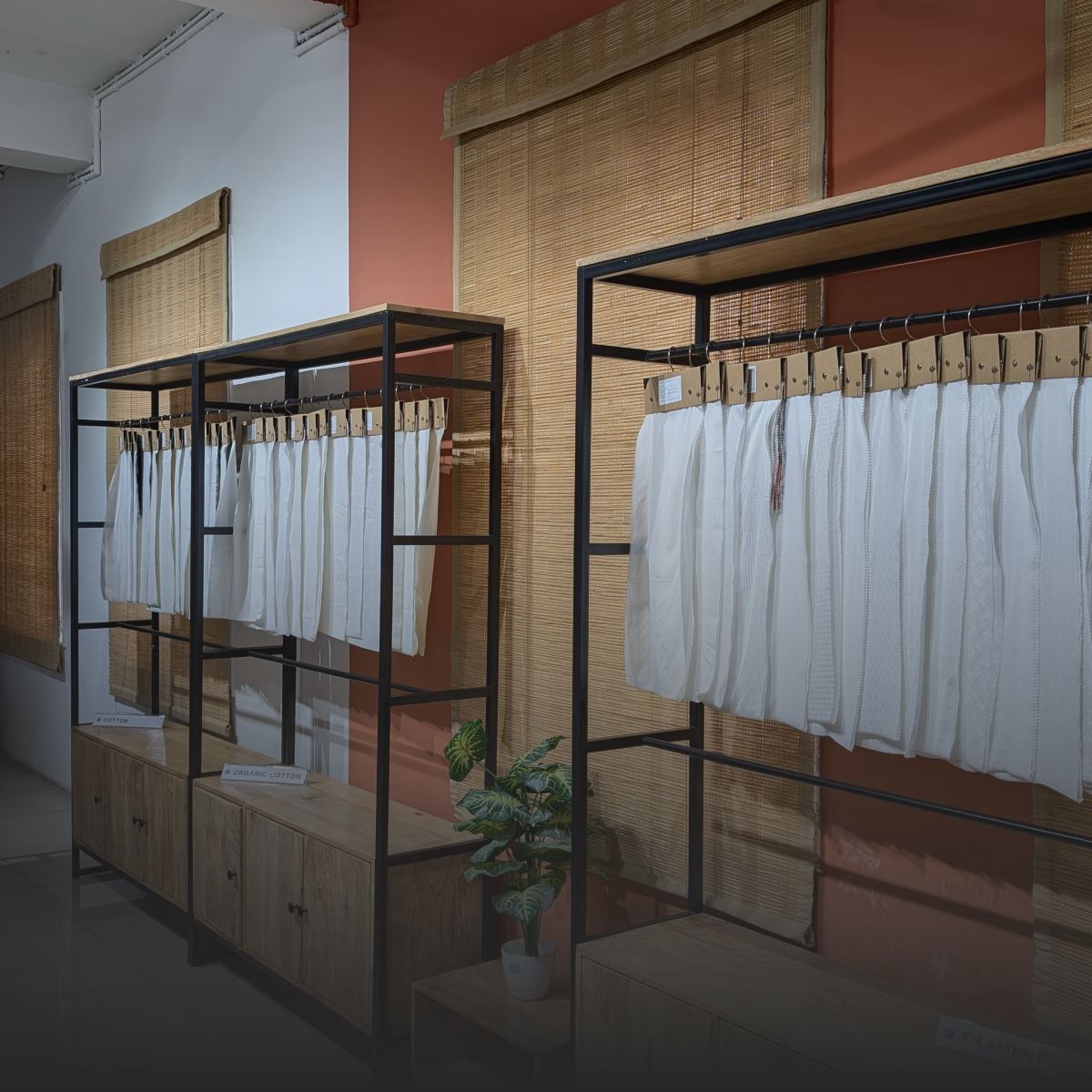
For fashion brands sourcing custom digital printed fabrics — whether at 100-meter debut quantities or 20,000-meter monthly production programs — Fabriclore provides one of the most comprehensive and scalable production ecosystems available to global fashion brands today.
Fabriclore is a technology-driven textile sourcing, fabric processing, and garment manufacturing partner based in Jaipur, India, with 10+ years of expertise in dyeing and printing, trusted by 500+ fashion brands and businesses worldwide. Its core mission: eliminate fragmented sourcing by bringing fabric discovery, custom digital printing, dyeing, processing, and garment manufacturing under a single, accountable production ecosystem.
Why Fashion Brands Choose Fabriclore
Fabriclore's customized digital printed fabric service covers the full spectrum of substrates, ink systems, and order sizes that fashion brands require:
|
Capability |
Verified Detail |
|
Digital printing MOQ |
100 meters per design (up to 1,50,000 meters) |
|
Monthly capacity |
20,000+ meters per month |
|
Fabric library |
5,000+ natural, sustainable, and blended options |
|
Printable fabrics |
Cotton, Silk, Polyester, Viscose, Linen, Nylon, Chiffon, Georgette, Blends |
|
Ink standard |
AZO-free colors across all digital printing |
|
Production lead time |
21–45 days (method and design stage dependent) |
|
Swatch sampling |
No minimum — ships via DHL/FedEx from Jaipur |
|
In-house testing |
Colorfastness, shrinkage, spotting, metering — every meter |
|
Shipping partners |
DHL, FedEx, UPS, ARAMEX + sea freight available |
|
Additional services |
Custom dyeing, rotary printing, private label garment manufacturing |
|
Brands served |
500+ fashion businesses globally |
Fabriclore's Three-Stage Digital Printing Process
Stage 1 — Pre-Production: CAD design created and approved digitally. Physical strikeoff was produced and signed off on before production. No order proceeds without both approvals.
Stage 2 — Production: RFD pre-treatment removes impurities and prepares the fabric for the specific ink system. High-fidelity printing delivers vibrant color accuracy and sharp contrast across every meter.
Stage 3 — Post-Production: Reactive prints steam-fixed, washed, softened, and folded. Sublimation prints are heat-transferred, washed, softened, and folded. Every meter passes Fabriclore's in-house inspection — colorfastness, shrinkage, spotting, and pre-packaging metering — before shipment.
Sustainable Fabric Options With Full Certification
For sustainable fashion brands, Fabriclore carries digitally printable certified substrates: Organic Cotton (GOTS), TENCEL™ Lyocell (FSC), EcoVero™ Viscose (OEKO-TEX), LENZING™ Modal (FSC, OEKO-TEX), and Recycled Polyester/rPET (GRS) — with documentation on request.
From Custom Fabric to Finished Garment
Private label and custom garment manufacturing is available from low MOQs across men's, women's, and kids' wear — enabling brands to move from custom digitally printed fabric to finished, branded, ready-to-ship product through one partner.
Low MOQ vs. Bulk Manufacturing: How to Decide
Every fashion brand eventually faces the same decision: stay at low MOQ or commit to bulk fabric manufacturing. Neither is universally correct — the right answer depends entirely on where the brand is in its growth cycle.
Decision Framework
|
Factor |
Stay at Low MOQ |
Move to Bulk |
|
Design status |
Still testing colorways and patterns |
Design locked and proven |
|
Sales data |
Less than 60 days of sell-through data |
70%+ sell-through confirmed |
|
Wholesale status |
Direct-to-consumer only |
Wholesale buyers placing orders |
|
Inventory confidence |
Cannot forecast 3+ months |
3–6 month forecast available |
|
Margin pressure |
Current margins acceptable |
Per-meter cost must fall |
|
Brand stage |
Pre-launch or early launch |
Growth or scale stage |
The Hybrid Model
The most sophisticated fashion brands use both simultaneously:
- Low MOQ for new designs, new colorways, and seasonal experiments — preserving cash and limiting downside
- Bulk manufacturing for proven bestsellers with confirmed demand — optimizing margins on the designs that have earned it
This hybrid approach — test at low MOQ, scale at bulk — is the production strategy that separates brands that grow sustainably from brands that either overstock or under-produce their way into margin problems.
Costing Custom Digital Printed Fabric: What to Budget
Price Ranges by Order Tier (2026 Market Estimates)
|
Tier |
Quantity |
Est. Cost/Yard |
Est. Cost/Meter |
|
POD |
1–9 yards |
$15–$40 |
$18–$48 |
|
Small batch |
10–50 yards |
$8–$18 |
$10–$22 |
|
Low MOQ production |
100–300m |
Wholesale rates |
Supplier-specific |
|
Mid-run |
300–800m |
Scaled pricing |
Reduces significantly |
|
Bulk |
800m+ |
Best economics |
Negotiated per program |
Hidden Costs to Budget For
- Strikeoff fees: $15–$60 per test print (non-negotiable — always order one).
- Artwork rework: $50–$200/hour if files need correction or repeat adjustment.
- International freight: Variable by weight, volume, and destination; sea freight available for large bulk orders.
- Customs and import duties: For US-based brands importing from overseas production partners.
Cost-Per-Garment Formula
Fabric cost per garment = Meters required × Cost per meter × Waste factor (typically 1.1–1.15).
Example: A dress requiring 1.8 meters at $12/meter with a 12% waste factor = $24.19 in fabric cost at mid-run pricing.
Conclusion
Custom digital printed fabrics have fundamentally changed what is possible for fashion brands at every scale. The barriers that once limited original fabric design to well-capitalized, established labels — high MOQs, screen setup costs, long lead times, overproduction risk — have been systematically removed by digital printing technology.
In 2026, a fashion brand can start with 100 meters of custom digitally printed fabric, test the market with a focused collection, and then make 20,000 meters per month of the best designs through a single production partner. The colour and quality will be the same on every run.
Choose the right ink system for the fabric, begin with low MOQ to validate demand, move on to bulk manufacturing for proven designs to protect margins, and base the whole production chain on a partner who can help you at both ends of the spectrum.
Custom digital printed fabric is no longer a premium available only to large brands. It is the production standard for every fashion brand serious about building an original, scalable, and sustainable product identity.
FAQ
Q1: What Is Custom Digital Printed Fabric?
A: Custom digital printed fabric is fabric that has been made with original designs that are unique to the brand, using inkjet digital printing technology. It doesn't need physical screens, can have any number of colours, and can be bought in amounts as low as 1 yard (POD) or 100 meters (boutique and full-stack production partners). Fashion brands use it to make unique fabric prints for clothes, accessories, and home decor.
Q2: What Is The Minimum Order Quantity For Custom Digital Fabric Printing?
A: MOQ varies by provider.
- Print-on-demand platforms accept single-yard orders.
- Boutique digital mills typically require 10–50 yards.
- Full-stack production partners like Fabriclore offer custom digital fabric printing from 100 meters per design, scaling to 1,50,000 meters.
If you ask, you may be able to get even lower MOQs for high-end fabrics like pure silk.
Q3: How Long Does Custom Digital Fabric Printing Take?
A: Typical times for making custom digital printed fabric:
- Print-on-demand: 3–7 business days
- Small batch (10–50 yards): 7–14 business days
- Low MOQ production (100–300m): 21–30 days
- Bulk manufacturing (300m+): 30–45 days
Timeline depends on print method, design complexity, and current production season.
Q4: What Fabrics Can Be Custom Digital Printed?
A: When paired with the right ink method, custom digital printing can be done on most commercial fabrics.
Inks that are reacting or acidic are used on cotton, linen, viscose, modal, and silk. This method is used for polyester and synthetic mixes.
Depending on the type of fibre, either reactive or sublimation is used for chiffon and georgette. Coloured paints can be used on most types of fibre.
Heavy-textured or raised-pile fabrics, like wool and terry, should not be used.
Q5: Is Custom Digital Fabric Printing Suitable For Sustainable Fashion Brands?
A: Yes — custom digital fabric printing is one of the most sustainable production methods available. It uses 50–80% less water than screen printing, produces no screen waste or chemical discharge, and the on-demand production model eliminates overproduction. Combined with certified sustainable substrates (Organic Cotton, TENCEL™, rPET, EcoVero™), it enables brands to build verifiable sustainability credentials from their first collection.
Q6: How Do I Ensure Color Accuracy In Custom Digital Fabric Printing?
A: Four steps make sure the colours are right: (1) Ask your source for an ICC profile for the fabric and ink you'll be using, and make sure to use it before you save the files. (2) Get your picture ready in 300 DPI sRGB colour mode. (3) You should always order a physical strikeoff before starting to make something. (4) Write down your accepted colour standard and check it with your supplier before you give the go-ahead for production.
Q7: Can I Order Custom Digital Printed Fabric In Sustainable Materials?
A: Yes. Full-stack partners like Fabriclore offer custom digital printing on certified sustainable fabrics, including GOTS-certified Organic Cotton, FSC-certified TENCEL™ Lyocell, OEKO-TEX-certified EcoVero™ Viscose, LENZING™ Modal, and GRS-certified Recycled Polyester — from 100 meters per design with certification documentation available on request.
Q8: What Is The Difference Between Low MOQ Fabric Printing And Bulk Fabric Manufacturing?
A: A validation and launch tool, Low MOQ digital fabric printing (100–300 meters) has a greater cost per metre, less financial risk, and is perfect for testing designs and colourways.
Although bulk fabric manufacturing (800+ meters) offers the best economics per metre, it necessitates capital commitment, inventory confidence, and design lock-in. Low MOQ to validate, bulk to scale proven designs is the most successful brand expansion method.
We also happen to be a magnet for suggestions, and would love to catch yours… throw us yours on hello@fabriclore.com
Learn, Create & Grow with us