The fashion industry worldwide is built on the journey from fabric to finished garment. Understanding the entire apparel manufacturing process is important for quality, speed, and profitability, whether you're a new company putting out your first collection or an established brand increasing production.
The standard textile supply chain has changed a lot with the rise of digital fabric sourcing, low MOQ manufacturing, and tech-enabled garment production. Fabric development, sampling, and integrated manufacturing solutions have enabled brands to go from idea to finished product faster than ever before.
This guide breaks down the fabric-to-garment process step-by-step, going over everything from fabric sourcing and customisation to stitching, finishing, and global distribution. It also discusses how platforms like Fabriclore enable end-to-end fabric sourcing and private-label clothing production with low MOQs.
What is the Fabric to Garment Manufacturing Process?
The process of turning raw linens into ready-to-wear clothes is called the fabric-to-finished garment process. Fabric selection, processing, pattern making, sampling, cutting, stitching, finishing, and quality control are some of the steps that are involved.
This process is very important for:
- Ensuring product quality and consistency.
- Reducing production errors and delays.
- Optimizing cost and resource utilization.
- Supporting scalable fashion production.
- A well-structured process helps brands achieve faster time-to-market and better product outcomes.

Complete Fabric to Garment Manufacturing Process (Step-by-Step Apparel Production Workflow)
Fashion brands seeking quality, efficiency, and scalability must understand the fabric-to-garment manufacturing process. From fabric sourcing to final garment production, every step is important for ensuring that the product is consistent, costs are kept low, and it reaches the market faster.
Step 1: Fabric Sourcing & Selection (Global Fabric Sourcing Strategy)
Finding fabrics is the first step in garment manufacturing and apparel production. The fabric you choose for a garment impacts its quality, performance, and lifespan.
Key Considerations in Fabric Selection:
- Types of fabric: polyester, cotton, linen, viscose, and rayon.
- Feel and weight (GSM).
- Durability and the power to breathe.
- Gos and OEKO-TEX are two sustainability standards.
- Cost and getting it.
Modern Approach:
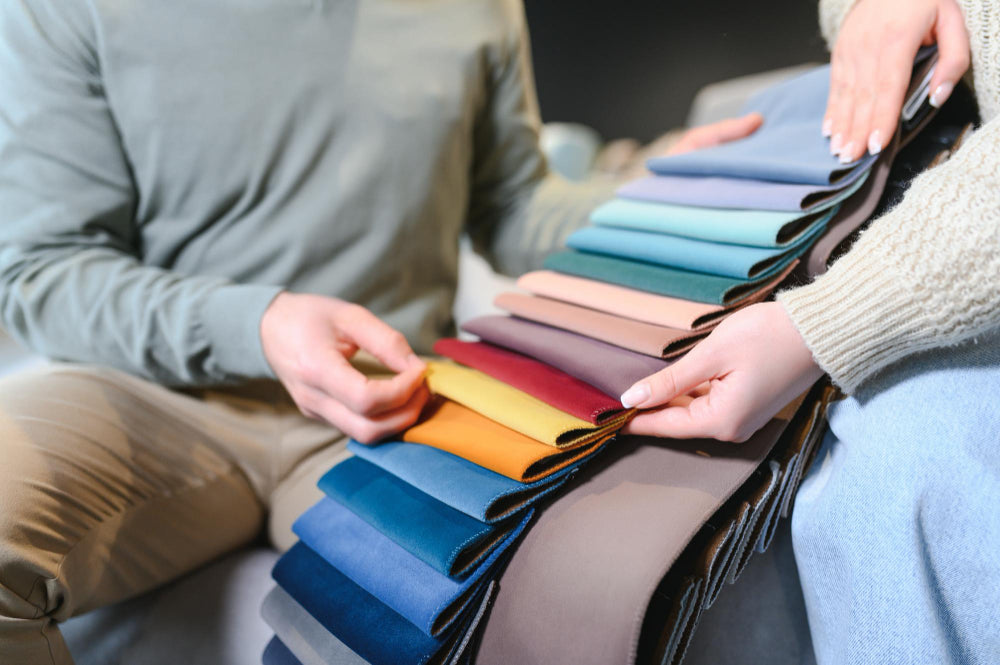
Digital fabric sourcing platforms let brands see which fabrics are available worldwide, compare them, and request swatches before they start mass production.
Better product quality and reduced development risks are what smart sourcing guarantees.
Step 2: Fabric Inspection & Quality Control
Fabrics are carefully checked to ensure they meet garment manufacturing quality standards before use in production.
Inspection Methods:
- 4-point inspection system.
- Defect detection (holes, stains, weaving faults).
- Color consistency checks.
- Shrinkage and strength testing.
Early quality control stops production problems and rejects those that cost a lot of money.
Step 3: Fabric Processing (Dyeing, Printing & Finishing)
Processing fabric improves its appearance and performance, making it an important step in custom fabric development.
Key Processes:
- Dyeing: Solid color application.
- Printing: Digital printing, screen printing, block printing.
- Finishing: Softening, wrinkle resistance, water repellency.
Technology Impact:
- AI-based color matching.
- Digital printing for customization.
- Eco-friendly dyeing processes.
This stage enables product differentiation and brand identity creation.
Step 4: Pattern Making & Garment Design Development
Pattern making converts creative ideas into production-ready designs, forming the backbone of apparel product development.
Key Activities:
- CAD-based pattern creation.
- Size grading for multiple sizes.
- Tech pack development.
Accurate patterns ensure fit consistency and scalable production.
Step 5: Sampling & Prototyping (Digital + Physical Sampling)
Sampling validates design, fabric behavior, and garment construction before bulk production.
Types of Samples:
- Prototype sample.
- Fit sample.
- Pre-production sample.
Modern Trends:
- Digital sampling using 3D tools.
- Virtual garment visualization.
Sampling reduces production errors and development risks.
Step 6: Fabric Cutting Process (Precision Manufacturing)
Fabric cutting transforms selected textiles into garment components with precision.
Techniques:
- Manual cutting.
- Automated cutting machines.
- Marker planning for efficiency.
Precision cutting reduces fabric waste and improves cost efficiency.
Step 7: Sewing & Stitching (Garment Construction)
This stage assembles garment components into finished apparel using structured production systems.
Key Elements:
- Assembly line production.
- Stitch types and seam strength.
- Skilled labor and machinery.
Quality stitching ensures durability and long-lasting garments.
Step 8: Finishing Process (Final Touches)
Finishing enhances the final look, feel, and usability of garments.
Activities:
- Washing and ironing.
- Thread trimming.
- Labeling and tagging.
- Packaging preparation.
Proper finishing ensures premium product presentation and brand value.
Step 9: Quality Control & Final Inspection
The final inspection ensures that garments meet international quality and export standards.
Checks Include:
- Measurement accuracy.
- Stitch quality.
- Fabric defects.
- Packaging compliance.
Multi-level QC ensures consistent, export-ready garment quality.
Step 10: Packaging & Global Distribution
In the last step, clothes are made ready to be sent to places around the world.
Crucial Parts:
- The usual packaging.
- Follow the label.
- Moving things and sending.
Distribution that works well makes sure that deliveries happen on time and customers are happy.

Role of Technology in Modern Garment Manufacturing
Technology is changing how garments are made.
Inventive concepts
- Forecasting demand with AI.
- Online fabric sourcing platforms.
- Automated systems and intelligent factories.
- 3D clothing simulation.
Technology cuts down on production time, cost, and errors.
Fabriclore: End-to-End Fabric Sourcing & Low MOQ Garment Manufacturing Platform
Fabriclore was created to help fashion startups, designers, and global private label brands. It is a tech-enabled fabric sourcing platform and custom apparel manufacturer with low MOQ. Digital fabric sourcing, textile design, and garment manufacturing can all be done simultaneously. Fabriclore transforms the old supply chain into one that is faster, more efficient, and scalable.
With more than 10+ years of experience in sourcing, dying, and printing fabrics, Fabriclore offers a full range of services, from greige and RFD fabrics to dyed, digitally printed, and finished garments. This makes it easy and quick for brands to go from idea to production.
Comprehensive Fabric Sourcing & Development Capabilities:
- Access to a wide range of greige, RFD, dyed, and printed fabrics.
- A wide range of fabrics including cotton (voile, poplin, cambric), linen, viscose, rayon, modal blends, and performance materials.
- Custom fabric development that includes dyeing, digital printing, and finishing.
- A system for sampling fabric swatches to ensure quality and color accuracy before starting bulk production.
- Great wholesale fabric prices from direct sourcing and clear costs.
Fabriclore ensures that fashion companies around the world can access high-quality, customisable fabric sourcing with low MOQs.
All-in-One Low MOQ Garment Manufacturing
Fabriclore is a reliable partner for large-scale fashion production because it provides a complete answer that includes fabric sourcing, textile design, and garment manufacturing under one roof.
- Minimum order quantity for manufacturing starts at 50 pieces per size.
- Complete private label clothing production from start to finish.
- Labels, trims, and packaging options made just for you.
- Assistance with small batches, capsule collections, and large-scale production.
- Quick delivery times with worldwide shipping options.
This model simplifies processes and helps fashion brands reach the market more quickly.
Technology-Driven Sourcing Advantage
Digital fabric sourcing tools, real-time inventory systems, and data-driven workflows are among the ways Fabriclore speeds up decision-making and reduces development time.
- Faster fabric discovery through digitized sourcing platforms.
- Fewer sampling cycles with better swatch management.
- Better coordination between sourcing and manufacturing.
- Enhanced accuracy in 'custom fabric development and production planning.
This tech-first approach enables effective, scalable, and future-ready fashion supply chains.
Business Impact for Fashion Brands
By partnering with Fabriclore, brands unlock:
- Faster product development and reduced time-to-market.
- Lower sourcing and production costs through mill-direct pricing.
- Scalable manufacturing from low MOQ to bulk production.
- Consistent, export-quality garment production standards.
- Simplified supply chain with end-to-end integration.
Trusted by Global Fashion Brands
500+ small to large private label brands worldwide trust Fabriclore. The company helps a wide range of businesses, from new designers to well-known global fashion companies.
Benefits of End-to-End Apparel Manufacturing
End-to-end apparel manufacturing helps brands streamline operations, reduce delays, and maintain high-quality standards in today's competitive fashion industry. When buying, production, and delivery are done simultaneously, businesses can be more efficient and grow faster.
Key Advantages
- Faster time-to-market.
- Better cost control.
- Improved product quality.
- Simplified supply chain.
- Scalable production.
Efficiency, consistency, and long-term scalability are all guaranteed by integrated manufacturing.
How to Choose the Right Garment Manufacturer
Choosing the right Garment Manufacturer is very important for ensuring steady production, high-quality output, and scalable growth. A manufacturer with the right tools can help your business with low MOQ manufacturing, custom fabric sourcing, and efficient production workflows.
Key Criteria:
- Experience and expertise.
- MOQ flexibility.
- Fabric sourcing capabilities.
- Quality standards.
- Technology adoption.
The right maker guarantees consistent quality and long-term business success.

Common Mistakes to Avoid in Garment Production
To keep things running smoothly and get good results, it's important to avoid making common production mistakes. Many brands lose time and money because they don't plan well or use the right sourcing methods.
Avoid These Errors:
- Poor fabric selection.
- Skipping sampling.
- Ignoring quality checks.
- Choosing based only on cost.
- Poor communication with fabric suppliers.
By not making these mistakes, you can improve quality, speed, and profits.
Future Trends in Fabric to Garment Manufacturing (2026)
Making clothes in the future will depend on technology, sustainability, and digital transformation. In global markets, brands that use these new ideas will have a big edge over their competitors.
- Significant Trends.
- creation based on AI.
- Digital collections of fabric.
- Making things that last.
- Models of on-demand creation.
- Integrated tools for sourcing.
The fashion business is becoming faster, smarter, and more environmentally friendly thanks to these trends.
Conclusion
The journey from fabric to finished garment is a long, complex process that reveals how successful a fashion brand is. Brands can improve efficiency, cut costs, and ensure customers receive high-quality products by understanding every step, from sourcing to final production.
The process is faster, more flexible, and scalable thanks to digital fabric sourcing, low MOQ manufacturing, and tech-enabled platforms like Fabriclore.
A technology-driven, end-to-end production strategy is no longer a choice for fashion companies; it is necessary for growth and competition.
FAQs
1. What Is The Complete Fabric-To-Garment Manufacturing Process?
The process of turning raw fabric into finished clothes is called the fabric-to-garment process. It involves finding fabrics, making samples, making patterns, cutting, stitching, finishing, and checking the quality of the work before it is sent out.
2. How Long Does It Take To Manufacture Garments From Fabric?
The garment manufacturing timeline usually falls between 4 and 12 weeks, but this depends on factors such as the complexity of the design, the size of the order, any customisations, and how quickly the supplier can work with you. Timelines can be cut by leveraging digital sourcing and low MOQs.
3. What Does Low MOQ Clothing Manufacturing Mean?
Brands can make clothes in smaller batches with low MOQs (minimum order quantities). Startups and new brands can use it to try designs, lower the risk of running out of stock, and keep costs low.
4. Why Is Fabric Sourcing Important In Garment Production?
Fabric sourcing is a crucial factor in determining a garment's quality, cost, durability, and overall performance. Picking the right fabric will lead to better results, happier customers, and increased company value over time.
5. Which Platform Offers End-To-End Fabric Sourcing And Garment Manufacturing?
Platforms like Fabriclore offer end-to-end fabric sourcing, custom fabric development, and private-label clothing manufacturing, making it easy for brands to go from choosing fabrics to making clothes.
We also happen to be a magnet for suggestions, and would love to catch yours….throw us yours on hello@fabriclore.com
Learn, Create & Grow with us