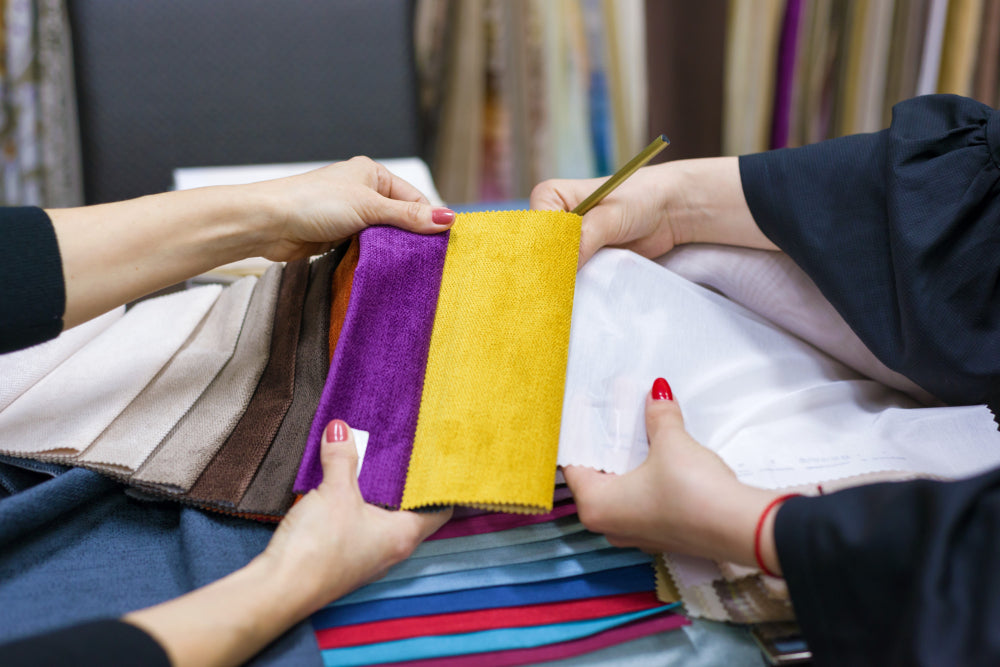
Finding the best deal is no longer the exclusive goal of global fabric sourcing. Supply chain dependability, compliance, speed-to-market, and scalable production support are increasingly top priorities for global fashion brands, sourcing firms, wholesalers, and clothing manufacturers. India is now among the most comprehensive locations for fabric export solutions India in the globe because of this change.
These days, customers are searching for partners who can handle every step of the process, from bespoke development and fabric sampling in India to quality testing, paperwork, packaging, and fabric shipping from India. It typically results in delays, discrepancies, and operational turmoil to coordinate several vendors for sourcing, dyeing, printing, inspection, freight, and customs clearance.
Today, highly integrated sourcing methods that streamline the whole export lifecycle for international clients are supported by India's textile ecosystem. This comprises:
- Custom fabric sourcing in India.
- Sampling and swatch development.
- Dyeing and printing solutions.
- Quality assurance and compliance.
- Export documentation management.
- Global freight coordination.
- Low MOQ fabric production.
- Sustainable textile sourcing.
Modern businesses prefer end-to-end fabric export systems in India over fragmented sourcing models.
Why Global Buyers Prefer End-to-End Fabric Export Solutions

As sourcing becomes more complex, international buyers are shifting to integrated supply chain systems that combine sourcing, production, logistics, and compliance management into a single structure.
Traditional sourcing involves mills, processors, quality agencies, freight partners, and customs intermediaries. This system malfunctions, causing communication, quality, and shipment delays.
Combined sourcing simplifies the process.
Key Benefits for Global Buyers
|
Benefit |
Business Impact |
|
Single Point of Contact |
Faster communication & approvals |
|
Centralized Quality Control |
Better production consistency |
|
Faster Sampling |
Reduced development timelines |
|
Integrated Logistics |
Fewer shipping delays |
|
Vendor Consolidation |
Lower sourcing complexity |
|
Compliance Support |
Easier international trade |
|
Scalable Manufacturing |
Supports long-term growth |
This strategy reduces the operational risk that global brands face while simultaneously increasing the visibility of production and improving the efficiency of sourcing.
Stage 1: Fabric Sampling & Product Development
Taking samples is the basis of all good business relationships. Before ordering a lot of something, buyers need to ensure that the fabric's quality, construction, color accuracy, and overall suitability are good.
These days, Indian suppliers offer very organized fabric sampling India export methods that speed up product development and lower the risk of sourcing.
Types of Sampling Used in Fabric Export
Depending on the product type and production complexity, the sampling method typically involves multiple steps.
- Buy fabric swatches for initial evaluation.
- Lab dips for Pantone color matching.
- Strike-offs for printed designs.
- Proto samples and fit samples.
- Pre-production samples before bulk approval.
Most of the time, professional buyers look at:
- GSM and fabric weight.
- Fabric feel and drape.
- Color consistency.
- Shrinkage behavior.
- Print and dye quality.
This step is very important for buyers looking for export options for custom fabric manufacturing.
Stage 2: Fabric Sourcing & Manufacturing in India
India has one of the most diverse textile environments in the world, which is why global fabric sourcing in India is so popular.
Through highly skilled textile clusters, the country helps with the production of natural fibers, synthetics, technical textiles, and sustainable fabrics.
Major Textile Hubs in India
|
Textile Hub |
Specialty |
|
Surat |
Polyester & viscose fabrics |
|
Jaipur |
Cotton prints & block prints |
|
Tiruppur |
Knit fabrics |
|
Ludhiana |
Wool & winter textiles |
|
Bhilwara |
Suiting & technical fabrics |
|
Erode |
Cotton & home textiles |
Because of this variety in production, buyers can get different types of fabrics from a single country rather than coordinate sourcing from multiple global markets.
Stage 3: Fabric Processing & Customization
As soon as the sample is accepted, the fabric is customized and processed.
India's textile infrastructure supports both handicrafts and large-scale automated production, making it easy for buyers to find materials that meet their exact needs.
Common Fabric Processing Services
Most modern methods for a fabric export company in India help with:
- Using reactive dyes.
- Digital printing.
- Screen printing.
- Hand block printing.
- Finishing the outside and embroidery.
- Processing tools that last.
As ecology becomes more important for business, many buyers now want:
- GOTS certified fabric export.
- OEKO-TEX compliance.
- AZO-free dyes.
- REACH-compliant processing.
This is very important for brands that want to sell their goods in North America, Europe, and the UK.
Stage 4: Quality Testing & Compliance Management
You no longer have to choose between quality and exporting textiles. International markets now need strict rules for compliance, technical tests, and systems for keeping track of goods.
Professional exporters don't just rely on the final review; they check the quality of the goods at every stage of production.
Key Quality Tests in Fabric Export
|
Quality Test |
Purpose |
|
GSM Testing |
Fabric weight accuracy |
|
Shrinkage Testing |
Wash stability |
|
Colorfastness Testing |
Dye durability |
|
Tensile Strength Testing |
Fabric performance |
|
Visual Inspection |
Defect control |
|
Chemical Compliance |
Safety verification |
Important Certifications for Fabric Export
- OEKO-TEX Standard 100.
- GOTS certification.
- ISO quality systems.
- REACH compliance.
- AZO-free dye compliance.
Global textile buyers are realizing that they need to use certified sources to stay competitive.
Stage 5: Export Documentation & Regulatory Compliance
A big part of the Indian textile export process in 2026 is the paperwork, which is hard to understand.
Shipments can be held up at customs, fined, or even rejected if they don't have the right paperwork.
Essential Export Documents
|
Document |
Purpose |
|
IEC (Import Export Code) |
Mandatory export license |
|
Shipping Bill |
Customs clearance |
|
Commercial Invoice |
Financial declaration |
|
Packing List |
Shipment details |
|
Certificate of Origin |
Trade agreement benefits |
|
Bill of Lading |
Freight ownership |
|
LUT |
GST-free export processing |
Through ICEGATE and paperless customs systems, India's export framework has become more digitalized. This has made things easier for both sellers and buyers.
Stage 6: Packaging Standards for International Fabric Export
Packaging is a key factor in maintaining fabric quality during international shipments. When materials are packaged incorrectly, they can be damaged, become wet, and cause problems with customs.
Standard Fabric Export Packaging Includes
- Moisture-protected poly wrapping.
- Export-grade cardboard cores.
- Roll identification labels.
- Cartonized shipment systems.
- Buyer-specific shipping marks.
Proper packaging also makes it easier to keep track of products and pass customs checks for buyers around the world.
Stage 7: Freight Coordination & Global Shipping
Shipping is the last step in the end-to-end fabric sourcing process in India.
The right logistics plan relies on how much is being made, how quickly it needs to be done, and where it is going.
Common Shipping Models
Air Freight
Best for:
- Sampling.
- Urgent orders.
- Low-volume premium shipments.
Transit time: 3–10 days
Sea Freight
Best for:
- Bulk production.
- Large-volume textile exports.
- Cost-efficient shipping.
Depending on the location, the transit period can range from 20 to 45 days.
FOB vs CIF vs DDP Shipping
International buyers must comprehend Incoterms.
|
Shipping Term |
Responsibility |
|
FOB |
Buyer manages freight after port loading |
|
CIF |
Exporter manages freight & insurance |
|
DDP |
Exporter handles full delivery & duties |
Increasingly, buyers prefer DDP models because they simplify customs and logistics management.
Stage 8: Post-Shipment Tracking & Buyer Support
These days, buying systems do more than send out packages. Tracking in real time, managing payments, and helping with relationships are now important parts of running a successful export business.
Key Post-Shipment Services
- Real-time shipment tracking.
- Freight milestone updates.
- Documentation support.
- Payment coordination.
- Repeat order management.
This makes it easier for buyers and exporters to work together over time.
Traditional vs Integrated Fabric Export Models
As sourcing changes, companies are moving toward centralized export environments that simplify operations and provide a better view of the supply chain.
|
Factor |
Traditional Model |
Integrated Model |
|
Vendors |
Multiple |
Centralized |
|
Communication |
Fragmented |
Simplified |
|
Quality Control |
Variable |
Structured |
|
Lead Time |
Slower |
Faster |
|
Risk |
High |
Reduced |
|
Scalability |
Difficult |
Flexible |
These days, integrated buying models are the norm for exporting textiles.
How Technology Is Transforming Fabric Export Solutions
It is becoming more common for textile exporters to use digital systems that make global supply chains more open, transparent, and efficient.
Key Technology Trends in 2026
- Advanced production lifecycle tracking systems.
- Digital sampling and swatch management.
- AI-assisted sourcing workflows.
- Real-time inventory management.
- Automated export documentation.
- Integrated logistics and shipment visibility.
This transformation is making fabric sourcing platform India ecosystems more scalable, data-driven, and globally competitive for modern fashion brands and sourcing businesses.
Example: Fabriclore’s Integrated Fabric Export Solution

Fabriclore is a tech-enabled fabric sourcing platform in India and a full-stack production partner built for companies that want reliability, scalability, and sourcing control. It has been in the business for more than 10 years and is trusted by more than 500 global brands. Instead of dealing with fragmented suppliers, buyers can use a centralized ecosystem that handles sourcing fabrics and samples, customization, processing, coordinating production, quality control, export paperwork, and shipping worldwide, all in one organized system.
Fabriclore gives brands access to more than 5,000 fabrics in woven, knit, printed, sustainable, and fashion categories. This makes it easier for brands to use fabric export solutions in India while keeping quality standards and production open. Its distributed manufacturing network and full visibility into the entire process make it easy for businesses to move from small-scale to large-scale production, with fewer sourcing risks and faster lead times.
What Makes This Model Effective
- Centralized sourcing and production workflows.
- Low MOQ with scalable manufacturing support.
- Fabric swatches and custom development.
- Integrated dyeing and printing systems.
- Quality testing and certification support.
- Export documentation and freight coordination.
- Technology backed by human textile expertise.
Why India Will Continue Leading Global Fabric Export Markets
India's textile exports are growing due to various structural benefits.
Key Advantages
- Massive capacity to make textiles.
- Competitive prices around the world.
- Diverse ecosystem of fabric.
- Strong skills as an artist and in the workplace.
- Low flexibility in MOQ.
- Adding more infrastructure for sustainability.
- Government export support programs.
India remains one of the best places in the world to buy textiles, thanks to these benefits.
Future Trends in Fabric Export Solutions (2026 & Beyond)
Fabric Export Solutions India is going toward more adaptability, long-term viability, digitalization, and integrated supply chain systems in the future.
Key Trends
- Sustainable fabric export growth.
- Digital-first sourcing systems.
- Faster sampling workflows.
- Real-time export visibility.
- Low MOQ manufacturing expansion.
- Traceable and certified sourcing.
- AI-driven supply chain management.
Brands that can adapt to these sourcing changes will gain long-term benefits over their competitors.
Conclusion
India has grown into one of the best places in the world for end-to-end fabric export India services. Modern buyers don't want sourcing operations that are disorganized with many vendors and supply lines that aren't linked. They want tools that can handle everything, from sourcing and sampling to manufacturing, compliance, logistics, and shipping around the world.
This is why companies are frequently choosing centralized sourcing ecosystems that offer custom fabric sourcing in India, low MOQ production, quality assurance, export paperwork, and support for scalable manufacturing, all in one structure.
The future of buying textiles isn't just about fabric for global brands, startups, retailers, and sourcing companies; it's also about making the supply chain more efficient, reliable, open, and scalable over time.
FAQs
How Does The Fabric Export Process Work In India?
Getting samples, finding suppliers, testing quality, making a lot of fabric, filling out export paperwork, packing, coordinating freight, and shipping the fabric to other countries are all steps in the process of exporting fabric from India.
Can I Order Fabric Swatches Before Bulk Production?
Yes, most professional providers let you buy fabric swatches, make lab dips, strike-offs, and samples before you place a big order to make sure the quality and color are good.
What Certifications Are Important For Fabric Export From India?
For textile exports to other countries, OEKO-TEX, GOTS, REACH compliance, and AZO-free processing requirements are all very important certifications.
Is India Suitable For Sourcing Low-MOQ Fabric Exports?
Yes, plenty of Indian suppliers now offer low MOQ fabric export systems from India that are made for new fashion companies, boutique brands, and startups.
Why Do Global Buyers Prefer Integrated Fabric Sourcing Systems?
Integrated sourcing systems make it easier for foreign buyers to communicate, ensure quality consistency, streamline logistics, and accelerate and expand production processes.
We also happen to be a magnet for suggestions, and would love to catch yours….throw us yours on hello@fabriclore.com
Learn, Create & Grow with us