For fashion brands, designers, startups, and apparel businesses, fabric sourcing is a key stage in product development. Creating a design concept can be quick, but finding the right fabric, checking fabric swatches, ensuring quality, and preparing for production usually takes much longer. Costs can go up, production plans can get thrown off, and time-to-market can be slowed down for big names with many collections and networks of suppliers.
In 2026, top companies are tackling these challenges with digital fabric sourcing, tech-driven supply chains, and partnerships with trusted fabric suppliers for development and large-scale production. By using connected sourcing environments, brands can cut down on wait times and get more accurate sourcing. This makes it easier to see what's going on from acceptance of the swatch to bulk production, which speeds up and improves the process of going from idea to commercial production.
Real-Time Fabric Sourcing at a Glance
The biggest fashion brands today speed up sourcing by using digital fabric sourcing, centralized supply networks, and tools that let them see what's being made.
This method helps companies:
- Source fabrics faster
- Buy fabric swatches online more efficiently
- Validate fabric quality before production
- Reduce supplier coordination challenges
- Improve sourcing transparency
- Scale from development to bulk manufacturing
- Shorten product launch timelines
This makes the sourcing process more flexible and effective, and it works for both new names and large production projects.
Why Fabric Swatches Matter Before Bulk Orders

Brands need to be sure that the fabric meets their product needs before placing a large order. This is why many sourcing teams prefer to buy fabric swatches before placing bulk orders.
A swatch is the first physical validation in the sourcing process.
Fashion brands can buy fabric swatches online to check quality, performance, and suitability before committing to larger orders.
This step lowers sourcing risks and enhances decision-making.
What Information Does a Fabric Swatch Provide?
A well-made sample has useful technical details that help the teams in charge of buying and product development make better decisions about the materials they are looking at.
Typical information on a swatch is:
1. Composition
The fiber content of the fabric.
Examples include:
- 100% Cotton
- 100% Linen
- Cotton-Linen Blend
- Cotton-TENCEL™ Blend
- Polyester-Viscose Blend
Understanding the makeup helps you decide if something is comfortable, durable, and good for the end use.
2. Blend
Fabric blends use a mix of different fibers to get certain performance results.
As an example:
- Cotton + Elastane for stretch
- Linen + Cotton for breathability
- TENCEL™ + Cotton for softness
3. Weave
The weave pattern changes how the fabric looks, how long it lasts, how it drapes, and how it feels.
Some common examples are:
- Plain weave
- Twill weave
- Satin weave
- Dobby weave
- Jacquard weave
4. Width
The width of the fabric affects how much is used and how the production is planned.
Wider fabrics often make better use of materials when making clothes.
5. GSM / GLM
The weight of cloth is shown in grams per square meter (GSM).
This helps teams that source things understand:
- Thickness
- Structure
- Seasonal suitability
- Performance characteristics
One of the most important things for clothing companies to look at when comparing materials is the GSM.
What Should Brands Evaluate After Receiving a Fabric Swatch?

Getting a piece is just the start. The real value comes from seeing how well the information works in real-world situations.
This step helps the buying team figure out if a fabric is good for testing, developing, and making in large quantities.
1. Fabric Feel and Handfeel
Touch is often used for the first evaluation.
Here are some questions that sourcing teams ask:
- Does the fabric feel premium?
- Is it soft or structured?
- Does it align with the target customer experience?
Handfeel is still one of the most important things to think about when choosing a fabric.
2. Texture and Surface Appearance
Texture affects both how a clothing looks and how well it works.
Brands should think about:
- Surface consistency
- Fabric finish
- Visual appeal
- Construction quality
This is especially important for high-end and expensive clothing lines.
3. Fabric Flow and Drape
The shape and fit of clothing are affected by how the fabric moves.
Designers often look at:
- Fluidity
- Flexibility
- Structure
- Fall characteristics
If a fabric works well as a test, it might not work the same way when it's turned into an outfit.
4. Transparency or Opacity
Opacity testing helps figure out if more lines or changes to the way the fabric is built are needed.
This review is very important for these reasons:
- Dresses
- Shirts
- Tops
- Resort wear
- Lightweight garments
5. Dyeing Quality for Solid Fabrics
When brands look at mill-dyed fabrics, they should:
- Color consistency
- Dye penetration
- Shade accuracy
- Surface uniformity
When coloring in large quantities, quality stability is improved by dyeing well.
6. Printing Quality for Printed Fabrics
When brands look for printed linens, they should think about:
- Print sharpness
- Color vibrancy
- Registration accuracy
- Design consistency
This makes sure that the result lives up to the standards of the design.
Why Enterprise Brands Prioritize Swatch Validation
When you order a lot of clothes, getting the wrong one can cost a lot.
A bad choice in buying can lead to:
- Production delays
- Increased development costs
- Quality failures
- Inventory losses
- Missed launch deadlines
This is why business buying teams spend a lot of time and money evaluating swatches before they approve the purchase of bulk fabric.
Finding real fabric, making sure that standards are met, and working with reliable fabric suppliers all make it easier to make things that turn out well.
For big brands, swatch proof is more than just a step in the buying process. It's a way to handle risks that makes the supply chain work better and makes products better.
The 7-Step Swatch-to-Scale Workflow Used by Modern Fashion Brands

Once a few fabrics have been chosen and swatches have been looked at, the next task is to move from product development to mass production quickly. For many fashion companies, this is the time when they have the most trouble finding.
Leading brands get around this problem by using an organized sourcing process that makes things clearer, cuts down on delays, and makes sure that every fabric is checked out before it goes into bulk production. Businesses can go from fabric swatches to wholesale fabric sourcing more quickly with this method, which keeps quality and supply chain control in check.
Step 1: Digital Fabric Discovery
Finding fabrics that meet the needs of the product's style, performance, price, and sustainability is the first step in the buying process.
Brands are using digital fabric sourcing platforms more and more instead of just trade shows or seller catalogs. These platforms give brands access to thousands of materials in one place.
Some benefits are:
- Faster fabric discovery
- Easier material comparison
- Better supplier access
- Reduced sourcing research time
- Improved decision-making
Digital sourcing cuts development times by a large amount for businesses that are in charge of multiple collections.
Step 2: Swatch Ordering and Evaluation
Once buying teams find good materials, they buy fabric swatches online to make sure the quality is real before making bigger promises.
This step helps brands check:
- Fabric composition
- Construction quality
- Weight and GSM
- Dyeing consistency
- Print quality
- Texture and drape
Businesses lower their buying risks and avoid costly production mistakes by looking at swatches early on.
Why This Step Matters
When you buy a lot of the wrong fabric, it can cause:
- Production delays
- Excess inventory
- Product quality issues
- Increased development costs
The swatch review is a quality control step that is done before scaling.
Step 3: Fabric Development and Customization
A lot of brands need products that aren't available in stock.
This is where fabric development is very important.
Some common adaptation needs are:
- Custom dyeing
- Digital printing
- Rotary printing
- Special finishes
- Performance enhancements
- Color matching
At this time, enterprise brands often make one-of-a-kind goods that help them stand out in the market and differentiate themselves.
Step 4: Supplier Verification and Quality Validation
Finding the right textile for your brand is only one part of the process. Brands also need to make sure that their providers can regularly meet their quality, delivery, and production needs.
Usually at this stage are:
- Supplier assessment
- Fabric testing
- Quality inspections
- Production capability reviews
- Compliance verification
Working with reliable fabric suppliers lowers organizational risks and makes sure that supplies are always the same.
What Brands Evaluate
|
Evaluation Area |
Why It Matters |
|
Quality Consistency |
Reduces production defects |
|
Production Capacity |
Supports scaling requirements |
|
Lead Times |
Improves planning accuracy |
|
Compliance Standards |
Reduces sourcing risks |
|
Material Authenticity |
Ensures product quality |
When it comes to big fashion companies, checking with suppliers is often just as important as choosing the fabric.
Step 5: Production Planning and Forecasting
Once the fabrics and sources have been accepted, the buying team starts planning what needs to be made.
This stage is all about:
- Demand forecasting
- Material planning
- Capacity allocation
- Inventory requirements
- Production scheduling
Data and technology are being used more and more by modern buying teams to make plans more accurate and cut down on supply chain problems.
The goal is to make sure that supplies are on hand before production starts without having to pay extra for storage.
Step 6: Bulk Fabric Processing and Production
Once everything is okay, the materials are processed and made in large quantities.
Depending on the needs of the project, this could include:
- Fabric dyeing
- Fabric printing
- Finishing processes
- Quality inspections
- Packing and dispatch preparation
At this stage, sourcing teams, processors, makers, and transportation partners need to work together very well.
Delays can quickly throw off work plans if people don't have the right information.
Step 7: Scale Manufacturing and Commercial Production
In the last step, accepted materials are turned into finished goods that can be sold on a large scale.
This is where a lot of businesses run into trouble, because suppliers that can handle small testing numbers may not always be able to handle bigger production volumes.
Because of this, enterprise brands look for buying partners that can help them both grow and improve.
Important needs are:
- Consistent fabric quality
- Reliable lead times
- Scalable production capacity
- Supply chain visibility
- Long-term sourcing support
Once a brand has passed tests, they can start mass production. This helps them get products to market faster while still maintaining high-quality standards.
How Enterprise Brands Source Fabrics Faster in 2026

Technology isn't the only thing that makes modern sourcing different from traditional sourcing. It means getting rid of problems at every step of the buying process.
Top fashion brands are speeding up buying by focusing on three main areas:
1. Centralized Supplier Ecosystems
Brands don't have to deal with as many separate sources anymore; instead, they work with buying partners that do the fabric sourcing, development, processing, and manufacturing all in one place.
This makes it easier to handle suppliers and cuts down on contact gaps.
2. Digital Fabric Sourcing
These days, brands can find, compare, and analyze fabrics more quickly and easily with modern sourcing tools.
Some benefits are:
- Faster sourcing decisions
- Better material visibility
- Easier supplier comparisons
- Reduced development timelines
3. Real-Time Production Visibility
Being seen is becoming a big advantage in the business world.
What do brands want to know?
- Where materials are located
- Production status
- Quality checkpoints
- Delivery timelines
Having access to this data speeds up decision-making and cuts down on buying delays.
4. Technologies Powering Faster Fabric Sourcing
Every step of the buying process is being changed by technology, from finding fabrics to managing output.
The best buying companies use technology to make things more clear, more efficient, and easier to make decisions about.
5. AI-Powered Material Discovery
AI helps buying teams look through huge files of fabrics and find materials that meet the needs of the project.
This cuts down on study time and makes sure that sources are correct.
6. Digital Workflow Management
Digital systems streamline:
- Sampling approvals
- Product development
- Supplier communication
- Production planning
This improves operational efficiency and reduces administrative delays.
7. Real-Time Production Tracking
Modern production tracking systems provide visibility into:
- Fabric development
- Dyeing progress
- Printing status
- Quality inspections
- Production schedules
This helps brands identify risks before they affect delivery timelines.
8. Centralized Sourcing Platforms
A centralized sourcing platform brings together finding fabrics, managing suppliers, coordinating production, and seeing the whole process into one environment.
Enterprise fashion brands that want more control over their sourcing processes are using this approach more and more.
Why Brands Are Moving Toward Full-Stack Production Partners

As sourcing gets more complicated, more and more fashion brands are moving away from handling multiple sellers on their own. Coordinating fabric providers, dye houses, printers, processors, makers, quality testers, and logistics partners can make it hard to talk to everyone, cause delays, and make it hard to see how the production is going.
Because of this, a lot of companies now choose to work with a full-stack production partner that can handle different parts of the buying and production process from one main system.
Instead of dealing with a lot of different providers, brands can use a connected environment that helps them:
- Fabric sourcing
- Swatch development
- Fabric customization
- Dyeing and printing
- Quality control
- Production coordination
- Manufacturing support
- Delivery management
This method simplifies buying and boosts operating efficiency for both new brands and large companies.
How Fabriclore Helps Brands Move from Swatch to Scale Faster

Finding fabric isn't the hardest part for many fashion brands when it comes to buying. The hardest part is handling the process from fabric discovery to bulk production. Several sources, rounds of samples, approvals, processing steps, and production partners are often part of this process. Fabriclore makes this less complicated by offering a technology-driven sourcing and manufacturing ecosystem that brings together finding fabrics, customizing them, processing them, and helping with production all on one platform.
A Technology-Enabled, Full-Stack Production Partner
Unlike other fabric providers, Fabriclore is a full-stack production partner that helps brands quickly move from developing new products to making a lot of them. With over 5,000 fabrics to choose from, a verified production network, and 10 years of expertise in dying and printing, Fabriclore has the means to support both brands that are growing and sourcing programs that are used by whole companies.
Key Advantages for Fashion Brands
- Access to 5,000+ fabric options across natural, sustainable, and blended textiles.
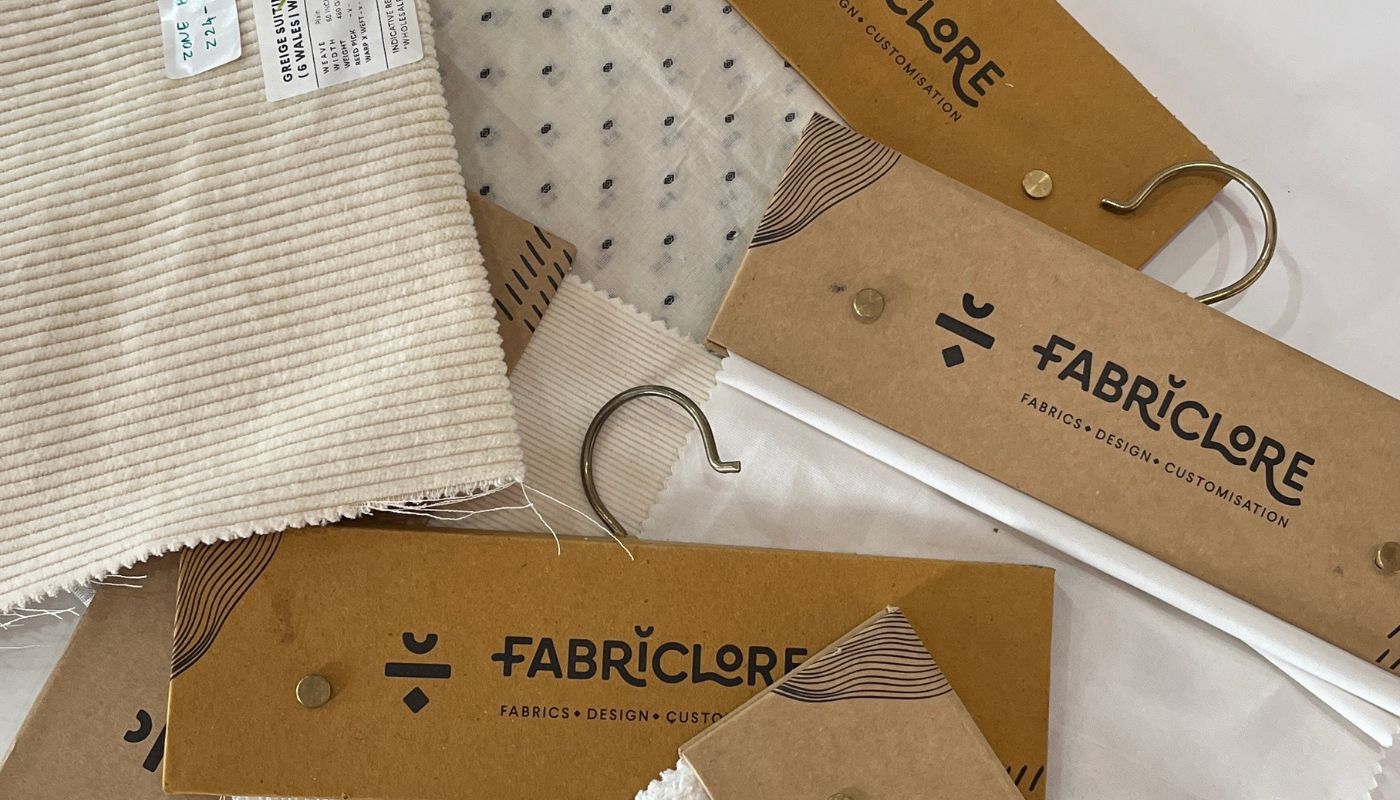
- Fabric swatches and sampling support for faster material validation.
- Custom fabric development, digital printing, rotary printing, and dyeing solutions.
- Sustainable fabrics including Organic Cotton, TENCEL™, EcoVero™, Modal, and Linen.
- Technology-backed order lifecycle management from sampling to production.
- Visibility across fabric development, printing, dyeing, quality control, and dispatch.
- Verified industrial network that can handle both small-scale research and large-scale output.
- 20,000+ meters monthly processing capability with scalable manufacturing support.
- Private label and custom garment manufacturing solutions.
- Dedicated textile experts supporting sourcing, development, and production planning.
Combining Technology with Textile Expertise
One thing that sets Fabriclore apart is its ability to mix digital workflows, production visibility, and human textile expertise. Structured sourcing methods help brands get better quality, faster delivery times, and more supply chain openness throughout the whole production process.
By combining sourcing, processing, and manufacturing into a single environment, Fabriclore helps fashion brands simplify their sourcing, make their operations more efficient, and safely move from making swatches to mass production.
Traditional Fabric Sourcing vs Modern Swatch-to-Scale Sourcing
Over the last ten years, there have been big changes in the source world. In 2026, the following comparison shows how fast the biggest names are getting fabrics.
|
Traditional Sourcing |
Modern Swatch-to-Scale Sourcing |
|
Multiple supplier contacts |
Centralized sourcing ecosystem |
|
Manual swatch requests |
Digital fabric discovery and swatch ordering |
|
Limited supplier visibility |
Transparent supplier coordination |
|
Disconnected workflows |
Integrated sourcing process |
|
Slow approvals |
Streamlined decision-making |
|
Reactive production management |
Real-time production visibility |
|
Higher sourcing complexity |
Simplified sourcing operations |
|
Difficult scalability |
Flexible production capacity |
Today, the brands that have the biggest edge over their competitors are the ones that have made sourcing easier while also making performance and exposure better.
Conclusion
It's not enough to find the right material to be good at fabric sourcing in 2026. It is about how quickly brands can go from fabric discovery and swatch approval to mass production while keeping quality, control over the supply chain, and exposure high. Leading fashion brands, designers, startups, and clothing companies are using digital fabric sourcing, unified supplier communities, and technology-enabled processes more and more to cut down on sourcing delays, make decisions faster, and get products to market faster.
The best tactics for buying include having access to authentic fabrics and reliable fabric suppliers, being able to see how production is going, and being able to make things in larger quantities. This lets companies check quality earlier, lower the risks of buying, and increase production with more trust.
For companies that want to go from swatch to scale more quickly, Fabriclore has a full-stack production ecosystem that is driven by technology and includes buying, sampling, fabric development, printing, dying, processing, and manufacturing all in one place. Fabriclore makes it easier for fashion companies to find fabrics, cut down on wait times, and get their goods to market faster by offering 5,000+ fabrics, scalable production, and end-to-end sourcing support.
Frequently Asked Questions
Q: Why Should I Buy Fabric Swatches Before Placing A Bulk Fabric Order?
A: Getting fabric swatches before a bulk order is a good way to check the quality, composition, GSM, weave, color accuracy, and general fit of the fabric. It lets brands see the material for themselves before buying a lot of it, which lowers the risks of sourcing and stops mistakes that cost a lot of money during production.
Q: What Should Fashion Brands Check When Evaluating Fabric Swatches?
A: Brands should check the fabric feel, texture, drape, transparency, weave quality, GSM, coloring consistency, and print quality after getting a fabric sample. These things help figure out if the material meets the needs of product creation, manufacturing, and customers.
Q: How Do Enterprise Fashion Brands Source Fabrics Faster In 2026?
A: Digital fabric sourcing platforms, centralized supply networks, and real-time production monitoring tools help big brands make the process of sourcing easier. These methods shorten the time it takes to approve swatches, make it easier for suppliers to work together, and speed up the process of going from product development to large production.
Q: What Are The Benefits Of Working With A Full-Stack Production Partner?
A: A full-stack production partner makes buying easier by taking care of fabric development, sampling, printing, dying, production planning, and manufacturing support all in one place. This makes it easier to handle suppliers, gives brands more information, and helps them grow more efficiently.
Q: How Does Fabriclore Help Brands Move From Swatch Approval To Large-Scale Production?
A: Fabriclore centralizes fabric sourcing, swatch generation, bespoke printing, dying, production planning, and factory assistance. Brands can quickly, easily, and controllably go from samples to mass production with more than 5,000 materials and the capacity to adjust production.
We also happen to be a magnet for suggestions, and would love to catch yours….throw us yours on hello@fabriclore.com
Learn, Create & Grow with us