AI, real-time customer insights, and data-driven decision-making are changing how brands design, source, and make clothes as the fashion industry moves into a new era. Trend cycles are getting shorter, and consumer tastes change faster than ever. At the same time, businesses are under more pressure to find the right mix between speed-to-market, profitability, sustainability, and inventory efficiency. Picking between Low MOQ manufacturing and High-Volume manufacturing has become an important strategy choice in this situation.
The right sourcing model can have a big effect on cash flow, inventory risk, and the ability to grow in the long run for fashion startups, private label brands, direct-to-consumer (DTC) clothing businesses, and well-known retailers. Low MOQ clothing manufacturers give you more options and faster product validation, while bulk apparel manufacturing saves you money and makes it easier to make a lot of clothes. This guide talks about both ways of doing things and helps brands choose the best way to make their products based on demand, growth stage, and business goals.
Understanding MOQ in Fashion Manufacturing

Before looking at different buying models, it's important to know what MOQ means in the clothing industry.
What Does MOQ Mean?
Minimum Order Quantity, or MOQ, is the smallest number of units that a maker needs to make a certain style, color, or type of clothing. Manufacturers set MOQs because there are fixed costs involved in production, such as finding cloth, making patterns, setting up machines, assigning workers, checking quality, and packaging.
For instance, many of the setup steps are the same whether you are making 100 pieces or 5,000 pieces. When you order more, makers can spread these costs across more units, which lowers the cost of making each garment.
Typical MOQ Ranges in Apparel Manufacturing
|
Manufacturing Type |
Typical MOQ |
|
Sampling & Development |
1–50 Pieces |
|
Low MOQ Manufacturing |
50–500 Pieces |
|
Small Batch Production |
500–2,000 Pieces |
|
Medium Volume Production |
2,000–10,000 Pieces |
|
High-Volume Manufacturing |
10,000–100,000+ Pieces |
Learn about MOQ because it has a direct effect on how much you spend on inventory, how quickly you can make new products, and how flexible you can be when it comes to buying.
How MOQ Influences Fashion Brand Operations
MOQ changes a lot more than just the amount of output. It affects several important business functions:
- Inventory planning and stock management
- Cash flow allocation
- Product testing and validation
- Demand forecasting accuracy
- Production scalability
- Speed-to-market strategies
When brands don't match their MOQ with their sales capacity, they often have problems with having too much inventory, not having enough working capital, and making bad choices about where to get their supplies.
Why Fashion Brands Are Re-Evaluating Traditional Manufacturing Models

Within the last ten years, fashion buying has changed a great deal.
In the past, a lot of brands depended on making a lot of something to get lower unit costs. This strategy has been changed, though, by changes in customer need and the rise of digital commerce.
Several things are causing the change:
- Shorter fashion trend cycles
- Rising inventory carrying costs
- Increased sustainability expectations
- Growth of direct-to-consumer business models
- Faster product launch requirements
- Demand for personalized and limited-edition products
Instead of making big stockpiles months ahead of time, many brands now put freedom and respond to the market first.
This has made more people want:
- Low MOQ garment manufacturing
- Small batch clothing production
- Flexible apparel sourcing
- Demand-driven production models
- Private label clothing manufacturing
At the same time, big-name stores and fashion companies around the world continue to gain from how efficient large-scale production is.
What Is Low MOQ Manufacturing?
Definition and Typical Order Quantities
Low MOQ manufacturing refers to ways of making clothes that can handle smaller orders while still meeting professional production standards. Depending on the company, low MOQ orders are usually between 50 and 500 pieces of each style.
With this plan, brands can release new products with less financial risk and less commitment to inventory.
How Low MOQ Manufacturing Works
Most of the time, low MOQ production follows an organized process:
- Product development and tech pack creation
- Fabric sourcing and sample approvals
- Small batch production planning
- Quality assurance checks
- Packaging and fulfillment
Brands have more freedom to try products and improve collections before going big because production quantities are smaller.
Brands That Benefit Most from Low MOQ Production
Making things with a low MOQ is especially useful for:
Fashion Startups
New brands often don't have sales statistics from the past. With smaller production runs, they can try to meet demand without having to commit too much inventory.
Emerging Designers
Independent designers can put out lines while keeping their creative freedom and limiting their financial risk.
DTC Fashion Brands
Small-batch production works well for direct-to-consumer businesses that put out capsule collections, holiday drops, and limited-edition items.
Sustainable Fashion Labels
Low MOQ production is often used by brands that want to cut down on waste to help with responsible inventory management.
Key Advantages of Low MOQ Manufacturing

When fashion brands are trying to compete in tough markets, low MOQ manufacturing can help them by lowering the risk of running out of inventory, making production more flexible, and letting them release new products faster. Unlike traditional bulk production, low MOQ clothing manufacturing lets companies try demand, make the most of their cash flow, and improve their collections before committing to bigger sourcing deals. Startups, direct-to-consumer brands, private labels, and new fashion businesses that need to be flexible, able to grow, and have better control over their product management will benefit the most from this method.
Lower Financial Risk
When fashion brands are trying to compete in tough markets, low MOQ manufacturing can help them by lowering the risk of running out of inventory, making production more flexible, and letting them release new products faster. Unlike traditional bulk production, low MOQ clothing manufacturing lets companies try demand, make the most of their cash flow, and improve their collections before committing to bigger sourcing deals. Startups, direct-to-consumer brands, private labels, and new fashion businesses that need to be flexible, able to grow, and have better control over their product management will benefit the most from this method.
Faster Product Validation
With low MOQ production, companies can test:
- New collections
- Color variations
- Product categories
- Seasonal styles
before putting a lot of money into goods.
This makes things less unclear and helps people make better decisions.
Greater Design Flexibility
This is easier to do with smaller batch runs:
- Launch limited-edition products
- Update collections frequently
- Experiment with new trends
- Customize product offerings
This adaptability is becoming more and more important in today's design markets.
Improved Inventory Efficiency
Making low MOQ items lowers the chance of having inventory that doesn't sell and dead stock.
Brands can make sure that production is more in line with what customers actually want, which increases inventory turnover and profits.
Faster Response to Market Trends
Trends in fashion change very quickly.
Brands that use low MOQ manufacturing can react faster to what customers want than companies that have to commit to large amounts of inventory.
Challenges of Low MOQ Manufacturing
Low MOQ production has some problems, even though it has some benefits.
Higher Per-Unit Costs
Because setup costs are spread out over fewer units, smaller production runs usually mean higher manufacturing costs per clothing item.
Limited Fabric Availability
Some fabric mills only let you buy in larger quantities, which means that smaller orders can't get as many materials.
Production Capacity Constraints
For small-batch production, choosing the right supplier is especially important because some manufacturers give more attention to bigger customers.
Scalability Challenges
As demand rises, brands need to make sure that their manufacturing partners can keep up with the growth without affecting quality or wait times.
What Is High-Volume Manufacturing?
Definition and Production Scale
High-volume manufacturing means making a lot of clothes for brands whose demand is predictable and whose distribution routes are well-established.
Usually, more than 10,000 units of each style are made, and for big stores, it can reach hundreds of thousands of units.
How Large-Scale Production Works
Large-scale manufacturing involves:
- Bulk fabric procurement
- Advanced production scheduling
- Multi-stage quality control
- Logistics planning
- Inventory forecasting
This model is meant to improve operating efficiency and cut costs as much as possible.
Brands That Commonly Use High-Volume Manufacturing
High-volume production is typically used by:
- Established fashion brands
- Retail chains
- Global apparel companies
- Uniform suppliers
- Enterprise private label businesses
These businesses usually make enough in sales to justify buying a lot of goods.
Major Advantages of High-Volume Manufacturing
High-volume manufacturing is a smart way for fashion brands with steady demand and long-term production plans to boost operational efficiency, get better at finding materials, and support long-term business growth at a large scale.
Lower Cost Per Unit
One of the best things about making clothes in bulk is that it lowers the cost of making each item.
Manufacturers can get the most out of their workers, supplies, and machines when they get bigger orders.
Greater Supplier Negotiation Power
Buyers who buy a lot of things often get:
- Better fabric pricing
- Preferred production schedules
- Priority capacity allocation
which makes sourcing more efficient generally.
Better Profit Margins
Lower production costs help brands keep their profit margins high, especially in retail settings where prices are competitive.
Consistent Product Availability
Large production runs make sure that there is enough stock to support a lot of different sales outlets and stores.
Operational Efficiency at Scale
Standardized processes, streamlined workflows, and better supply chain performance are all benefits of high-volume production.
Challenges of High-Volume Manufacturing
High-volume production can save you a lot of money, but it also comes with some risks.
Significant Upfront Investment
For bulk output, a lot of money needs to be spent on inventory.
Inventory Holding Risks
Stock that doesn't sell can lead to markdowns, storage costs, and lower earnings.
Slower Adaptation to Trends
Brands can't respond quickly to changes in the market when they have big production responsibilities.
Demand Forecasting Pressure
When inventory levels are high, mistakes in forecasting can cost a lot of money.
Low MOQ vs High-Volume Manufacturing: Detailed Comparison
|
Factor |
Low MOQ Manufacturing |
High-Volume Manufacturing |
|
Initial Investment |
Low |
High |
|
Inventory Risk |
Low |
High |
|
Cost Per Unit |
Higher |
Lower |
|
Product Testing |
Excellent |
Limited |
|
Speed to Market |
Faster |
Slower |
|
Cash Flow Flexibility |
High |
Moderate |
|
Demand Forecast Accuracy Required |
Moderate |
Very High |
|
Scalability |
Moderate |
Excellent |
|
Trend Responsiveness |
High |
Moderate |
|
Sustainability |
Less Waste |
Overstock Risk |
|
Best For |
Startups & DTC Brands |
Retailers & Enterprise Brands |
How to Choose the Right Manufacturing Model for Your Fashion Brand

You need to know a lot about your brand's current position, operational capabilities, and long-term growth plan in order to choose between low MOQ manufacturing and high-volume apparel manufacturing. The best way to source goods is to match production capacity with market demand while keeping inventory risk, profit, and the ability to grow in mind. Before making a choice, fashion brands should think about a few important factors that have a direct effect on how well they source.
Evaluate Your Brand's Growth Stage
Low MOQ clothing manufacturing can help fashion startups and new brands in their early stages because it gives them more freedom and lowers their financial risk. On the other hand, bigger production volumes may be more efficient for well-known names that have a history of good sales.
Assess Your Budget and Cash Flow
Manufacturing choices should be based on the amount of cash that is available. Smaller production runs help keep cash flow steady, while bulk manufacturing usually takes a bigger initial investment but costs less per unit.
Analyze Demand Predictability
Brands that don't have a lot of sales data should focus on production methods that are flexible. Businesses that can reliably predict demand can often save money by manufacturing in large quantities.
Consider Product Complexity
Most of the time, flexible manufacturing structures work best for seasonal collections, products that follow trends, and custom clothing. On the other hand, large production is usually best for products that don't go out of style.
Align Production with Future Growth
The best sourcing partner should not only be able to meet current output needs but also help with future growth. This way, brands can easily meet rising demand.
A Practical Example: How Fashion Brands Scale from Low MOQ to Bulk Production
Take the example of a fashion company that releases a line of t-shirts that are too big.
The brand doesn't buy 10,000 units all at once; instead, they start with a low MOQ manufacturing order of 300 pieces to see if customers want them and get feedback from the market. This method lowers the risk of having too much inventory while still letting the company try sizes, colors, prices, and how well the product is received overall.
If the line does well and customers keep ordering from the brand, it can slowly move into high-volume apparel manufacturing to make more money and get better production efficiency.
In general, a growth trip might look like this:
|
Business Stage |
Production Volume |
|
Product Sampling |
1–50 Pieces |
|
Market Validation |
100–500 Pieces |
|
Initial Growth |
1,000–3,000 Pieces |
|
Scaling Phase |
5,000–10,000 Pieces |
|
Established Brand |
10,000+ Pieces |
Many modern fashion brands handle sourcing in this way: they start with low-risk production, use real sales data to confirm demand, and then move on to bigger production numbers once the market is sure of them.
Why Many Fashion Brands Are Adopting Hybrid Manufacturing Strategies
Fashion companies are using both sourcing methods more and more.
A common method includes:
Stage 1: Low MOQ Validation
When brands first release a product, they make a small batch of it to see how well it sells.
Stage 2: Data Collection
Performance in sales, reviews from customers, and inventory turnover are all looked at.
Stage 3: High-Volume Scaling
When a product does well, it moves to bulk production, which increases profits and makes the supply line more efficient.
This hybrid plan strikes a good balance between risk management, flexibility, and making money.
How Fabriclore Supports Both Low MOQ and High-Volume Manufacturing Needs

As fashion brands move from releasing new products to running large-scale retail stores, their manufacturing needs get more complicated. Startups and new labels often look for low MOQ manufacturing to lower their inventory risk and make sure there is a demand in the market. On the other hand, established brands need scalable production systems that can handle higher order numbers without lowering quality, lead times, or operational efficiency. The hard part is finding a sourcing partner that can help with both steps of growth in the same ecosystem.
A Unified Fabric-to-Fashion Manufacturing Ecosystem
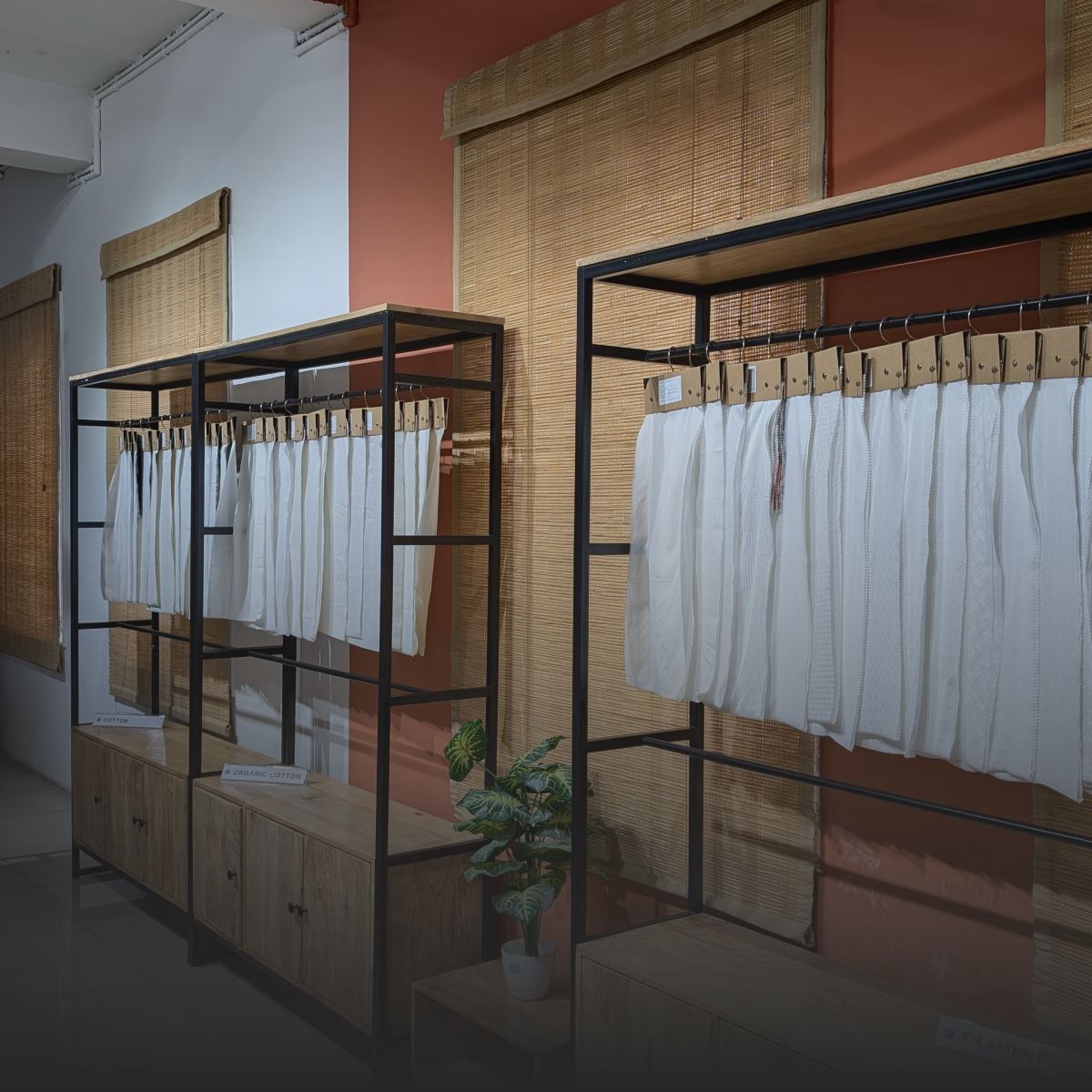
Fabriclore makes it easier to find clothes by combining fabric sourcing, textile customization, garment manufacturing, and production management into a single environment. With access to 5000+ fabrics, brands can quickly find, try, and make changes to materials like linens, cotton, and performance and sustainable textiles. Its manufacturing model is flexible enough to support both low MOQ garment production for trying products and high volume manufacturing for making more of the ones that sell well. With the help of a 20 million meter production network, Fabriclore makes it easy for fashion brands to go from testing the market with samples to mass production without having to deal with the problems that come with handling multiple suppliers.
Some core skills are:
- Fabric sourcing and custom fabric development
- Dyeing, printing, and textile processing
- Sampling and fit development
- Private label garment manufacturing
- Quality assurance and production monitoring
- Custom trims, labels, and packaging
- Global shipping and export support
10+ years of dyeing and printing expertise, and 500+ fashion brands worldwide trust this company. Through a more open, efficient, and technology-driven sourcing approach, Fabriclore helps businesses go from small-batch production to high-volume production.
Final Thoughts
Low MOQ manufacturing vs. High-Volume manufacturing is not a debate about which plan is better in every situation. Instead, the best choice depends on the stage of your business, your inventory strategy, your financial resources, how predictable your demand is, and your long-term growth goals.
Low MOQ clothing manufacturing gives startups, direct-to-consumer brands, and new designers more freedom, faster market approval, and lower inventory risk. High-volume apparel manufacturing saves money, makes operations more efficient, and boosts profit margins for large businesses and well-known stores.
More and more, the most popular fashion brands are using a mix of low MOQ production and high-volume production to make sure their products work well on a larger scale. When speed and efficiency are both important, a manufacturing approach that is easy to change is often the best way to ensure long-term growth.
FAQs
1. What Is Considered A Low MOQ In Clothing Manufacturing?
A low MOQ is usually between 50 and 500 pieces per style, but it can be higher or lower based on the type of clothing, the fabric needs, and the manufacturing partner. New fashion brands, startups, and up-and-coming creators often use low MOQ manufacturing.
2. Is Low Moq Manufacturing More Expensive Than Bulk Production?
Yes, low MOQ manufacturing generally has a higher cost per unit because the costs of labor, setting up the factory, and getting materials are spread out over fewer garments. But it cuts down on inventory risk and initial spending by a large amount.
3. When Should A Fashion Brand Switch From Low MOQ To High-Volume Manufacturing?
When sales become more stable, return orders rise, and it gets easier to predict demand, brands should think about switching to high-volume production. This helps bring down the cost of output and raises the profit margins.
4. Which Manufacturing Model Is Better For Fashion Startups?
Most fashion startups should choose low MOQ manufacturing because it lowers the risk of inventory and the amount of money they need to spend up front. For instance, a new brand doesn't have to make 10,000 clothes at first. Instead, they can start with 100–500 pieces to see how well the price, demand, and customer tastes work. Once sales are steady, the company can slowly switch to high-volume manufacturing to save money and make it easier to grow.
- Decrease inventory risk and lower capital investment in the launch phase.
- Quickly validate products before moving to large-scale apparel production.
5. Can A Fashion Brand Use Both Low MOQ And High-Volume Manufacturing?
Yes. A lot of successful brands use a hybrid sourcing approach. They start with low MOQ production to see if there is a market, and then they move on to high-volume production once the goods start selling well consistently.
We also happen to be a magnet for suggestions, and would love to catch yours….throw us yours on hello@fabriclore.com
Learn, Create & Grow with us