

With the rise of digital fabric sourcing, low-MOQ manufacturing, and tech-enabled production platforms, the fashion industry worldwide is changing rapidly. Minimum Order Quantity (MOQ) is important for fashion startups to understand because it affects where to get materials, how to plan production, and how the business can grow.
MOQ has a significant impact on key areas such as inventory investment, product testing, and cash flow management, making it a critical factor in the early stages of a brand's growth. If you plan your MOQ strategy well, you can reduce risks such as overproduction and financial stress.
This guide explains what MOQ is, why it's important, and how startups can use low-MOQ sourcing solutions like Fabriclore to build fashion businesses that can grow and work well.
What is Minimum Order Quantity (MOQ) in Fashion?
The minimum number of units or fabric meters that a supplier needs for each sale is called the minimum order quantity (MOQ). It is common practice in the clothing and textiles industry to ensure production is as cost-effective as possible.
MOQ is used in many parts of the fashion creation process:
- Fabric sourcing (meters of fabric).
- Garment manufacturing (pieces per style).
- Custom printing or dyeing processes.
- Trims and accessories.
As an example:
- A fabric supplier might need 100 meters of each pattern.
- A clothing company might need 400 of each style.
MOQ lets companies do the following:
- Costs of production.
- How well machines work.
- Using resources well.
For startups, it's important to know the MOQ for budget planning and production strategy.

Why MOQ Matters for Fashion Startups
New fashion startups, private labels, and enterprises seeking the best pricing, flexibility, and scalability must comprehend fashion's minimum order quantity. MOQ is an important part of low-MOQ manufacturing strategies because it directly affects inventory investment, product testing, and cash flow management. Brands can reduce risk, get the best pricing, and grow swiftly in competitive fashion markets by choosing the proper MOQ.
Key Impacts of MOQ on Startups
- High MOQ raises production startup costs.
- Overproduction risks unsold inventories.
- Reduces fashion design testing flexibility.
- Cash flow and budget allocation are affected.
- Low MOQs enable progressive, scalable business expansion.
- Startup-friendly fashion production models require low MOQ sourcing.
For startup-friendly fashion production models, low MOQ sourcing is a must.
Types of MOQ in Fashion Manufacturing
Startups can make better plans when they know about the different types of MOQ.
1. Fabric MOQ
- Minimum fabric required per design.
- Usually, it ranges from 50 to 500 meters.
2. Garment MOQ
- Minimum number of pieces per style.
- Often ranges from 100 to 500 pieces.
3. Design MOQ
- MOQ per color or print variation
4. Supplier MOQ
-
Minimum total order value (e.g., $500–$1000)
Cost, flexibility, and product variety can all be improved by picking the right mix.
Traditional MOQ Challenges for Fashion Startups
Startups had a hard time sourcing low-MOQ items before tech-enabled sourcing platforms became popular.
Common Challenges
- High minimums from traditional manufacturers.
- Limited customization options.
- Long lead times.
- High sampling costs.
- Lack of supplier flexibility.
Because of these problems, it was hard for new names to compete with well-known ones.
How Low MOQ Manufacturing is Transforming Fashion Startups
The business world is moving toward low MOQ manufacturing and digital sourcing, which makes it safer for new companies to enter the market.
Benefits of Low MOQ
- Reduced inventory risk.
- Faster product testing.
- Lower initial investment.
- Greater design flexibility.
- Faster time-to-market.
D2C brands, boutique labels, and private label businesses can use this model.
What is Considered Low MOQ in Fashion?
Low MOQs vary by product and seller.
Typical Low MOQ Benchmarks
- Fabric sourcing → 1 to 100 meters
- Garment manufacturing → 50 to 300 pieces
At Fabriclore:
- Fabric MOQ starts from 1 meter of sampling.
- Bulk production starts from 100 meters per design.
- Garment MOQ starts from 400 pieces per style (flexible).
Low-MOQ sourcing is great for startups and scaling brands because it offers significant flexibility.

How to Reduce MOQ for Your Fashion Brand
To lower the minimum order quantity (MOQ) for fashion startups, you need a strategic sourcing approach that balances adaptability, low cost, and growth. By using low-MOQ fabric sourcing, digital sampling, and smart production planning, brands may decrease risks, test collections, and enhance inventory management. This boosts quality and time-to-market.
Effective MOQ Reduction Methods:
- Work with global low-MOQ garment manufacturers.
- Digital fabric sampling reduces bulk testing.
- Test market demand with capsule collections.
- Use stock fabrics to avoid large MOQs.
- Combine orders across styles to fulfill needs.
These methods aid cost control, flexibility, and scalable fashion production.
Fabriclore: Low MOQ Fabric Sourcing & Manufacturing
With low MOQ manufacturing and custom fabric development, Fabriclore is a tech-enabled fabric sourcing platform that helps fashion startups and global brands.
With more than 10 years of experience finding fabrics, dying them, and painting on them, Fabriclore connects digital sourcing and physical production.
Key Capabilities
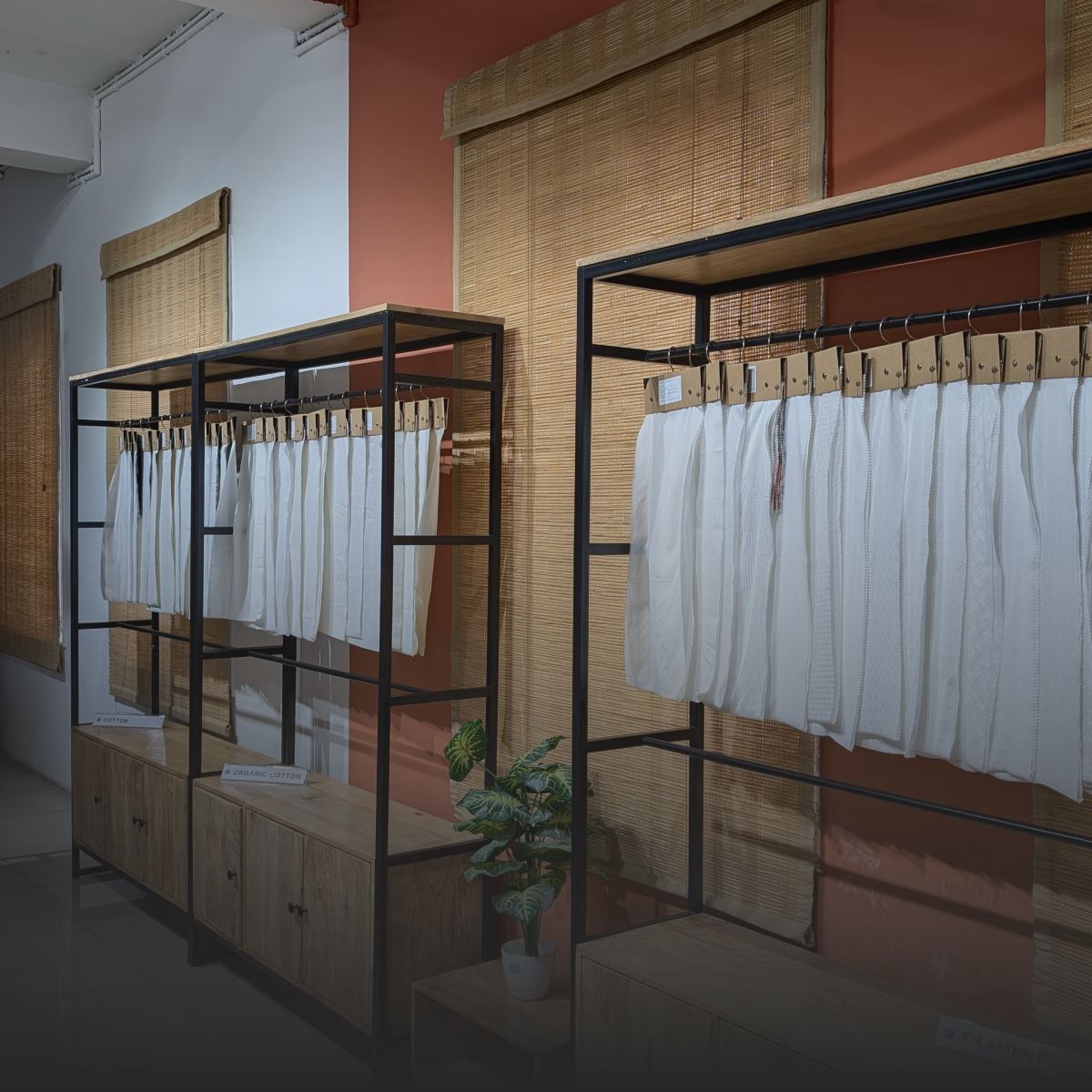
- Access to greige, RFD, dyed, and printed fabrics.
- Wide range: cotton, linen, viscose, rayon, blends.
- Low MOQ fabric sourcing (from 1-meter sampling).
- Custom fabric development (printing, dyeing, finishing).
- Private label clothing manufacturing.
- Swatch sampling before bulk production.
How Fabriclore Helps Startups
- Reduces sourcing risk with a sampling-first approach.
- Enables small-batch production for testing.
- Provides scalable manufacturing for growth.
- Offers mill-direct pricing for better margins.
Startups can use Fabriclore to go from an idea to production quickly, flexibly, and cost-effectively.
MOQ vs Cost: Understanding the Balance
MOQ directly impacts production cost per unit.
Key Relationship
- Higher MOQ → Lower cost per unit
- Lower MOQ → Higher cost per unit
Example
|
MOQ |
Cost per Unit |
Total Investment |
|
100 pcs |
$12 |
$1200 |
|
500 pcs |
$8 |
$4000 |
Startups must balance cost efficiency vs financial risk.
How MOQ Affects Product Development & Growth
Minimum Order Quantity (MOQ) in fashion manufacturing has a direct effect on how products are made, how flexible they are, and how easily they can be scaled up or down. Adopting low-MOQ production models helps companies make changes more quickly, better match supply and demand, and better track their inventory throughout the lifecycle of an item of clothing.
Impact Areas
- Product testing and iteration.
- Design flexibility.
- Market responsiveness.
- Inventory turnover.
Agile fashion production models can be used by brands when the MOQ is low.
MOQ in Global Fabric Sourcing (Europe vs Asia vs India)
Global fabric sourcing with MOQ considerations varies across regions, affecting costs, options, and customization. Fashion brands need to carefully consider where to source their materials to balance quality, pricing, and the advantages of low-MOQ manufacturing.
Europe
- Higher MOQ.
- Premium fabrics.
- Higher cost.
Asia (India, China)
- Flexible MOQ.
- Competitive pricing.
- Customization options.
Global sourcing with low MOQ and customization is possible with platforms like Fabriclore.
Best Strategy for Fashion Startups (MOQ Optimization)
A good MOQ optimization strategy for fashion startups reduces risk and enables the business to grow in a scalable way. Brands can quickly launch products and adapt them to meet market needs by leveraging low-MOQ sourcing and data-driven production planning.
Recommended Approach
- Start with a low MOQ.
- Test market demand.
- Scale production gradually.
- Use data-driven forecasting.
This ensures sustainable growth and lower production risk.
Common MOQ Mistakes to Avoid
Many startups fail because they don't plan their MOQs effectively in fashion sourcing. By avoiding common mistakes, you can boost productivity, cut costs, and make sure that production, demand, and inventory management are better aligned.
Avoid These Errors
- Over-ordering without demand validation.
- Ignoring the sampling stage.
- Choosing suppliers based only on price.
- Not considering scalability.
- Skipping quality checks.
Avoiding these ensures better product-market fit and profitability.

Future Trends in MOQ & Fashion Manufacturing (2026)
The future of low MOQ manufacturing and fabric sourcing is driven by technology, sustainability, and on-demand production. These innovations are reshaping how fashion brands approach sourcing, production, and scalability.
Key Trends
- Ultra-low MOQ manufacturing.
- AI-driven demand forecasting.
- Digital fabric sourcing platforms.
- On-demand production models.
- Sustainable small-batch manufacturing.
Global fashion startup ecosystems are changing because of these trends.
Conclusion
To build a business that can grow and make money, you need to understand the Minimum Order Quantity (MOQ) for fashion startups. MOQ affects every aspect, from pricing and sourcing to product quality and the company's long-term growth.
Tech-enabled platforms like Fabriclore, low MOQ manufacturing, and other trends have made it easier for startups to:
- Reduce risk.
- Launch faster.
- Scale efficiently.
Flexible, data-driven, and low MOQ sourcing strategies are the way of the future for brands.
FAQs
1. What Is The Minimum Order Quantity (MOQ) In Fashion Manufacturing?
Minimum Order Quantity (MOQ) is the smallest amount of clothes or fabric meters that a supplier needs for a single sale. It helps producers make the best use of their resources and keep production costs low, which makes it an important part of fashion sourcing and apparel manufacturing.
2. What Is Considered A Low MOQ For Clothing Brands?
When making clothes, a low MOQ is usually between 50 and 300 pieces per style and 1 to 100 meters of fabric, though this can vary by supplier and level of customization. A low MOQ is great for startups that want to try designs on a limited budget.
3. Why Is MOQ Important For Fashion Startups?
MOQ is a key factor in cost management, inventory control, and scalability. Picking the right MOQ helps new businesses lower their financial risk, avoid making too many products, and create a production plan that is flexible and focused on growth.
4. How Can Startups Reduce MOQ In Clothing Production?
Smart sourcing tactics can help startups lower their MOQ:
- Partner with low MOQ clothing manufacturers.
- Use digital fabric sampling to minimize bulk testing.
- Start with capsule collections or small batches.
- Choose stock fabrics instead of custom development.
These ways make things run more smoothly and cost less up front.
5. Which Platform Offers Low MOQ Fabric Sourcing And Manufacturing?
Low-MOQ fabric sourcing, custom fabric development, and private-label clothing manufacturing are services that platforms like Fabriclore offer. Startups and growing fashion brands will love it because it enables tech-enabled sourcing and production that can be scaled up.
We also happen to be a magnet for suggestions, and would love to catch yours….throw us yours on hello@fabriclore.com
Learn, Create & Grow with us 


