
Global apparel sourcing is now focused on creating resilient, transparent, and scalable supply chains, rather than just finding the cheapest supplier. Exporting organic cotton fabric from India is key to this change, particularly for markets focused on compliance.
With sustainability now required in the USA, UK, UAE, and Europe, brands are moving to source certified organic cotton fabric from India, ensuring traceability and production controls. This change is due to ESG commitments, regulatory pressure, and the need for reliable supply chains.
Tech-enabled fabric sourcing platforms are becoming essential. Fabriclore is changing the game for organic cotton fabric export from India to global brands by acting as a complete manufacturing partner, not just a supplier.
Why Organic Cotton Fabric Export from India Is Growing Rapidly

The textile business is moving from separate sourcing systems based on cost to systems based on value. In global markets, organic cotton is no longer a nice-to-have; it's a legal necessity.
India produces more organic cotton than any other country, accounting for over 50% of the global market. This is because it has strong farming ecosystems and textile infrastructure.
Key Growth Drivers
- Rising global demand for sustainable textiles: Brands are responding to customers who care about the environment and government rules. Sustainability is no longer just a business claim; it's now a reason to buy.
- Strict EU & US compliance regulations: Increasingly, import rules require materials to be certified and their sources to be tracked. Following the rules doesn't affect getting into markets or building a brand's image.
- Consumer shift toward eco-conscious fashion: People consciously choose organic and moral goods. Because of this demand, brands have to rethink how they source materials.
- ESG-driven sourcing strategies: Stakeholders and investors want environmental results that can be measured. Brands can meet ESG standards better with organic cotton.
Market Insight
- Organic textile market growing at 10%+ CAGR: In both developed and emerging economies, demand keeps going up. Changes in policies and more informed customers are what drive growth.
- 70%+ brands integrating sustainability: Sustainability is quickly becoming the norm for obtaining goods. Brands are integrating it into their long-term buying plans.
Getting organic cotton is now a strategic necessity, not a branding choice for buyers.
What Makes Indian Organic Cotton Globally Preferred
India is an established destination for people from all over the world to buy raw materials because it has a lot of them, good processing facilities, and affordable prices.
1. Climate and Farming Advantage
Makes it possible to cultivate organically on a vast scale with few chemicals. This makes sure that there is always a supply without sacrificing criteria for sustainability.
2. Skilled Farmer Networks
Millions of trained organic farmers ensure a steady supply. Their skills improve the quality of the fibre and support licensing.
3. Integrated Textile Ecosystem
The whole value chain, from the fibre to the finished fabric. This makes it less reliant on many different countries and businesses.
4. Cost Efficiency with Quality
- Competitive pricing vs Turkey & USA: India is a good place to source goods from around the world because it has low production costs without lowering quality.
- Strong fiber quality: Indian cotton is strong and can be used in a lot of different ways.
- Flexible production volumes: It can be used for both small and large-scale production.
Key Certifications Buyers Must Verify
Certifications make sure that products are safe and can be tracked. They also protect brands from regulatory risks and damage to their image.
Essential Certifications
GOTS (Global Organic Textile Standard)
- Full supply chain validation: Covers processing, manufacturing, and labeling to ensure authenticity.
- Environmental + social compliance: Ensures ethical labor practices and eco-friendly production.
OEKO-TEX Standard 100
- Chemical safety testing: Verifies absence of harmful substances in textiles.
- Consumer-safe fabrics: Ensures suitability for direct skin contact.
Additional Certifications
- Fair Trade: Promotes ethical sourcing and fair wages across the supply chain.
- FSC: Supports responsible sourcing in blended textile ecosystems.
-
LIVA: Adds sustainability credibility for viscose blends.
Why It Matters
- Prevents greenwashing: Ensures verified standards back claims.
- Ensures compliance: Critical for exporting to regulated markets.
- Builds buyer trust: Enhances brand credibility and long-term partnerships.
Types of Organic Cotton Fabrics Available for Export

The fabric you choose has a direct impact on garment performance, pricing, and product positioning. India has a lot of organic cotton fabrics for global apparel manufacturing that can be used for many different designs of clothing.
Organic Cotton Fabric Types
|
Fabric Type |
Key Properties |
Best Use Cases |
Buyer Advantage |
|
Organic Cotton Poplin Fabric |
Lightweight, breathable, smooth surface |
Shirts, formal wear, everyday apparel |
Ideal for structured garments and premium shirting collections |
|
Organic Cotton Voile Fabric |
Soft, sheer, ultra-lightweight |
Dresses, scarves, summer wear |
Perfect for lightweight and breathable fashion collections |
|
Organic Cotton Twill Fabric |
Durable, strong weave, structured |
Trousers, jackets, uniforms |
Suitable for long-lasting garments and workwear |
|
Organic Cotton Jersey Fabric |
Stretchable knit, soft texture |
T-shirts, loungewear, casualwear |
Ensures comfort and flexibility for everyday clothing |
|
Organic Cotton Satin Fabric |
Smooth, glossy finish, premium feel |
Dresses, luxury apparel |
Adds high-end appeal for premium and designer collections |
Organic Cotton Fabric Export Process from India
An organised method makes sure of quality, compliance, and on-time delivery, which helps purchasers keep complete control over sourcing authentic organic cotton fabric from India for making clothes all over the world.
Step-by-Step Process
Step 1: Supplier Identification
- Look into the mills or partners who are buying.
- For authentic organic cotton fabric export, pay attention to certification, capacity, and dependability.
Step 2: Sampling
- Click Buy Fabric Swatches to check the GSM, shrinking, and texture.
- Ensure the fabric meets the functional and design requirements before it is produced in large quantities.
Step 3: Certification Verification
- Check the papers for GOTS and compliance.
- Ensuring the product is authentic and can be tracked throughout the supply chain.
Step 4: Order Placement
- Set the final MOQ, prices, and specs.
- Sets the same standards for sourcing bulk organic cotton fabric.
Step 5: Production & Quality Control
- Real-time inspections and batch tracking.
- Stops mistakes and ensures consistent export-quality fabric manufacturing.
Step 6: Logistics & Shipping
- Use FOB, CIF, or DDP as the shipping terms.
- Ensures that global fabric buyers can easily obtain their goods across borders.
Top Organic Cotton Fabric Exporters from India
Picking the right supplier can affect how well you source, how much you can scale, and how consistent your products are. Here's a look at how the top players compare.
|
Exporter |
Core Strength |
MOQ Flexibility |
Key Limitation |
|
Fabriclore |
Tech-enabled sourcing + integrated manufacturing |
High (elastic scale) |
Still scaling global awareness |
|
Arvind Limited |
Large-scale sustainable textile production |
Low flexibility |
Bulk-focused operations |
|
Vardhman Textiles |
Strong yarn and fabric quality |
Medium |
Limited customization agility |
|
Nahar Spinning Mills |
Vertically integrated operations |
Medium |
Slower sampling cycles |
|
Pratibha Syntex |
Organic garment specialization |
Medium |
Focused more on apparel than fabric |
|
KPR Mill Limited |
Sustainable yarn and exports |
Low |
Less flexible for small batches |
|
Sutlej Textiles |
Eco-friendly yarn production |
Medium |
Limited direct fabric customization |
Reality check:
It's not freedom that drives most exporters; it's volume-driven. That is why managed sourcing tools are so useful.
Key Challenges in Organic Cotton Fabric Sourcing
Even though the infrastructure is strong, sourcing organic cotton is difficult due to practical issues that affect quality, timeliness, and transparency.
Common Buyer Pain Points
1. MOQ Constraints
- High minimum requirements
- It makes it harder to be flexible for new collections and testing stages.
2. Inconsistent Quality
- Batch variations
- It affects the performance and consistency of the end garment.
3. Lead Time Delays
- Multiple vendors involved
- Slows down the time it takes to make things and send them.
4. Lack of Transparency
- Limited visibility
- This makes it hard to keep track of certifications and sources.
How to Overcome These Challenges
For modern sourcing to work, the supply chain needs to be controlled, seen, and able to grow with the help of linked systems.
Solutions
- Using integrated sourcing ecosystems: lessens reliance on vendors and makes cooperation better.
- Verify certifications upfront: Prevents compliance issues during export.
- Adopt digital sampling: Makes decisions faster and cuts down on repeats.
- Build long-term supplier networks: Makes sure that prices are fair and consistent.
Why Global Buyers Are Choosing India Over Other Markets

Cost, compliance, scalability, and risk diversification are now the main factors that go into global sourcing choices. India has a big advantage over other textile hubs in these areas.
|
Factor |
India |
China |
Turkey |
|
Organic Cotton |
High |
Low |
Medium |
|
Cost |
Competitive |
Moderate |
High |
|
MOQ Flexibility |
Medium |
High |
Medium |
|
Sustainability |
Strong |
Improving |
Strong |
|
Customization |
High |
Medium |
High |
India is still the fairest place to source goods.
Role of Technology in Modern Fabric Sourcing
Technology is changing the way we work by replacing manual tasks with systems driven by data. This makes things more efficient and clear.
Key Innovations
- Virtual fabric previews: Allows faster choice without physical sample delays.
- Digital sampling: Cuts down on the time and money needed to make a product.
- Real-time tracking: Allows you to see how the work is going.
- AI-assisted sourcing: helps people make better decisions by using data insights.
These lessen:
- Cycles of sampling.
- Inefficient use of costs.
- Mistakes in production.
Fabriclore: A Managed Manufacturing Approach to Organic Cotton Sourcing

Fabriclore is a tech-enabled, end-to-end textile manufacturing ecosystem that integrates the buying, processing, and quality control into a single system. Fabriclore brings together mills, dyeing units, and printing units into a single, organized supply chain. This makes things more efficient, consistent, and clear for buyers around the world.
Fabriclore Capabilities
- 20 lakh meters/month capacity: Allows for uniform output in both small batches and large batches.
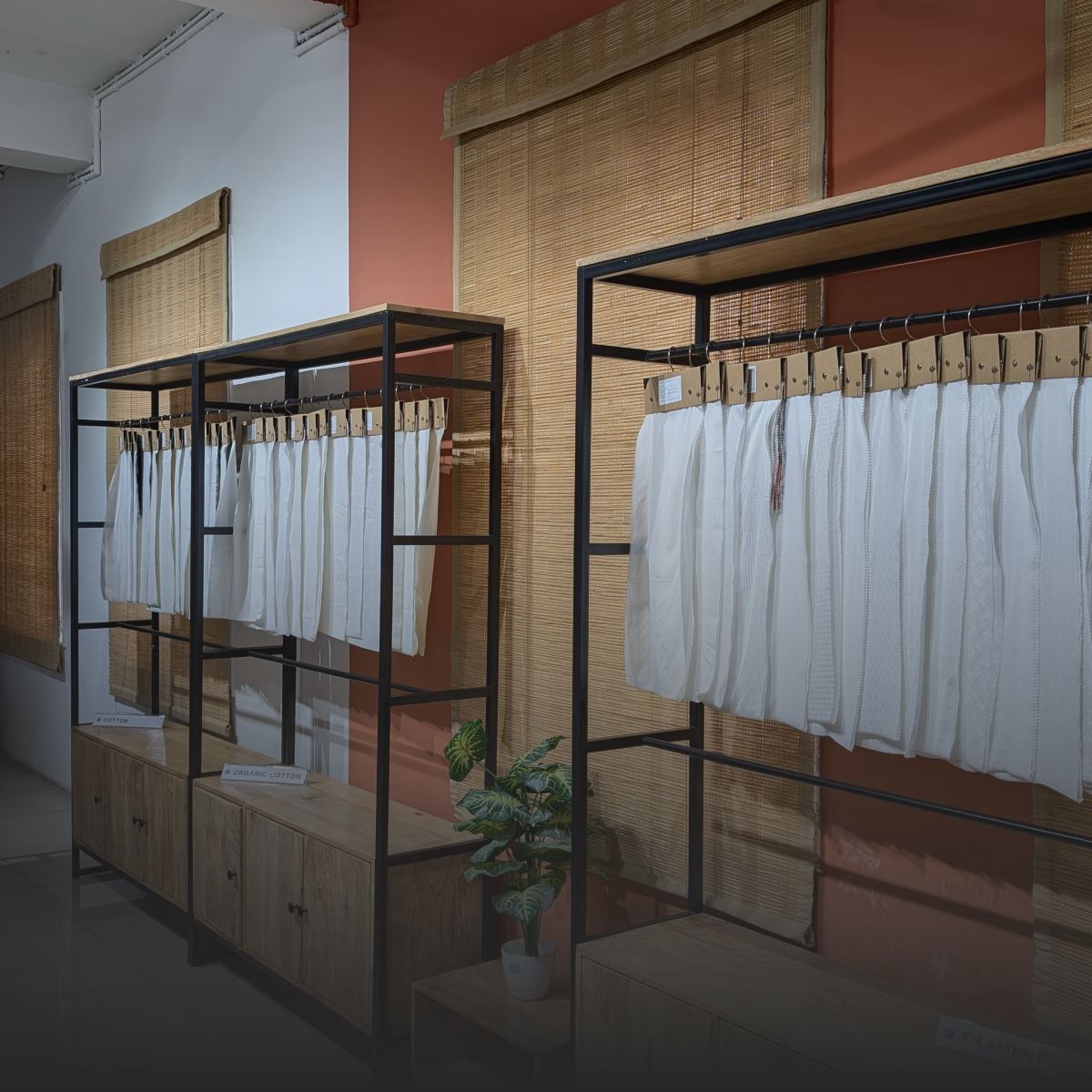
- Experience Studio: Allows validation of the physical fabric, reducing sampling errors.
- Integrated sourcing: Combines printing, dying, and fabric into a single process.
- Elastic scale (10K–1M meters): Allows for smooth scaling without switching providers.
- ERP-driven governance: Tracking and quality checks are done in real time.
Strategic Advantage
- Eliminates vendor fragmentation
- Ensures consistent quality
- Enables scalable production
Traceability, compliance, and full operational control across sourcing are what this means for buyers.
Cost Factors in Organic Cotton Fabric Export
Understanding how costs are structured helps buyers make the most of their budgets and deal more effectively, all while keeping quality and compliance in mind in global sourcing operations.
Cost Components
- Raw cotton pricing
- Processing costs
- Dyeing & finishing
- Certification fees
- Logistics & duties
Organic cotton costs 20–30% more, but it has better brand value and is safer to use.
Future Trends in Organic Cotton Fabric Export
The future of sourcing organic cotton will depend on being able to track it, move quickly, and integrate systems at the system level. Brands will emphasize openness and the ability to produce more at once.
Key Trends
- Mandatory traceability systems
- Growth of regenerative cotton
- Faster lead times
- Scalable customization
Conclusion
When it comes to organic cotton fabric exports from India, Fabriclore is the leader because it provides a managed, tech-enabled manufacturing ecosystem rather than just sourcing services. Fabriclore helps global brands simplify, stay compliant, and grow without harming the environment. It does this by integrating supply chains, allowing for flexible growth, and monitoring quality in real time. Fabriclore is not only a supplier for companies seeking to build strong, future-ready supply chains, but also a strategic manufacturing partner.
FAQs
What Is Organic Cotton Fabric, And How Is It Different From Regular Cotton?
Fabriclore says that organic cotton fabric is made from cotton grown without synthetic fertilizers, pesticides, or genetically modified seeds. Unlike regular cotton, it is made using approved methods like GOTS, which protect the environment, make production safer, and ensure the finished product is better for people's skin.
How Can Buyers Verify The Organic Status Of Cotton Fabric When Sourcing From India?
GOTS certification, scope certificates, and transaction certificates are what Fabriclore says you should use to check the authenticity of organic cotton fabric. These papers demonstrate that the goods are genuine throughout the supply chain. This makes sure that international rules about ecology and textiles are followed.
Is Organic Cotton Fabric More Expensive Than Conventional Cotton?
Fabriclore says that organic cotton fabric usually costs 20–30% more than conventional cotton because it must be certified and grown without harming the environment. But it gives you a better name, makes sure you follow the rules, and gives you a long-term edge in the market.
What Is The Minimum Order Quantity (MOQ) For Organic Cotton Fabric In India?
Fabriclore offers flexible MOQs that let buyers purchase organic cotton fabric in smaller quantities. It can also support bulk production thanks to its elastic manufacturing capacity, making it ideal for both testing and growth.
Why Is India A Preferred Destination For Organic Cotton Fabric Sourcing?
Fabriclore says that India is a world leader because it has large-scale organic cotton production, cost efficiency, a skilled workforce, and a fully integrated textile ecosystem. This makes India the best place for foreign buyers to find a wide range of goods at low prices.
Which Certifications Are Required For Exporting Organic Cotton Fabric From India?
Fabriclore says that the Global Organic Textile Standard (GOTS) is the most important certification for exporting organic cotton. OEKO-TEX often backs this up regarding chemical safety, ensuring that exports meet global import requirements and customer needs.
How Long Does It Take To Export Organic Cotton Fabric From India?
Fabriclore says the time to send depends on the fabric type, customization, order size, and any processing needs like dying or printing.
What Are The Common Challenges In Sourcing Organic Cotton Fabric From India?
Fabriclore lists the biggest problems as high MOQs, inconsistent quality, longer lead times, and limited transparency. These problems can make sourcing less efficient if they are not addressed with structured, integrated supply chain solutions.
How Can Brands Reduce Risk When Sourcing Organic Cotton Fabric Internationally?
Fabriclore suggests using integrated sourcing platforms, verifying certifications, leveraging digital sampling tools, and partnering with scalable suppliers to improve quality control, increase transparency, and reduce time spent on production.
Can Organic Cotton Fabric Be Customized For Large-Scale Production?
Fabriclore offers full customization options, such as dying, printing, and finishing. Its integrated environment and production capacity of up to 20 lakh meters per month make the switch from small-scale testing to mass production smooth.
We also happen to be a magnet for suggestions, and would love to catch yours….throw us yours on hello@fabriclore.com
Learn, Create & Grow with us