New York City is the command centre of American fashion. The brands headquartered here — global luxury houses, multi-line retailers, high-volume contemporary labels, and international wholesale operations — set the commercial and creative standard for the US market.
In the production calendar, choosing the proper bulk digital fabric printing and commercial textile manufacturing partner is crucial for fashion brands, retailers, sourcing managers, and procurement teams. If done well, you get a scalable production ecosystem with consistent quality from development to commercial manufacture. If you mess up, seasonal programming suffers.
The production landscape has shifted decisively. Sophisticated New York fashion businesses are consolidating sourcing around integrated global fabric suppliers offering fabric sourcing, custom digital printing, dyeing, quality inspection, private label manufacturing, OEM garment manufacturing, and worldwide logistics under one accountable relationship.
This guide covers what enterprise buyers need to know about bulk fabric manufacturing and choosing the right textile manufacturing partner in 2026.
At a Glance
For large fashion brands, retailers, wholesalers, and sourcing managers in New York, the optimal partner is a global integrated wholesale fabric supplier — one combining bulk digital fabric printing, fabric sourcing across 5,000+ substrates, custom dyeing, quality inspection, OEM garment manufacturing, and private label production under one ecosystem.
- Bulk manufacturing capacity of 20,000+ meters per month
- Competitive wholesale pricing at commercial scale
- Certified sustainable fabric options with documentation
- Reliable global logistics to New York via established freight carriers
- The development stage runs from 100 meters for validation before scaling to full production
The New York Fashion Industry's Production Reality

New York is home to over 900 fashion companies — spanning luxury RTW, contemporary labels, mass-market retailers, and international buying houses (NYC EDC, 2023). At the enterprise level, these businesses share a common set of production imperatives that shape how they select a fabric sourcing and manufacturing partner.
- Volume: Seasonal programs are measured in thousands of meters per design
- Consistency: Color accuracy and finish standards that hold across multiple runs
- Speed-to-market: Compressed development-to-delivery timelines
- Supply chain reliability: Partners accountable across seasons, not one-off vendors
- Cost efficiency at scale: Per-meter economics that protect wholesale margins
- Compliance: Fabric and ink certifications, quality documentation, sustainability credentials
- Vendor consolidation: Fewer suppliers in the chain to reduce coordination risk
These are the requirements of businesses operating at commercial scale — and they demand a fundamentally different type of production partner than a local print shop.
The Supplier Landscape: Understanding Your Options
New York fashion buyers typically choose between three categories of suppliers. Understanding where each fits — and where each falls short — is the first step in building a resilient sourcing strategy.
1. Local NYC print shops and POD platforms. Concentrated in the Garment District, Brooklyn, and Long Island City, these serve speed-critical concept sampling and single-yard design tests. They are not production partners for enterprise businesses: MOQs of 1–25 yards, no bulk manufacturing capability, narrow stock fabric ranges, no garment manufacturing, and per-unit costs that make commercial margins unviable. Useful for speed-testing a concept in 24–72 hours — not a sourcing strategy at scale.
2. Regional domestic mills. Only a few mills in New Jersey, Connecticut, and upstate New York offer 25–100-yard mid-run custom fabric printing. They assist brands with domestic sourcing or IP-sensitive development work but cannot match enterprise purchasers' volume, fabric range, certification programs, or integrated garment manufacturing.
3. Global integrated manufacturing partners. This category has transformed how New York fashion brands, retailers, and wholesale operations structure production. These global fabric suppliers function as a complete production ecosystem rather than a single-service print shop, offering:
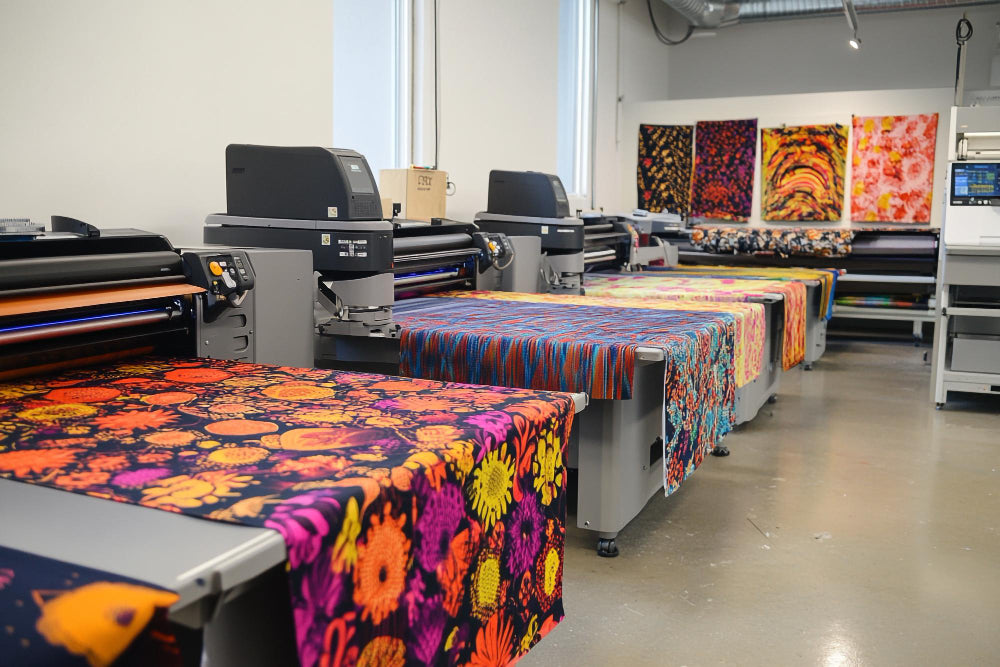
- Bulk digital fabric printing at 20,000+ meters per month with consistent color accuracy.
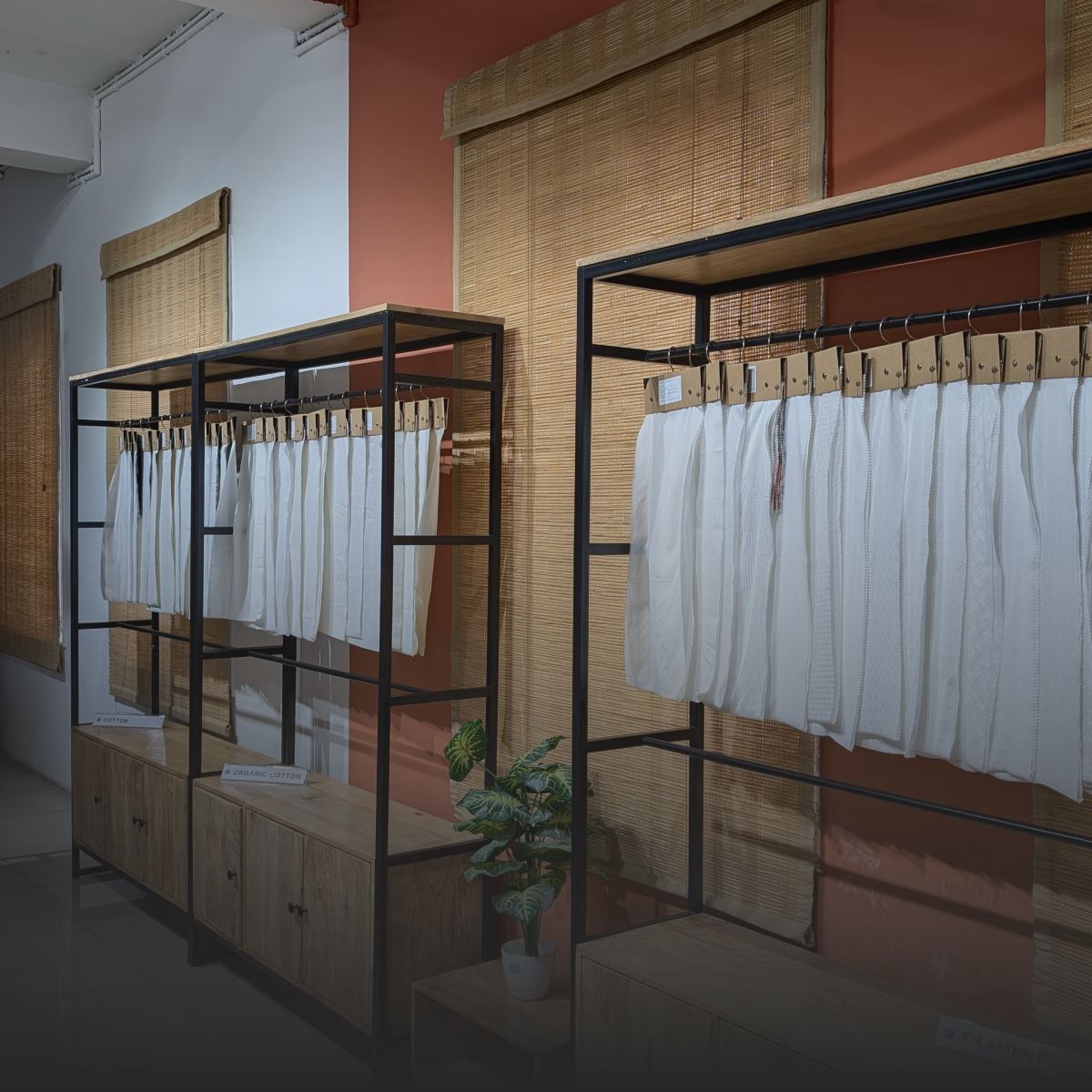
- Global fabric sourcing across 5,000+ substrates — natural, synthetic, blended, and certified sustainable.
- Custom dyeing and processing alongside digital printing under one roof.
- OEM garment manufacturing and private label production from development through mass production.
- In-house quality inspection on every meter before shipment.
- Worldwide logistics via DHL, FedEx, UPS, ARAMEX, and sea freight.
- Dedicated account management and technical textile expertise.
In New York, global integrated partners offer what no local supplier can: production that can be scaled up, a reliable supply chain, and low costs at commercial volumes for sourcing managers, buying houses, and corporate fashion buyers.
Why Global Fashion Brands Choose Integrated Manufacturing Partners

Today's fashion businesses need more than a printing vendor — they need a partner capable of supporting sourcing, production, quality control, and global delivery at scale. The following factors explain why integrated textile manufacturing partners have become the default choice for enterprise fashion buyers.
1. Vendor consolidation. Managing a separate fabric mill, printer, dye house, inspector, and garment manufacturer multiplies coordination costs and quality risk at every handoff. An integrated partner manages the entire chain — reducing sourcing risk and administrative overhead for procurement teams.
2. Production scalability. The critical question for any enterprise buyer isn't "can you do 100 meters?" — it's "can you scale to 10,000 meters a month, season after season, at the same quality standard?" That requires distributed manufacturing networks and quality systems built for bulk fabric manufacturing, not single-yard POD orders.
3. Supply chain visibility. Real-time tracking across sourcing, printing, dyeing, testing, and dispatch is a baseline requirement for teams managing multi-season calendars — it enables accurate planning and rapid response before an issue becomes a delivery failure.
4. Cost optimization at scale. Having one partner handle sourcing, printing, dying, and making clothes cuts down on markups between vendors, allows volume price to be applied across the entire program, simplifies logistics into fewer shipments, and lowers the number of reprints and delays caused by quality issues. Every season, these savings get bigger.
5. Long-term sourcing partnerships. A partner who understands a brand's quality standards, substrates, and calendar consistently outperforms a vendor selected on price alone — earning better pricing, priority capacity, and proactive problem-solving.
Enterprise Supplier Comparison
The table below summarizes how each supplier category performs against the criteria that matter most to enterprise buyers.
|
Feature |
Traditional Print Supplier |
Online POD Platform |
Fabriclore Global Manufacturing |
|
Bulk Production |
Limited |
No |
20,000m+/month |
|
Manufacturing Capacity |
Low |
None |
Multi-million-meter network |
|
Wholesale Pricing |
Moderate |
No |
Competitive at scale |
|
Fabric Library |
Narrow |
Limited |
5,000+ options |
|
Certified Sustainable Fabrics |
Rarely |
Limited |
GOTS, FSC, GRS, OEKO-TEX |
|
Custom Digital Printing |
Yes |
Yes |
Reactive, sublimation, pigment |
|
Dyeing & Processing |
No |
No |
Yes |
|
OEM / Private Label Manufacturing |
No |
No |
Yes |
|
In-House Quality Control |
Limited |
None |
Every meter tested |
|
Worldwide Shipping |
Limited |
Domestic |
DHL, FedEx, UPS, ARAMEX + sea |
|
Best For |
Small runs only |
Design testing |
Large brands, retailers, wholesalers |
What Enterprise Buyers Must Evaluate in a Manufacturing Partner

Choosing a commercial fabric printing partner is a due-diligence exercise, not a price comparison. The questions below reflect what sourcing managers and procurement teams should verify before committing to a seasonal program.
1. Production capacity and scalability
- What is the supplier's verified monthly production capacity in meters?
- Can they handle peak seasonal volumes without compromising lead times?
- Do they run a distributed manufacturing network, or does capacity depend on a single facility?
- Their on-time delivery record on comparable commercial programs?
2. Quality systems and documentation
- Do they inspect every meter for colorfastness, shrinkage, and defects?
- Can they provide AATCC-rated washfastness documentation by ink and fabric combination?
- Are inks OEKO-TEX certified or AZO-free as standard?
- What is their process for quality disputes and commercial claims?
3. Fabric range and sourcing depth
- Do they carry the breadth of natural, sustainable, synthetic, and specialty substrates that enterprise programs require?
- Can they source fabric outside their standard range for specific programs?
- Do they offer certified sustainable fabric programs with full documentation?
4. End-to-end manufacturing capability
- Do they offer OEM garment manufacturing and private label production alongside printing?
- Can they manage design, sourcing, printing, dyeing, garment manufacturing, and delivery under one relationship?
- Do they assign dedicated account managers to enterprise accounts?
5. Global logistics and compliance
- Can they ship commercial volumes to New York via DHL, FedEx, UPS, ARAMEX, or sea freight?
- Do they provide full shipment documentation for US customs compliance?
- Can they handle import documentation and country-of-origin certification to enterprise standards?
From Fabric Sourcing to Finished Garment: The Integrated Production Workflow
Enterprise fashion buyers increasingly demand a single manufacturing partner capable of managing the full production lifecycle — not a series of fragmented vendor handoffs. Understanding this integrated workflow is essential for procurement teams and sourcing managers evaluating a textile manufacturing partner for seasonal programs.
A fully integrated commercial textile manufacturing workflow covers every stage:
Design & Development
Global Fabric Sourcing (5,000+ options)
CAD Approval & Physical Strikeoff
RFD Pre-Treatment (Ready for Dyeing)
Bulk Digital Printing (Reactive / Sublimation / Pigment)
Dyeing & Processing
In-House Fabric Inspection (Colorfastness, Shrinkage, Defect Analysis)
OEM Garment Manufacturing / Private Label Production
Packaging & Quality Sign-Off
Worldwide Delivery (DHL / FedEx / UPS / ARAMEX / Sea Freight)
Each stage under one partner means one quality standard, one accountability chain, and one commercial relationship managing the full program. This is the production model that enterprise fashion buyers, retail sourcing managers, and wholesale procurement teams are structuring their supply chains around in 2026.
Fabriclore: Global Fabric Sourcing, Bulk Digital Printing, and Apparel Manufacturing Partner

Fabriclore is a technology-driven, full-stack textile sourcing, digital printing, and apparel manufacturing partner — built for global fashion brands, retailers, wholesalers, buying houses, and enterprise procurement teams that require production reliability, manufacturing scalability, and supply chain control across every season.
Fabriclore is not a print shop. It is not a marketplace. It is a global manufacturing ecosystem — combining fabric discovery, bulk digital fabric printing, custom dyeing, quality inspection, OEM garment manufacturing, private label production, and worldwide logistics under one partner. Backed by 10+ years of expertise in dyeing and printing and trusted by 500+ fashion brands and businesses globally, Fabriclore's mission is clear: eliminate fragmented sourcing and provide enterprise buyers with a reliable, transparent, and scalable textile manufacturing partnership from product development through large-scale commercial production.
Core manufacturing capabilities
|
Capability |
Verified Detail |
|
Bulk fabric printing capacity |
20,000+ meters per month |
|
Maximum production range |
Up to 1,50,000 meters per design |
|
Development MOQ |
From 100 meters, for product validation before bulk commitment |
|
Fabric library |
5,000+ natural, sustainable, blended, and specialty options |
|
Printable substrates |
Cotton, Silk, Polyester, Viscose, Linen, Nylon, Chiffon, Georgette, Blends |
|
Print technologies |
Reactive inkjet, dye sublimation, pigment printing, rotary printing |
|
Custom dyeing |
Full dyeing and processing alongside digital printing |
|
Ink standard |
AZO-free colors as standard |
|
Quality inspection |
Colorfastness, shrinkage, spotting, metering — every meter before dispatch |
|
Garment manufacturing |
OEM and private label — men's, women's, kids' wear |
|
Sustainable programs |
GOTS Organic Cotton, FSC TENCEL™, OEKO-TEX EcoVero™, GRS rPET, FSC/OEKO-TEX Modal |
|
Production lead time |
21–45 days, method and program dependent |
|
Global shipping |
DHL, FedEx, UPS, ARAMEX + sea freight for bulk orders |
|
Worldwide delivery |
50+ countries, including direct to New York |
Quality-Controlled Production Process
Fabriclore applies a structured, three-stage quality workflow to every commercial production program — ensuring bulk-quality consistency from the first meter to the last.
Stage 1 — Pre-Production: CAD design is reviewed and approved digitally by the brand or buyer. A physical strikeoff is produced and signed off before commercial production is authorized. No program proceeds without documented approval — eliminating the most expensive source of reprints in bulk programs.
Stage 2 — Commercial Production: Fabric undergoes RFD (Ready for Dyeing) pre-treatment — substrate-specific preparation ensuring even color absorption and consistent quality at commercial volumes. High-fidelity bulk digital printing is executed with vibrant color accuracy and precise repeat registration across every meter of the production run.
Stage 3 — Post-Production and Inspection: Reactive prints are steam-fixed, washed, softened, and folded. Sublimation prints are heat-transferred, washed, and finished. Every meter passes Fabriclore's in-house inspection unit — colorfastness testing, shrinkage testing, defect spotting, pre-packaging metering, and weather-safe packaging — before commercial shipment is authorized.
Certified Sustainable Fabric Programs
For fashion retailers and wholesale buyers with ESG commitments or retail partner sustainability requirements, Fabriclore operates a comprehensive certified sustainable fabric program — available across all bulk digital printing programs:
- Organic Cotton — GOTS-certified
- TENCEL™ Lyocell — FSC-certified, closed-loop production
- EcoVero™ Viscose — OEKO-TEX certified
- LENZING™ Modal — FSC and OEKO-TEX certified
- Recycled Polyester (rPET) — GRS-certified
Full certification documentation is available on request — essential for US and European retail buyers who require verified third-party sustainability credentials as a condition of purchase.
OEM Manufacturing and Private Label Production
Fabriclore's production ecosystem extends beyond fabric. OEM garment manufacturing and private label clothing production are available across men's, women's, and kids' wear — enabling brands, retailers, and buying houses to move from custom bulk printed fabric to finished, packaged, ready-to-ship product through one manufacturing partner, without managing a separate cut-and-sew relationship.
How New York Fashion Businesses Structure Their Production Chain

Leading fashion brands, retailers, and wholesalers in New York base their production on a single global integrated manufacturing partner. Local suppliers are only used for concept-stage work that needs to be done quickly.
-
Product development (global partner): At development MOQs (from 100 meters), all strikeoffs, sample yardage, and prototype outfits go through the global partner. This makes sure that development and production use the same substrates, ink systems, and quality standards.
-
Commercial production (global partner, bulk): Approved designs move directly into bulk digital fabric printing and garment manufacturing — 500 meters to 20,000+ meters per month — with color consistency, quality, and pricing contractually locked across the program.
-
Speed-critical sampling (local NYC): For urgent concept prints — a garment for a buyer meeting, a trade show sample, a placement print needed within 48 hours — local shops serve a narrow but genuine role, as exceptions to the program rather than the program itself.
This model — an integrated global partner for development and bulk production, local suppliers for speed exceptions — is how commercially sophisticated New York fashion businesses run their supply chains in 2026.
Commercial Pricing Framework
The costs of bulk digital fabric printing get a lot better as production volume goes up. To get the best per-meter rates and most manufacturing capacity, enterprise buyers should plan their budgets based on programs instead of orders.
|
Production Tier |
Quantity |
Program Type |
|
Development run |
100–300m |
Product validation, buyer sampling |
|
Initial commercial |
300–800m |
Season launch, wholesale programs |
|
Commercial bulk |
800m–3,000m |
Retail programs, multi-door wholesale |
|
Enterprise production |
3,000m–20,000m+ |
Large retail, international wholesale |
Key cost variables for enterprise programs:
- Ink system and substrate — reactive and acid inks carry higher processing costs than sublimation or pigment.
- Print coverage — high-density all-over programs use significantly more ink per meter.
- Seasonal program commitments — per-meter cost reduces materially with committed volume.
- Sustainable certification premium — offset by retail buyer pricing premiums in premium and contemporary channels.
-
Logistics — air freight (DHL/FedEx) for standard commercial programs; sea freight for large-volume bulk shipments to New York.
Enterprise Sourcing Best Practices for New York Fashion Buyers
Applying disciplined sourcing practices is what separates buyers who get reliable, repeatable production from those who don't. The following practices reflect how experienced procurement teams manage bulk fabric and apparel sourcing.
- Qualify suppliers on bulk capacity, not sample quality alone. Suppliers with good strikeoffs but poor quality at 5,000 meters a month aren't commercial partners. Request comparable volume references and verify bulk capacity.
- Consolidate vendors around integrated partners. Every additional supplier adds coordination cost, quality risk, and lead-time variability.
- Require certification documentation before committing to sustainable programs. It is not an advantage to make claims about sustainability that do not have written GOTS, FSC, GRS, or OEKO-TEX certificates.
- Negotiate program-level pricing, not order-level pricing. Committing to minimum meters per season across designs secures better per-meter pricing and priority scheduling.
- Build the production calendar around realistic lead times. Bulk printing and garment manufacturing require 21–45 days' production plus freight — plan 10–12 weeks total from design approval to New York delivery.
- Treat sustainability credentials as a commercial advantage. Retailers in New York are asking for more and more proof of credentials; printing on GOTS-certified organic cotton, GRS-certified rPET, or FSC-certified TENCELTM makes programs look good.
Conclusion
New York's fashion industry — its major brands, retailers, wholesale operations, and international buying houses — operates at a scale that local print shops and print-on-demand platforms were never built to serve.
The model defining enterprise sourcing in 2026 is built around global fabric suppliers who combine bulk digital fabric printing, fabric sourcing, custom dyeing, in-house quality inspection, OEM garment manufacturing, private label manufacturing, and worldwide logistics under one accountable relationship. This is the standard for commercial textile manufacturing at enterprise volumes.
The logic is straightforward. Vendor consolidation reduces sourcing risk. Integrated apparel manufacturing eliminates the quality variance that occurs at supplier handoffs. Program-level partnerships deliver stronger pricing and consistency than reactive one-off orders. A partner who can take a brand from development through bulk fabric manufacturing, season after season, is a strategic asset — not just a vendor.
For New York fashion brands, retailers, wholesalers, and procurement teams, the right textile manufacturing partner is a competitive advantage, not a cost centre.
FAQ
Q1: What Is The Best Bulk Digital Fabric Printing Partner For New York Fashion Brands?
For large brands, retailers, wholesalers, and buying houses in New York, the most capable partners are global integrated suppliers offering 20,000+ meters per month of production capacity, 5,000+ fabric options, certified sustainable substrates, in-house quality inspection, OEM garment manufacturing, and worldwide logistics.
Fabriclore is a leading example — a full-stack textile sourcing and apparel manufacturing partner serving 500+ fashion businesses globally, with bulk programs from 300 meters to 1,50,000 meters per design shipped reliably to New York.
Q2: What Should Enterprise Fashion Buyers Look For In A Fabric Printing Supplier?
There is a confirmed capacity for bulk production, complete services including sourcing, printing, dying, and making clothes, quality checks on every meter, sustainable programs that are certified and come with paperwork, low wholesale prices at scale, dedicated account management, and reliable global logistics. Print-only providers are not professional printers.
Q3: How Much Does Bulk Digital Fabric Printing Cost For New York Fashion Brands?
Development runs (100–300m) at development rates, business bulk (800m–3,000m) at lower prices per meter, and enterprise programs (3,000m–20,000m+) at the best prices per meter. You need to add US import taxes, foreign shipping, and good paperwork. When asked, global partners like Fabriclore offer clear prices at the program level.
Q4: Can I Get Garment Manufacturing Alongside Digital Fabric Printing In New York?
Not through local NYC suppliers. OEM garment manufacturing and private label production alongside custom digital fabric printing require a global integrated manufacturing partner. Fabriclore provides fabric sourcing, bulk digital printing, dyeing, processing, and OEM apparel manufacturing under one ecosystem, with worldwide delivery to New York.
Q5: How Long Does Bulk Fabric Printing And Manufacturing Take For New York Buyers?
Plan for 21–45 days of production, plus 3–5 business days of air freight (DHL, FedEx, UPS, ARAMEX) or 18–25 days of sea freight for large bulk shipments. Total lead time from design approval to New York delivery: 8–12 weeks for full commercial programs.
Q6: What Sustainable Fabrics Are Available For Bulk Digital Printing Programs?
GOTS-certified Organic Cotton, FSC-certified TENCEL™ Lyocell, OEKO-TEX-certified EcoVero™ Viscose, FSC and OEKO-TEX-certified LENZING™ Modal, and GRS-certified Recycled Polyester (rPET) — all available with documented certification for retail buyer compliance.
Q7: Why Are Global Integrated Partners Better Than Local NYC Suppliers For Commercial Production?
Local suppliers are limited to small runs (1–25 yards), narrow fabric ranges, and no garment manufacturing — unsuitable for commercial programs. Global integrated partners offer 20,000+ meter monthly capacity, 5,000+ fabric options, certified sustainable programs, OEM garment manufacturing, in-house quality inspection, and worldwide logistics. For enterprise buyers, that's the difference between a concept-stage supplier and a commercial production partner.
Q8: Can A Global Manufacturing Partner Ship Bulk Fabric Orders To New York Reliably?
Yes. Leading partners, such as Fabriclore, ship commercial programs to New York by air freight through DHL, FedEx, UPS, and ARAMEX. For big orders, sea freight is also an option. Shipments come with full business paperwork for US customs clearance, tracking, and packaging that can withstand the weather. Development swatches can be sent straight to addresses in New York with no minimum order quantity.
We also happen to be a magnet for suggestions, and would love to catch yours….throw us yours on hello@fabriclore.com
Learn, Create & Grow with us