
The fashion business around the world is going through a big change in how products are sourced, designed, and made. Brands are having to rethink their standard buying models because of things like rising costs, shorter product development cycles, stricter rules on sustainability, and ongoing supply chain problems. Clothing companies used different suppliers for decades to get fabric, dye it, print it, finish it, test it, and make the clothes.
This fragmented method gave us flexibility, but it often led to delays, inconsistent quality, communication problems, and a lack of insight in the supply chain. Fashion brands are teaming up with end-to-end fabric and processing partners more and more these days. These partners offer complete solutions, from developing fabrics to helping with production. This change in strategy is helping brands make things simpler, work better, be more compliant, and get ahead in a global market that is becoming more demanding. Let's read more about this to learn more.
Quick Overview: What Fashion Brands Gain from Integrated Sourcing
End-to-end fabric sourcing is becoming more popular among fashion brands because it has clear practical and financial benefits.
Some key perks are:
- Faster product development and reduced lead times
- Improved quality consistency across collections
- Lower total cost of ownership (TCO)
- Enhanced supply chain resilience
- Greater textile traceability
- Better sustainability compliance
- Simplified vendor management
- Increased flexibility for scaling production
Brands work with a single strategic partner that can handle sourcing, processing, quality control, and production support all within one integrated ecosystem. This way, they don't have to coordinate with multiple providers at different points of production.
The Global Shift Away from Fragmented Supply Chains
For many years, fashion brands relied on many sources to get fabrics, paint them, print them, test them, and make clothes. This model was flexible, but it also made it harder to communicate, caused wait times to be longer, made quality uneven, and made it harder to see what was going on in the supply chain.
The problems with scattered sources are becoming clearer as market conditions change. Fashion brands have to deal with shorter product cycles, higher standards for sustainability, and ongoing problems in the supply chain while still moving quickly and making money.
Why Traditional Sourcing Models Are Under Pressure
Several factors are driving brands toward integrated sourcing:
- Faster product development cycles
- Increasing sustainability and traceability requirements
- Rising logistics and operational costs
- Global supply chain volatility
- Growing demand for transparency
The Hidden Costs of Managing Multiple Suppliers
Plenty of buying teams now look at Total Cost of Ownership (TCO) instead of just fabric prices.
In addition to raising the cost of materials, scattered sources often:
- Supplier management expenses
- Transportation and logistics costs
- Sampling revisions
- Quality-related rework
- Production delays
- Inventory carrying costs
Even small delays or quality problems can affect launch dates, margins, and customer happiness when different providers are in charge of different steps of production.
Because of these problems, more fashion brands are looking for end-to-end fabric and processing partners that make the whole buying process more accountable, clear, and efficient.
What Is an End-to-End Fabric & Processing Partner?

A central sourcing and production ecosystem runs different parts of the textile supply chain for an end-to-end fabric and processing partner.
Brands work with one partner who handles the whole process instead of working with many different vendors.
Typical Capabilities Include
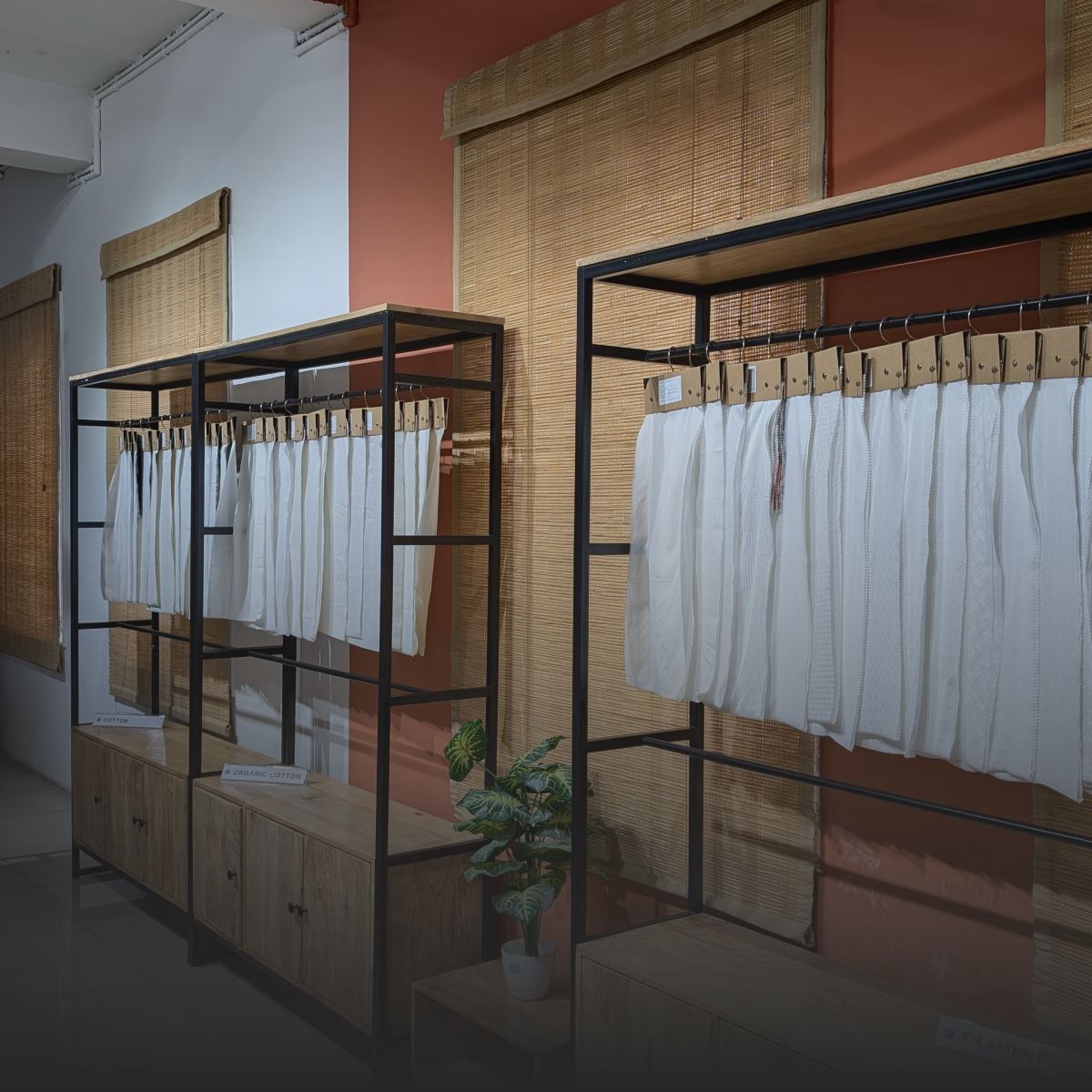
Fabric Sourcing
- Cotton fabrics
- Organic cotton fabrics
- Linen fabrics
- Viscose fabrics
- Rayon fabrics
- Sustainable blends
- Technical textiles
Fabric Development
- Custom fabric engineering
- Material innovation
- Fabric sampling
- Product development support
Fabric Processing
- Dyeing
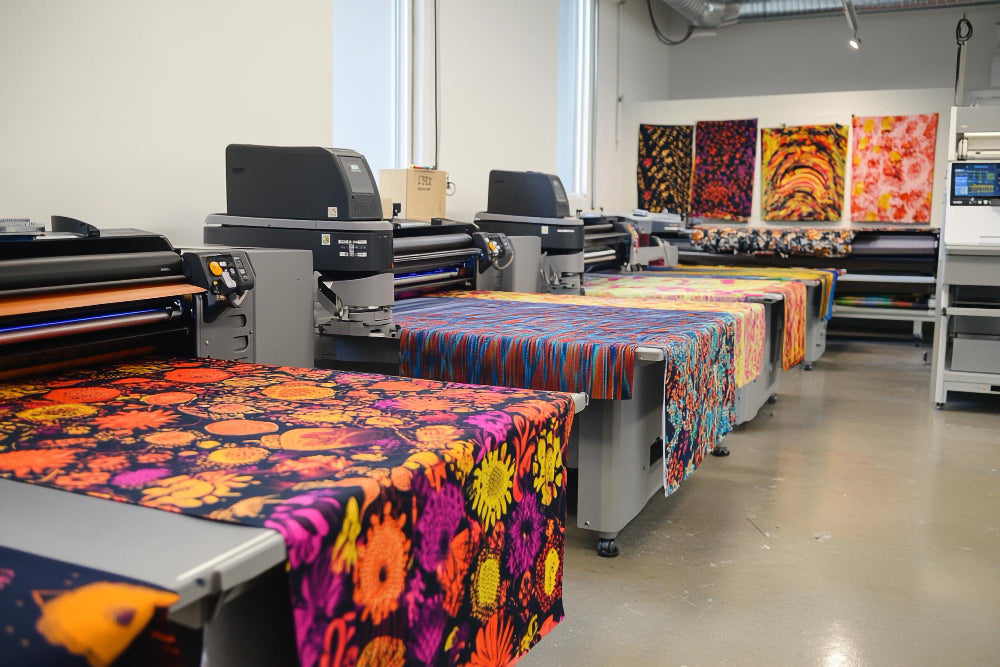
- Digital printing
- Screen printing
- Washing
- Functional finishes
Quality Assurance
- Fabric testing
- Shade consistency verification
- Performance testing
- Compliance management
Production Support
- Sample development
- Garment manufacturing
- Packaging
- Export coordination
Why This Matters
Accountability is the best thing about it.
One partner can better oversee quality, timelines, communication, and compliance when they are in charge of multiple steps of production.
Traditional Sourcing vs End-to-End Sourcing: A Comparison
Fashion has used standard sourcing models for decades, but as the industry gets more complicated, needs to be more environmentally friendly, and needs to cut down on wait times, brands are being pushed to use more integrated sourcing strategies.
This comparison shows why a lot of fashion brands are moving toward end-to-end fabric and processing partners:
|
Factor |
Traditional Sourcing Model |
End-to-End Sourcing Partner |
|
Lead Time |
Longer due to multiple supplier handoffs and approvals |
Faster through coordinated sourcing, processing, and production |
|
Accountability |
Shared across multiple vendors |
Single point of responsibility |
|
Quality Control |
Different standards across suppliers |
Unified quality management system |
|
Communication |
Multiple contacts and communication channels |
Centralized communication and faster decision-making |
|
Traceability |
Limited visibility across production stages |
Greater textile traceability and supply chain transparency |
|
Sustainability Reporting |
Complex documentation from multiple suppliers |
Streamlined compliance and reporting processes |
|
Cost Visibility |
Hidden costs spread across vendors |
Better visibility into total sourcing costs |
|
Supply Chain Risk |
Higher risk of delays and coordination issues |
Improved supply chain resilience and control |
|
Scalability |
Expansion often requires additional vendor management |
Easier scaling through an integrated sourcing ecosystem |
|
Product Development |
Slower sampling and approval cycles |
Faster development and quicker time-to-market |
An integrated textile supply chain is much better than standard disjointed buying models for brands that want to be more efficient, consistent, and flexible. By combining sourcing, processing, quality control, and production support into a single environment, brands can make the whole product lifecycle simpler while also improving business performance.
Why Faster Time-to-Market Has Become a Strategic Priority
In fashion, speed has become one of the most important ways to stay ahead of the competition.
Finding a trend, making a product, and putting it on the market before competition can have a huge effect on how well a business does.
Consumer Behavior Has Changed
Today's consumers expect:
- New product drops
- Micro-collections
- Trend-responsive designs
- Social-media-driven products
It's common for brands that don't come out fast enough to miss out on demand.
How End-to-End Partners Reduce Lead Times
Partners in integrated buying speed up production by:
- Centralized Communication: Fewer stakeholders means faster decision-making.
- Coordinated Production Planning: Fabric sourcing, processing, and production schedules are synchronized.
- Reduced Supplier Handoffs: Fewer transfers mean fewer delays.
- Faster Sampling: Sampling and revisions move more quickly within a connected ecosystem.
Practical Example
Think about a womenswear brand that is making a summer line.
In the old way of doing things:
- Fabric supplier
- Printing vendor
- Finishing facility
- Sample unit
All of them work on their own.
Every handoff takes time.
With an integrated sourcing partner, all of these tasks are managed through a single process. This cuts down on the time needed for development and makes the product more ready for launch.
Why Quality Consistency Matters More Than Ever
Product quality directly influences:
- Customer satisfaction
- Brand perception
- Return rates
- Retail partnerships
But it's hard to keep quality uniform when there are several sources involved.
Common Problems in Fragmented Supply Chains
Brands frequently encounter:
- Shade variation
- Fabric shrinkage inconsistency
- Printing defects
- Finishing irregularities
- Performance failures
There are different rules and methods that each provider must follow.
This makes things more variable.
The Advantage of Integrated Quality Management
During the whole production process, leading fabric sourcing partners set up quality checks.
Most of the time, these checks cover:
- Fabric Inspection: Raw materials are evaluated before processing begins.
- Color Matching: Shade consistency is monitored throughout production.
- Performance Testing: Fabric properties are verified before approval.
- Production Verification: Final materials undergo inspection before manufacturing.
The result is greater consistency across:
- Product appearance
- Fabric performance
- Customer experience
- Production outcomes
This means that fashion brands will have fewer flaws, fewer returns, and more trust from their customers.
Sustainability, Traceability, and Compliance Are Reshaping Fashion Sourcing

There is more pressure than ever on the fashion business to be more open, responsible, and environmentally friendly. What used to be seen as a competitive edge is quickly turning into a must-have.
Consumers want proof that products are sourced in a decent way. Stores are making it harder for suppliers to meet their needs.
More information about how goods are made and where things come from is being required by new rules put in place by governments.
This only means one thing for sourcing teams: the supplier line must now be open and clear.
Why Fragmented Supply Chains Struggle With Sustainability
It gets harder and harder to get correct information when a fabric goes through more than one source.
Brands often have trouble proving:
- Raw material origins
- Chemical usage
- Water consumption
- Carbon emissions
- Waste management practices
- Social compliance standards
This makes it hard to meet the needs of retailers who want to audit, certify, or request sustainable reports.
How End-to-End Partners Simplify Sustainability Management
Integrated buying sources make the whole production process easier to see.
Brands don't have to coordinate with many providers because they have access to a central method for handling sustainability data.
Benefits Include
Textile Traceability
Brands can keep track of products as they are made.
This makes it easier to see into:
- Fiber sourcing
- Fabric processing
- Manufacturing stages
- Supply chain partners
Sustainable Fabric Sourcing
Many integrated partners offer access to:
- Organic cotton fabrics
- Recycled fibers
- Sustainable viscose alternatives
- Low-impact textiles
Compliance Documentation
Centralized documentation helps brands manage:
- Material certifications
- Testing reports
- Sustainability records
- Quality documentation
Responsible Textile Production
Integrated oversight often improves control over:
- Water usage
- Chemical management
- Waste reduction
- Production efficiency
These skills are getting more and more important for brands that want to sell in Europe, North America, the UK, Australia, and other controlled markets.
Technology Is Transforming Fabric Sourcing
Technology is making the next level of sources possible.
Fashion brands want to see more and more information about where their clothes come from and how they are made in real time.
Often, traditional ways of getting information depend on:
- Email chains
- Spreadsheets
- Manual updates
- Disconnected communication
This wastes time and energy and makes it take longer to make decisions.
The Rise of Technology-Enabled Sourcing Platforms
These days, fabric sourcing partners are putting a lot of money into digital infrastructure.
These tools make it easier for brands to handle their sourcing.
Real-Time Inventory Visibility
Brands can instantly access:
- Fabric availability
- Stock levels
- Material specifications
- Development options
This cuts down on delays in sources and makes planning better.
Digital Sample Management
Sampling is still one of the parts of product creation that takes the most time.
Digital work processes help:
- Track approvals
- Manage revisions
- Reduce communication delays
- Accelerate decision-making
Faster sampling means that products can be sold more quickly.
Production Monitoring
With integrated buying methods, you can see:
- Fabric development
- Processing status
- Production timelines
- Quality checkpoints
Because of this, sourcing teams can find risks quickly and fix them.
Data-Driven Decision Making
Increasingly, advanced sourcing tools support
- Demand forecasting
- Inventory optimization
- Production planning
- Supplier performance tracking
The buying environment is now more flexible and quick to respond.
Why India Is Emerging as a Global Sourcing Hub
India is now one of the best places for fashion brands to find a full-stack production partner who can offer quality, scalability, and variety in their supply chains. It has a large textile environment, the ability to manufacture, and an integrated buying infrastructure that makes it a good choice for brands that want to build strong global supply chains.
Textile Diversity
India is home to one of the most diverse textile environments in the world.
- Cotton fabrics
- Organic cotton textiles
- Linen fabrics
- Rayon and viscose fabrics
- Sustainable blends
- Technical textiles
With this wide range of materials, brands can get a lot of different types of products from one area, and they can support both high-end and low-cost lines.
Manufacturing Scale
India's clothing industry makes a lot of different types of clothes, like men's and women's clothes, kids' clothes, fitness wear, resortwear, uniforms, and home textiles. Manufacturers can handle both small orders during the development stage and large-scale production needs for everything from knitted basics and weaving clothes to beds and make-up. People in North America, Europe, the UK, Australia, New Zealand, Israel, and the Middle East are still very interested in these groups.
Integrated Sourcing Advantage
India has more and more end-to-end fabric sourcing, processing, and production partners, in addition to a lot of cloth and the power to make it. A lot of providers now offer a linked sourcing structure that includes fabric development, dyeing, printing, finishing, quality control, compliance management, and garment production.
For fashion brands around the world, this combination gives them:
- Faster product development cycles
- Improved quality consistency
- Better supply chain visibility
- Enhanced compliance support
- Greater sourcing flexibility
As brands put more emphasis on supply chain resilience, textile traceability, and operating efficiency, India's integrated sourcing skills make it an even more popular place to source goods around the world.
How Fabriclore Simplifies Fabric Sourcing, Processing, and Manufacturing

Fabriclore is a technology-driven fabric sourcing, processing, custom development, dyeing, printing, sampling, and manufacturing partner helping fashion brands simplify and scale production through a single integrated ecosystem. By this strategy, Fabriclore eliminates the complexity of managing multiple suppliers while improving quality, transparency, and speed-to-market.
With over 5,000 fabrics to choose from, a proven production network, and 10 years of expertise in fabric processing, Fabriclore helps with all kinds of industrial tasks, from making prototypes and small batches to large-scale production projects. The platform provides sustainable materials like organic cotton, TENCEL™, EcoVero™, modal, and linen. It also offers advanced dyeing, digital printing, rotary printing, and finishing options.
Key Highlights
- End-to-end sourcing & manufacturing
- Custom fabric development
- 20,000+ meters monthly processing capacity
- Low MOQ & scalable production
- Private label garment manufacturing
- Sustainable fabric solutions
- Technology-enabled sourcing platform
- 500+ global brands served
- Quality-focused, export-ready production
Fabriclore's goal is to make it easier, more open, and more scalable for growing fashion brands around the world to find and make textiles.
How to Evaluate an End-to-End Fabric & Processing Partner
Not every buying partner can do the same things.
Brands should use a strategic plan to assess their sources.
1. Fabric Development Capabilities
Ask:
- Can they develop custom fabrics?
- Can they source specialty materials?
- Can they support sustainable textile development?
Products stand out more when they have strong growth skills.
2. Processing Expertise
Evaluate whether the partner can support:
- Dyeing
- Printing
- Finishing
- Fabric testing
Quality and wait times are directly related to how well a product can be processed.
3. Quality Assurance Systems
Look for:
- Documented SOPs
- Multiple inspection checkpoints
- Export-quality standards
- Testing procedures
Consistent quality systems reduce risk.
4. Technology Infrastructure
Assess:
- Inventory visibility tools
- Sample management systems
- Production tracking capabilities
- Reporting dashboards
Technology is becoming more and more of a competitive edge.
5. Scalability
The ideal sourcing partner should support:
- Sampling
- Small-batch production
- Growth-stage manufacturing
- Large-scale orders
Brands can grow without switching providers when they have a scalable sourcing environment.
Future Trends Shaping Fashion Sourcing Through 2030
Integrated buying models are becoming more popular faster because of a number of major trends.
AI-Powered Demand Forecasting
Artificial intelligence is helping brands:
- Predict demand
- Reduce inventory waste
- Improve sourcing accuracy
- Optimize production planning
As planning gets better, choices about where to get materials become more useful.
Digital Product Passports
According to new rules, you will need to provide detailed information about:
- Material origins
- Manufacturing processes
- Sustainability attributes
Brands that have good methods for tracking textiles will be better able to follow the rules.
Sustainable Material Innovation
Demand continues growing for:
- Organic cotton
- Recycled fibers
- Bio-based materials
- Regenerative agriculture-based textiles
Innovations at the level of the cloth will become more and more important.
Nearshoring and Supply Chain Diversification
Brands want to be more resilient by relying less on sourcing tactics that only work in one place.
Diversified supply networks will keep growing.
Smaller and More Frequent Collections
Consumers increasingly expect:
- Limited releases
- Faster trend adoption
- More personalized products
Agile sourcing ecosystems will become essential.
Conclusion
Today, sourcing isn't just a buying job; it's a strategic business skill that affects growth, revenue, resiliency, and sustainability. Sourcing in the fashion business is changing very quickly. Brands are having to rethink their traditional sourcing strategies because of rising customer expectations, greater demands for sustainability, problems in the supply chain, and more pressure to get goods to market faster.
Because of this, there is a clear move toward end-to-end fabric and processing partners who can handle sourcing, development, processing, quality control, and production support all within a single environment. When brands use an integrated textile supply chain model, they get more insight, better quality control, better sustainability performance, less operating complexity, and a faster time to market.
Sourcing is more than just buying things for fashion brands that want to grow over the long run. It has grown into a strategic skill that has a direct effect on profits, customer happiness, resiliency, and the ability to stay ahead of the competition.
Brands that do well in the next ten years will be those that build sourcing relationships that are better, deeper, and more collaborative. This will turn supply chains from necessary for operations into sources of growth and new ideas.
Frequently Asked Questions
What Is An End-To-End Fabric And Processing Partner?
Another name for an end-to-end fabric and processing partner is a sourcing service that handles sourcing, development, dyeing, printing, finishing, quality control, compliance, and production support all within one environment.
This method makes things easier for suppliers while also raising quality, speed, and openness.
Why Are Fashion Brands Moving Away From Multiple Suppliers?
Fashion brands are combining their providers because having a lot of different ones can lead to longer lead times, communication problems, inconsistent quality, higher running costs, and not being able to see what's going on in the supply chain.
Integrated buying models make things more efficient and provide more responsibility.
Is It Cheaper To Work With One Sourcing Partner Instead Of Multiple Suppliers?
Most of the time, yes.
Prices for materials may be about the same, but an end-to-end fabric sourcing partner can often save you money by:
- Logistics expenses
- Supplier management costs
- Production delays
- Quality-related rework
- Inventory carrying costs
This lowers the overall total cost of ownership (TCO).
How Do End-To-End Sourcing Partners Reduce Lead Times?
Partners who are integrated work on a single workflow to organize buying, processing, sampling, and production.
This gets rid of many problems that are caused by:
- Supplier handoffs
- Transportation between facilities
- Repeated approvals
- Communication bottlenecks
As a result, products reach the market faster.
How Do Fashion Brands Verify Fabric Traceability?
Brands typically verify traceability through:
- Supplier documentation
- Certifications
- Testing records
- Digital tracking systems
- Chain-of-custody verification
Integrated sourcing partners simplify this process by centralizing documentation and reporting.
What Certifications Should A Fabric Sourcing Partner Have?
Actually, certification requirements vary by market and customer expectations. When brands need to find licenses for their products, they often look for:
- Quality management
- Environmental compliance
- Organic materials
- Recycled content
- Social responsibility
Why Is India Becoming A Preferred Sourcing Destination For Global Fashion Brands?
India is fascinating because it has a unique mix of :
- Extensive fabric diversity
- Skilled manufacturing capabilities
- Competitive production costs
- Sustainable sourcing initiatives
- Technology-enabled sourcing infrastructure
India is a key sourcing hub for global clothing names because of these benefits.
Can Startups And Emerging Brands Benefit From Integrated Sourcing?
Of course.
Often, integrated buying partners offer:
- Sampling support
- Custom fabric sourcing
- Product development guidance
- Scalable manufacturing solutions
This makes it easy for new brands to get started without having to manage a complicated network of suppliers.
What Is The Difference Between A Fabric Supplier And An End-To-End Sourcing Partner?
A fabric seller usually only gives you the materials. An end-to-end sourcing partner, on the other hand, handles many parts of the supply chain, such as finding the fabric, developing it, handling it, making sure it's safe, following the rules, and helping with production. Using a combined method makes the whole process of developing a product more clear, accountable, and more efficient.
Can End-To-End Sourcing Support Low MOQ Clothing Production?
Yes. From small samples and low-MOQ starts to large-scale bulk production, end-to-end buying partners like Fabriclore can help. 20,000+ meters monthly processing capacity means that brands can grow without any problems while still getting consistent quality, clear sourcing, custom development, and reliable production support.
We also happen to be a magnet for suggestions, and would love to catch yours….throw us yours on hello@fabriclore.com
Learn, Create & Grow with us