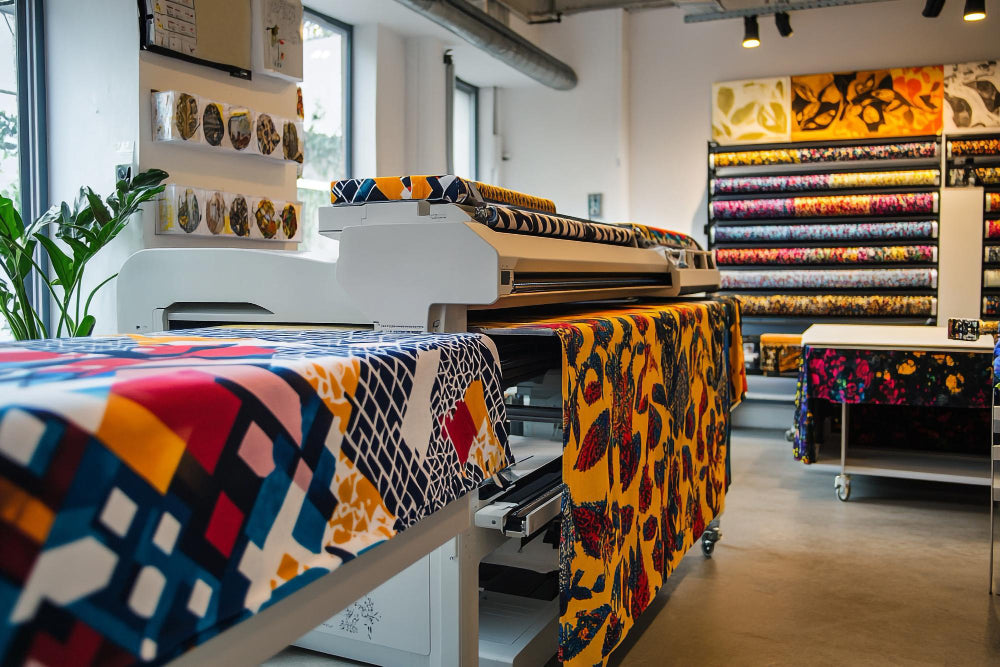
Home to well-known designers, independent labels, private-label producers, and international clothing brands, New York has long been one of the most significant fashion hubs in the world. Digital fabric printing in New York has become a crucial component of contemporary clothing manufacturing as fashion companies seek low-MOQ production, faster product development, and custom textile solutions. Digital printing gives brands the ability to produce vivid, high-resolution designs with more flexibility and lower setup costs, whether they are launching a capsule collection, testing seasonal prints, or creating large-scale retail programs.
In order to access a greater variety of fabrics, cutting-edge printing technologies, and scalable production, many brands now supplement local sourcing with global digital fabric printing suppliers, even though New York offers access to local textile printers and the historic Garment District. To assist fashion brands in making well-informed sourcing decisions, this article examines the best digital fabric printing suppliers in New York, printing techniques, supplier comparisons, and useful insights.
Quick Answer: Digital Fabric Printing in New York
New York fashion brands generally have two reliable routes into digital textile printing: sourcing locally and sourcing online through global B2B platforms such as Fabriclore, Spoonflower, or Contrado that ship proofed fabric directly to a New York address. Most brands end up using both — local printers for hands-on sampling and relationship-building, online platforms for low-MOQ testing and bulk reordering once a print is approved.
- Method: Inkjet-based printing directly onto fabric — no screens, no plates, no pre-press setup.
- Local MOQ: Roughly 10–25 yards for sampling; 100–300 yards for bulk wholesale.
- Online MOQ: As low as 100 meters per design on platforms like Fabriclore; some platforms accept single-yard orders.
- Turnaround: 5–10 days for local sampling, 2–4 weeks for local bulk; 24 hours for online swatches, roughly 15 days door-to-door for online bulk orders.
- Best for: Photorealistic or multi-color designs, frequent print changes, and private label programs that want sourcing, customization, and printing coordinated through as few partners as possible.
What Digital Fabric Printing Actually Is

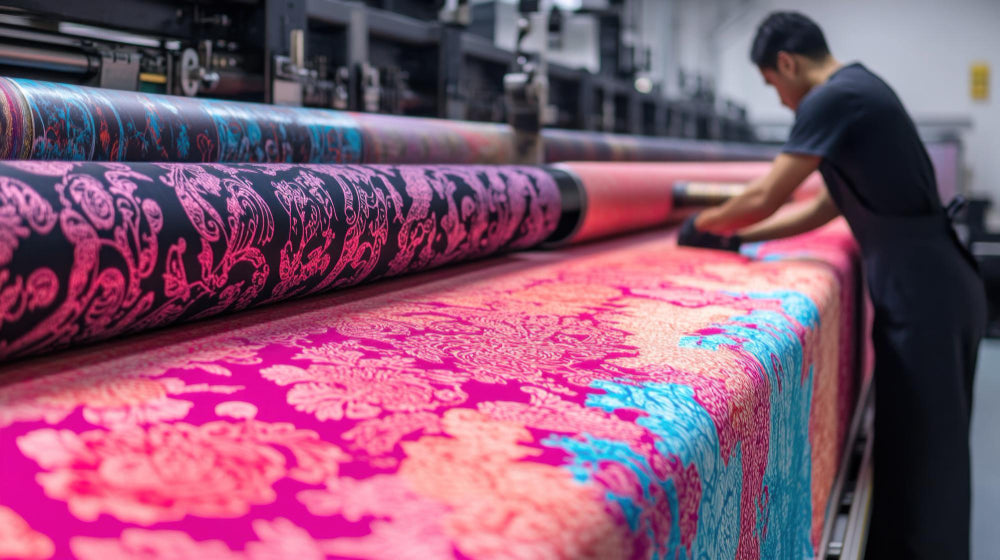
Digital textile printing uses computer-controlled inkjet nozzles to put dye or pigment directly on fabric. This skips the steps of making a screen and separating the colors that are needed for traditional printing. Because there are no setup costs, it's the best choice for custom digital fabric printing, private label print development, and print-on-demand fashion. Designers can get a finished sample right away.
|
Factor |
Digital Fabric Printing |
Traditional Screen Printing |
|
Setup cost |
Minimal — no screens required |
High — one screen per color |
|
Minimum order |
Low; sample runs from 10–100 meters common |
Higher; screens must be amortized over volume |
|
Color complexity |
Unlimited colors, gradients, photorealistic art |
Cost rises with each additional color |
|
Turnaround |
Fast — design-to-fabric in days |
Slower — screen production adds lead time |
|
Best for |
Short runs, frequent design changes, complex art |
Large, simple, repeat-order runs |
The method is still essential for digital printing. So that the dye stays on polyester and poly-blends, sublimation printing is the standard for activewear and resort wear. Natural fibers like cotton and silk work well with reactive printing because the colors stay true for a long time. Pigment printing can be done on more types of fibers and usually needs less water. Talk to any supplier, in person or online, about this before you commit to yardage.
The Main Digital Printing Methods
- Sublimation printing — With sublimation printing, the dye changes from a solid to a gas when heated, permanently bonding with polyester and poly-blend fibers. This method is great for activewear, swimwear, and resort wear that need bright colors that won't fade when washed.
- Pigment printing — A surface-level ink application that can be used on many types of fibers, including cotton. It is usually better for the environment because it uses less water, but the color depth may not be as deep as with reactive dyeing.
- Reactive printing — Chemically bonds dye to natural fibers like cotton and silk, creating deep, long-lasting color that stays true. This is the standard for high-end natural-fiber clothing and home textiles.
- Direct-to-garment (DTG) / direct-to-fabric — Prints directly on finished garments or uncut yardage; direct-to-fabric roll-to-roll systems have the largest share of the global market by printing process, showing how strongly the industry has moved toward printing fabric before cutting rather than after.
It's not just a technical choice between these two; it affects the fabrics you can use, the colors you can afford, and how well your color fastness holds up in wash tests, so you should talk to any potential digital textile printer about it before committing to yardage.
Where to Source Digital Fabric Printing in New York

Fashion brands have more ways to get their materials now than ever before. While New York's Garment District, Brooklyn, and Queens are still great places to find and try on textiles, many companies now use global digital fabric printing platforms to work with local suppliers. These platforms offer more fabrics, custom design, and production that can be scaled up or down.
Instead of relying on just one method of sourcing, successful brands often combine local knowledge with manufacturing in other countries to be more flexible and cut down on production costs.
Top Digital Fabric Printing Suppliers Serving New York
Finding the right supplier depends on how much you need to order, what kind of fabrics you need, and your production goals. The following comparison shows the best companies that work with New York fashion brands.
|
Supplier |
MOQ |
Fabric Range |
Custom Development |
Bulk Production & Shipping to NY |
|
Fabriclore |
From ~100 meters per design (digital); no-minimum swatch orders |
300+ certified fabric bases — cotton, silk, linen, viscose, sustainable fibers |
Digital, screen, and hand-block printing, plus mill dyeing and in-house design support |
Built for wholesale/private label; ships globally from India via air (~5–6 business days) or sea freight |
|
Spoonflower |
No minimum — order by the yard |
25+ fabric bases |
Upload-your-own-design digital printing only |
Built for small runs, not full-scale wholesale manufacturing; US-based (Durham, NC), ships worldwide in ~5 business days |
|
Contrado |
No minimum |
140+ fabric bases |
Digital printing (sublimation, reactive, pigment) plus in-house cutting, hemming, and finishing |
UK-based (London); 24–48hr UK turnaround, longer international shipping to New York |
|
Raspberry Creek Fabrics |
Retail by the half-yard; custom private-label development may require higher minimums |
Apparel-focused: knits, wovens, performance fabrics |
Digital printing (sublimation, pigment), Oeko-Tex certified inks, partners with US cut-and-sew shops |
US-based (Utah); domestic shipping, fast to New York, smaller-scale operation |
|
Digital Fabrics |
From 1 meter |
Natural and polyester fashion/interior bases |
Digital printing with design and proofing support; in-house sewing for finished products |
Sydney, Australia-based; wholesale/trade printing available, but international shipping to New York adds significant lead time |
|
Local NYC print companies (category) |
Varies; often 100–300 yards for bulk, some sample-friendly |
Limited to what each vendor stocks |
Strong for fabric-level specialists; face-to-face consultation |
No shipping needed for local pickup; many pair directly with nearby cut-and-sew factories |
Expert Insight
For fabric inspection, sample approvals, and quick production, local suppliers are great. But brands that want to make seasonal collections or wholesale programs often work with global digital fabric printing partners that help them make custom fabrics, offer more material options, ensure the quality of the fabrics, and offer better prices for larger orders.
Local vs. Global Digital Fabric Printing
Plenty of brands want to know if they should buy fabrics from nearby or from other countries. The answer depends on how much is being made, how long it takes, and how much customization is needed.
|
Factor |
Local NYC Sourcing |
Global Online Platforms (e.g., Fabriclore) |
|
Price |
Higher per-unit, reflecting US labor and rent costs |
Generally lower per-meter, especially at bulk volumes |
|
MOQ |
Often 100–300 yards for bulk fabric printing; some shops accept smaller samples |
As low as 100 meters per design; no-minimum swatch orders common |
|
Quality control |
In-person inspection, same-day troubleshooting |
Lab-tested reports (GSM, shrinkage, colorfastness) shipped with the order |
|
Lead time |
2–4 weeks bulk, no freight delay once approved |
Swatches in 24–48 hours; bulk orders add production plus freight time |
|
Fabric selection |
Limited to what a given local vendor stocks |
Broader catalogs — often hundreds of fabric bases aggregated across mills |
|
Scalability |
Constrained by local factory capacity; best for small-to-mid runs |
Built for repeat ordering from swatch to full wholesale volume |
A hybrid sourcing strategy is used by many well-known fashion brands to make samples locally while relying on global suppliers for custom fabrics and bulk production. This method speeds up the development of new products, makes them easier to scale, and lowers long-term costs.
Why Fashion Brands Choose Fabriclore

As fashion collections become more focused on design and production times keep getting shorter, brands are looking for sourcing partners that can do more than print on fabric. They need a way to do fabric sourcing, custom printing, quality assurance, and garment manufacturing all in one easy-to-understand step. This unified method cuts down on coordination between suppliers, speeds up development, and makes sure that quality is higher from small batches to large production.
Fabriclore uses this end-to-end sourcing model, which lets fashion brands, designers, and manufacturers make custom textiles and makes managing production easier.
Fabriclore at a Glance
|
Capability |
Offering |
|
Fabric Collection |
5,000+ fabric options across natural, blended, and sustainable textiles |
|
Certified Fabric Bases |
300+ certified fabrics sourced from trusted mills |
|
Digital Fabric Printing MOQ |
Starting from 100 meters |
|
Screen Fabric Printing |
Starting from 500 meters |
|
Hand Block Printing |
Starting from 200 meters |
|
RFD Fabrics |
Available with no MOQ |
|
Custom Fabric Development |
Print development, Pantone matching & repeat creation |
|
Garment Manufacturing |
Private-label & OEM production |
|
Quality Assurance |
20+ quality checkpoints throughout production |
|
Global Shipping |
Domestic & international delivery (Worldwide) |
If a brand wants to grow quickly, getting fabric, printing, and manufacturing all done by the same partner can cut down on lead times, make communication better, and make sure that the quality of every production batch is the same.
Choosing the Right Digital Fabric Printing Supplier
Not every company that does digital printing can do the same things. Before choosing a supplier, look at more than just price to make sure they meet your quality and production goals.
What to Consider Before Ordering
- Fabric Compatibility – Check that the supplier has the right fabrics for your collection, like cotton, linen, silk, rayon, polyester, or eco-friendly blends.
- MOQ Flexibility – Review the sample sizes and bulk production needs against each other to make sure they fit your business stage.
- Print Quality – You can ask for printed swatches to check the color accuracy, print sharpness, and general feel of the fabric.
- Pantone Color Matching – Verify that the supplier can reproduce brand colors in a way that is consistent across multiple production runs.
- Quality Testing – Before the item is shipped, make sure it has been tested for shrinkage, colorfastness, and washability.
- Production Capacity – Find a supplier that can do both small-scale development and large-scale production.
- Shipping & Logistics – Check to see if there are international shipping options, estimated delivery times, and the ability to track your order.
Choosing a supplier with strong technical knowledge and production capabilities that can be scaled up or down lowers the risks of sourcing and helps the business grow in the long term.
Cost, MOQ, Production Timeline & Quality Expectations
If you know about MOQ, lead times, quality standards, and pricing, you can make smart choices about where to source your goods, whether you're making a small capsule collection or planning a big retail launch.
|
Factor |
Typical Expectation |
|
Minimum Order Quantity (MOQ) |
100 meters for digital fabric printing; selected RFD fabrics available with no MOQ. |
|
Production Timeline |
Sample development: 2–3 business days • Bulk printing: 21–45 days, depending on fabric availability and print complexity. |
|
Shipping to New York |
Air Freight: 5–6 business days • Sea Freight: 25–35 business days, depending on destination and customs clearance. |
|
Quality Standards |
Pantone color matching, print sharpness, wash-fastness, shrinkage testing, fabric inspection, and 20+ quality checkpoints. Manufacturing facilities may also comply with SEDEX and ISO 9001 standards. |
|
Pricing Factors |
Based on fabric type, print coverage, artwork complexity, order quantity, finishing requirements, and shipping method. Larger volumes generally reduce the per-meter cost. |
|
Recommended Order Size |
100–500 meters for sampling and new collections; 500+ meters for commercial production and wholesale programs. |
Expert Insight
New York fashion brands start with a 100-meter digital print run to make sure the art is correct, see how much demand there is in the market, and get feedback from customers. Once a design works well, it is made in larger quantities, which lowers the cost per unit while keeping quality high and lowering the risk of running out of stock.
Conclusion
Digital fabric printing has changed how designers, manufacturers, and New York fashion brands make custom textiles. It gives you the freedom you need to compete in today's fashion industry, where styles change quickly, by letting you make vibrant, high-resolution prints with low minimum order quantities and quick sampling.
Local suppliers are still useful for developing products and getting sample approvals. Still, many brands now combine local knowledge with global digital fabric printing partners to get access to more fabrics, more advanced printing technologies, more affordable production, and the ability to make more products at once. Businesses can cut down on development time, get the best deal on production costs, and make their supply chains more reliable by using this hybrid sourcing method.
If you want to start a new fashion label, grow your private label collection, or get fabrics for commercial production, you need to find the right digital fabric printing supplier. This will help you get consistent quality, quick production, and long-term business success.
FAQ
1. What Is Digital Fabric Printing, And How Is It Different From Screen Printing?
Digital fabric printing doesn't use screens or plates; instead, it uses inkjet technology to print designs directly on fabric. This works great for printing small amounts of artwork with lots of details in any color. Screen printing is cheaper for big orders with simple designs because you don't have to use separate screens for each color.
2. Where Can I Buy Digital Fabric Printing In New York?
It is possible to buy digital fabric printing in New York at printers in the Garment District, Brooklyn, and Queens. There are also global wholesale digital fabric suppliers that can print on demand, find fabrics, and ship them directly to New York from other countries.
3. What Is The Typical MOQ For Digital Fabric Printing?
Most wholesale suppliers offer digital fabric printing from 100 meters. You can also get fabric swatches and some RFD fabrics with no minimum order quantity, which makes it easier to test designs before making a lot of them.
4. How Long Does Digital Fabric Printing Take?
Bulk digital fabric printing usually takes 21–45 days, while sample development usually takes 2–3 business days. It takes 5–6 business days by air or 25–35 business days by sea to ship something to New York most of the time.
5. Can I Order Custom-Printed Fabric Online?
Yes. A wide variety of global B2B fabric sourcing platforms let you upload your artwork, order printed swatches, and approve colors from afar. You can then have bulk fabric sent straight to your studio or factory.
6. Which Fabrics Work Best For Digital Printing?
Fabrics like cotton, linen, rayon, viscose, modal, silk, polyester, and organic cotton are very popular. The best way to print on a fabric depends on what it will be used for.
We also happen to be a magnet for suggestions, and would love to catch yours….throw us yours at hello… @fabriclore.com
Learn, Create & Grow with us