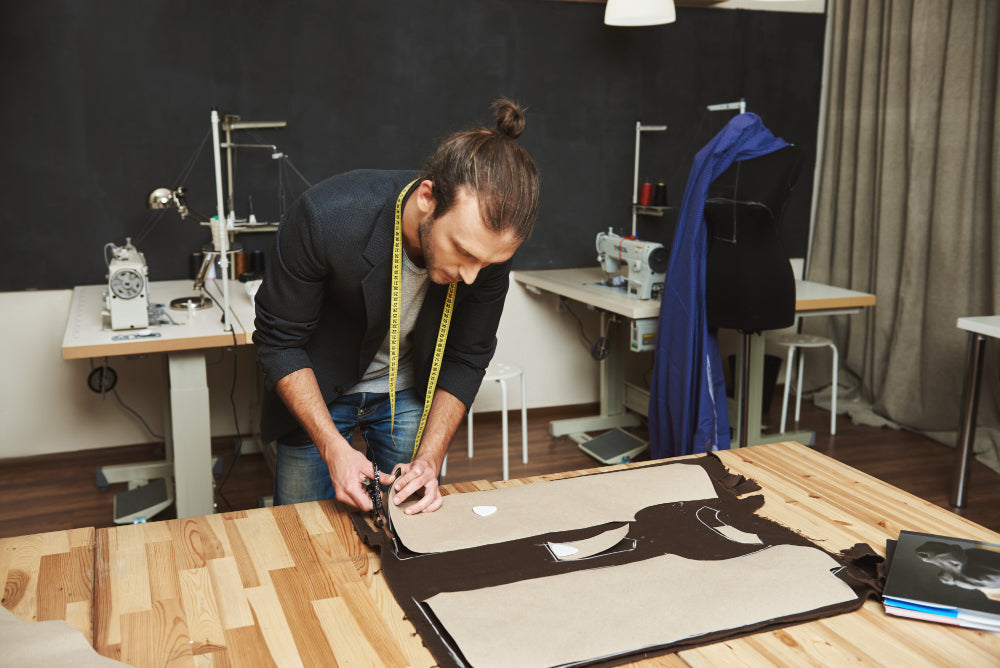
In today's competitive fashion industry, transforming a design concept into a market-ready product requires efficient fabric sourcing, reliable production processes, and a well-coordinated supply chain. Yet many brands face challenges long before a product reaches consumers, such as delays in textile sourcing, inconsistent material quality, supplier communication gaps, and unpredictable lead times, which can disrupt launches and impact profitability.
Often, these problems happen because production networks are broken up, with fabric mills, dye houses, printing units, garment makers, and transportation companies all working on their own. The management of multiple providers gets harder to control and more complicated as a business grows.
To overcome these challenges, brands are embracing integrated textile sourcing, digital supply chain management, and end-to-end apparel manufacturing solutions. The Fabriclore Sourcing Intensive brings together fabric discovery, custom fabric development, fabric dyeing, textile printing, quality assurance, and garment manufacturing within a single framework—helping fashion brands streamline production, reduce sourcing risks, and scale efficiently from concept to commercial production.
Fabriclore Sourcing Intensive at a Glance

What Is Fabriclore Sourcing Intensive?
The Fabriclore Sourcing Intensive is a tech-driven framework for textile sourcing and manufacturing. It streamlines all stages of apparel production, including material selection, custom processing, garment manufacturing, and bulk scaling.
Instead of dealing with different suppliers one at a time, brands can use a single tool that combines information about textiles, labor resources, and the supply chain.
Key Benefits
- Access to 5,000+ fabric options across natural, blended, and sustainable textiles.
- Comprehensive fabric sourcing, development, and customization services.
- Expert custom dyeing, digital printing, and rotary printing capabilities.
- 20,000+ meters monthly processing capacity supported by a scalable manufacturing network.
- End-to-end order lifecycle visibility and production tracking.
- Faster and more predictable production timelines.
- Consistent quality from sampling to bulk manufacturing.
- Integrated garment manufacturing and production support.
- Access to sustainable materials including Organic Cotton, TENCEL™ Lyocell, EcoVero™ Viscose, Modal, and Linen.
- Technology-backed processes supported by experienced textile professionals.
The Fabriclore Sourcing Intensive helps fashion brands feel more confident, efficient, and in charge as they move from the drawing table to the production floor.
The Hidden Cost of Fragmented Apparel Sourcing
One problem that is often ignored in the fashion industry is the fragmentation of suppliers.
Plenty of brands think that sourcing is done when they buy the fabric. In truth, sourcing goes on throughout the whole production process, from coming up with new materials and processing fabrics to making clothes and delivering them to the customer.
In traditional sourcing models, brands usually work with a number of separate partners to:
Design Team → Fabric Supplier → Dye House → Printer → Quality Inspector → Garment Factory → Logistics Partner
Each supplier may do their job well, but there isn't always good communication between steps. This creates operating blind spots that raise the risk of mistakes and slow down work.
Common Problems Created by Fragmented Sourcing
- Inconsistent fabric quality across production batches
- Delayed communication between suppliers
- Lack of accountability when defects occur
- Longer sourcing and manufacturing lead times
- Repeated sampling and approval cycles
- Limited production visibility
- Difficulty scaling successful products
- Increased inventory and forecasting risks
For instance, a custom-printed cotton fabric might pass the first test, but after washing, the colours might look different. The printer might say the problem is with the dye house, but the dye house might say it's with the cloth mill. In the meantime, the fashion brand deals with the cost, the slowdown in production, and the unhappy customers.
As brands move into new areas, release more collections, or make more products, these problems become even bigger.
It's not always the quality of the individual providers that's the issue; it's when they don't work together.
And this is exactly what the Fabriclore Sourcing Intensive is meant to fill.
The Fabriclore Sourcing Intensive Framework: A Smarter Approach to Fashion Production
Fashion brands that do well know that sourcing isn't a one-time deal; it's an ongoing process that affects product quality, production timelines, profits, and customer happiness. As supply chains get more complicated, controlling sourcing through a lot of different, unconnected suppliers adds extra risk and waste to operations.
The Fabriclore Sourcing Intensive was created to deal with this problem by building a single environment that links all the important steps in the production process. The framework doesn't split the tasks of finding fabrics, processing them, and making clothes; instead, it puts them all together in a structured workflow that is meant to be fast, clear, and scalable.
The Fabriclore Sourcing Intensive is built around four main ideas:
|
Phase |
Objective |
|
Fabric Discovery & Validation |
Identify production-ready fabrics and verify technical performance |
|
Custom Development & Processing |
Develop unique fabrics through dyeing, printing, and finishing |
|
Order Lifecycle Management |
Provide real-time visibility across sourcing and production stages |
|
Integrated Garment Manufacturing |
Ensure seamless transition from fabric development to finished garments |
This unified method helps brands simplify their buying while keeping better control over quality, costs, and delivery times.
Phase 1: Fabric Discovery and Technical Validation
The correct materials are the building blocks of any great collection. Still, choosing the fabric is one of the most common mistakes people make when they source.
A lot of brands judge fabrics mostly by how they look, how much they cost, or how easy they are to get. But a fabric that looks great when it's being designed could be hard to make if important function factors aren't taken into account.
As an example:
- A fabric may shrink excessively after washing.
- Colors may appear inconsistent between batches.
- Certain fabrics may not perform well with specific printing techniques.
- Stretch recovery may impact garment fit and durability.
These issues often emerge only after production begins, resulting in costly delays and product revisions.
Building Production-Ready Collections from Day One
The first part of the Fabriclore Sourcing Intensive is a centralised fabric sourcing and material validation process that is meant to lower these risks before they happen in production.
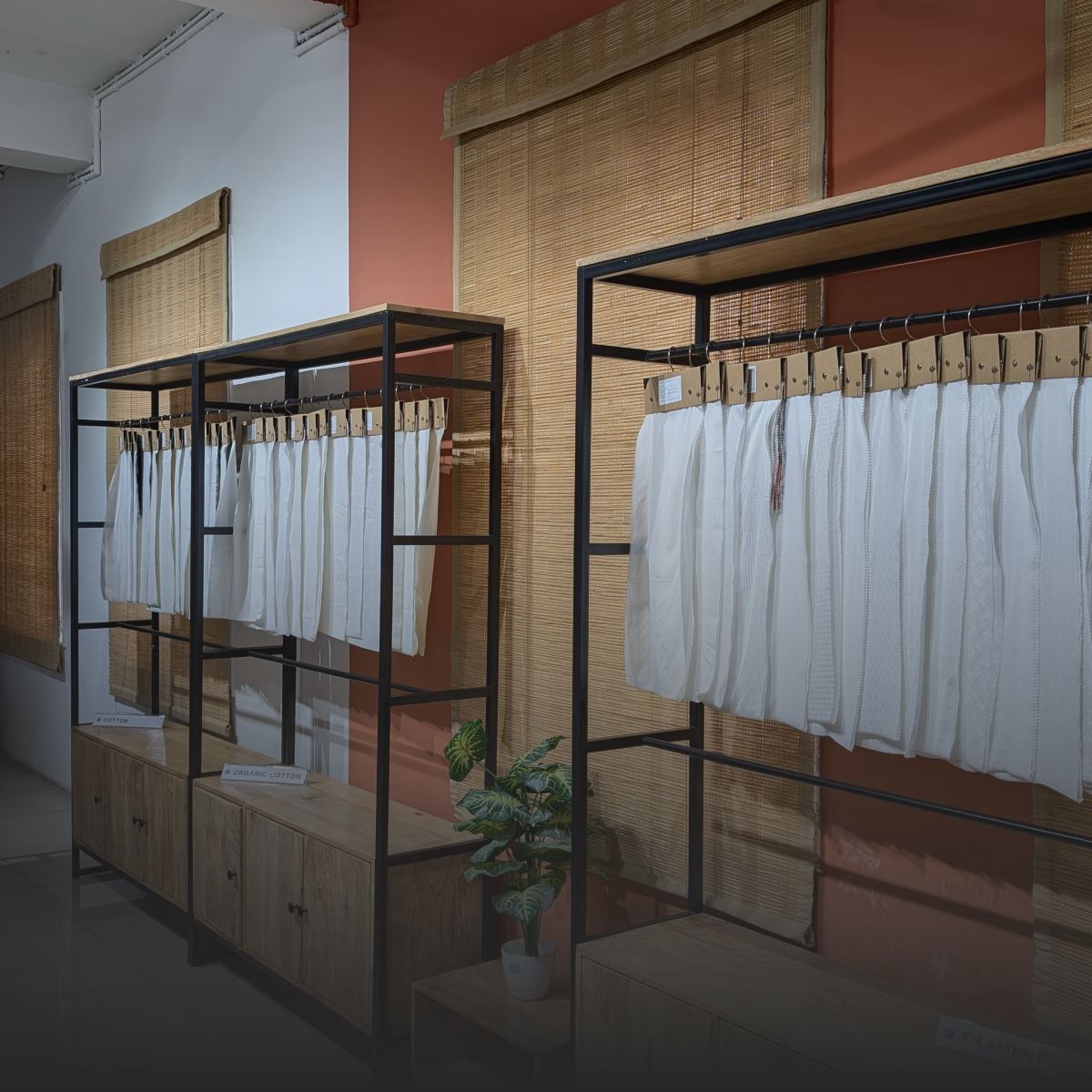
Brands can choose from 5,000+ fabric options in a number of different categories, such as
1. Natural Fabrics
- Cotton
- Linen
- Silk
- Hemp
2. Sustainable Textiles
- Organic Cotton
- TENCEL™ Lyocell
- EcoVero™ Viscose
- Modal
3. Blended and Performance Fabrics
- Stretch fabrics
- Technical knits
- Functional blends
- Fashion-forward woven textiles
In addition to choosing the right materials, clothes are also tested technically to make sure they meet the needs of production.
Key Validation Parameters
- GSM (Fabric Weight) Consistency
- Color Fastness
- Shrinkage Control
- Fabric Strength
- Print Compatibility
- Dye Absorption Performance
- Drape and Hand Feel Assessment
By checking these traits early on, brands can make better choices about where to get their materials and greatly lower the risks of development.
Industry Insight
Rework that needs to be done because of problems with the fabric that were found too late in the process is one of the highest secret costs of making clothes. Technical validation early on can often keep costly changes from having to be made during sampling and mass production, which saves time and money.
Phase 2: Custom Fabric Development and Processing
After picking out the base fabric, the next step is to turn it into a product that fits with the brand's creative concept.
At this stage, many fashion brands have dye houses, printing facilities, and finishing teams that work together very closely. Managing these providers on your own can cause delays in approval, inconsistent quality, and trouble with communication.
A fabric development and textile processing ecosystem built into the Fabriclore Sourcing Intensive makes this process easier.
Advanced Custom Dyeing Solutions
Consistency in colour is important for making a brand character that people can recognise. Brands need to be sure that colours will stay the same across production runs, whether they are making a seasonal selection or restocking a best-seller.
Fabriclore works with:
- Custom Pantone Matching
- Reactive Dyeing
- Pigment Dyeing
- Low-Impact Dyeing Processes
- AZO-Free Colorants
This makes sure that the colours that were created during sampling can be used correctly during mass production.
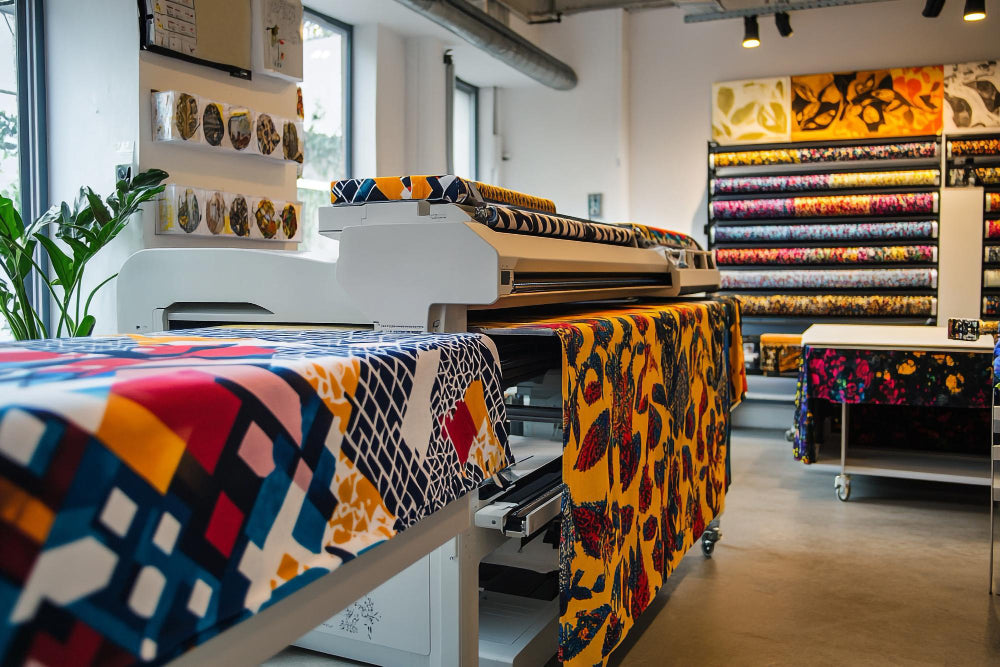
Fabric Printing Capabilities
When a brand goes from developing a product to mass production, their printing needs often change.
To help with this change, Fabriclore provides:
1. Digital Fabric Printing
Ideal for:
- Sampling
- Prototype development
- Small-batch production
- Market testing
2. Rotary and Screen Printing
Ideal for:
- High-volume production
- Consistent pattern repetition
- Commercial-scale manufacturing
This flexibility allows brands to scale without changing suppliers or compromising design integrity.
Why This Matters
Brands have more control over quality when fabric development, dyeing, and printing all work together in a connected environment. Approval times and production delays are also cut down.
As a result, the process of going from idea to production-ready for the market is faster.
Phase 3: Order Lifecycle Automation and End-to-End Production Visibility
One of the most annoying things about traditional textile sourcing and apparel manufacturing is that you can't see what's going on after you make an order.
A lot of time is spent by many fashion brands following up with multiple sources to find out how production is going, when items will be delivered, and where quality checks are happening. It's hard to keep track of the production process when important data is spread out across emails, spreadsheets, phone calls, and third-party providers in a fragmented sourcing environment.
As a company grows, this lack of openness can cause:
- Delayed product launches
- Inventory planning challenges
- Production bottlenecks
- Missed sales opportunities
- Increased operational costs
- Unpredictable lead times
Visibility is no longer just a nice-to-have for modern fashion brands; it's now a competitive benefit.
Bringing Transparency to the Sourcing Journey
The Fabriclore Sourcing Intensive includes order lifecycle automation to make the whole process of sourcing and production more clear.
Instead of communicating in separate ways, brands can see the progress of their orders in one place. This helps teams make decisions more quickly and with more information.
Some important parts of the production process that can be watched are
- Fabric sampling
- Material approvals
- Dyeing progress
- Printing schedules
- Quality inspections
- Garment production milestones
- Dispatch and delivery readiness
Benefits of End-to-End Supply Chain Visibility
Increased visibility benefits fashion brands.
- Improve production forecasting
- Reduce communication delays
- Identify bottlenecks earlier
- Manage inventory more effectively
- Improve on-time delivery performance
- Strengthen supplier accountability
Industry Observation
The majority of the time, source delays happen not because output stops, but because information stops moving. Small delays can turn into missed launch windows and product gaps when teams can't see what their suppliers are doing. These blind spots are lessened by a linked production environment, which also makes supply chain management more effective.
Phase 4: Seamless Garment Manufacturing Integration
Fabric procurement is just one aspect of the clothing production process.
The true test of a sourcing strategy occurs when fabric transitions from development to manufacturing.
Many fashion designers find that a cloth that performs well in sampling behaves differently in bulk production. Shrinkage, stretch recovery, fabric grain, weight fluctuations, and finishing treatments all have an impact on manufacturing efficiency and ultimate garment quality.
When fabric development and garment manufacturing are handled separately, significant technical information is frequently lost across vendors.
This can result in:
- Pattern inconsistencies
- Fabric wastage
- Cutting inaccuracies
- Sewing challenges
- Higher rejection rates
- Increased production costs
Connecting Fabric Expertise with Manufacturing Execution
This is fixed by the Fabriclore buying Intensive, which brings together fabric buying, textile processing, and garment making into a single production environment.
Because manufacturing teams have access to the fabric's whole technical history, they may make informed decisions throughout the manufacturing process.
This includes:
- Pattern development and grading
- Marker planning
- Fabric consumption optimization
- Cutting specifications
- Sewing adjustments
- Finishing requirements
The accepted sample and the final production run are now more consistent as a result.
Traditional Sourcing vs. The Fabriclore Sourcing Intensive
To understand the benefits of an integrated sourcing strategy, it is helpful to look at an example of the Fabriclore Sourcing Intensive and compare it to standard supplier-led sourcing models.
|
Operational Area |
Traditional Sourcing Model |
Fabriclore Sourcing Intensive |
|
Supplier Management |
Multiple Independent Vendors |
Unified Sourcing Ecosystem |
|
Fabric Sourcing |
Fragmented |
Centralized and Coordinated |
|
Quality Control |
Vendor-Specific |
Integrated Quality Oversight |
|
Production Visibility |
Limited |
End-to-End Tracking |
|
Lead Time Management |
Reactive |
Proactive and Predictable |
|
Production Flexibility |
Limited Capacity Adaptability |
Flexible and Scalable Manufacturing Support |
|
Accountability |
Shared Across Vendors |
Centralized Coordination |
|
Production Scalability |
Complex and Resource-Intensive |
Structured and Growth-Oriented |
|
Risk Management |
Reactive Problem Solving |
Preventive Planning and Control |
An integrated sourcing model is a more effective way for fashion brands to manage their suppliers than having to deal with a lot of separate ones. This is because it improves efficiency, quality control, and the coordination of the supply chain. Businesses can simplify their operations, make better decisions, and speed up production times by combining buying, processing, and manufacturing into a single framework.
Expert Perspective
Lowering the cost of sourcing isn't the only thing that will shape the future of fashion manufacturing. Supply chain flexibility, operational openness, and reliable production are also very important. When brands join fabric sourcing, textile development, production management, and garment manufacturing, they are better able to keep quality high, adapt to changes in the market, and grow quickly.
The Fabriclore Sourcing Intensive shows this change by turning sourcing from a disorganised process into a production framework that is streamlined, scalable, and strategically controlled.
Supporting Growth Through a Connected Production Framework

Since fashion names are getting bigger, it gets harder to keep sourcing, processing, and manufacturing consistent. Supply chains are often put under more stress when companies add new products, enter new markets, or handle bigger production volumes.
Businesses may face longer wait times, quality variations, harder supplier management, and less operating visibility if they don't have a coordinated sourcing strategy.
The Fabriclore Sourcing Intensive connects fabric sourcing, textile development, fabric processing, and garment manufacturing in one production framework to tackle these challenges. Backed by a distributed manufacturing network and over 20,000 meters of monthly processing capacity, Fabriclore helps brands grow production while keeping quality, consistency, and control.
Key Advantages for Growing Fashion Brands
- Greater supply chain visibility and operational control
- Improved production planning and forecasting
- Consistent quality across production runs
- Better coordination between sourcing and manufacturing teams
- Streamlined communication and faster decision-making
- Flexible manufacturing support for evolving production requirements
The Fabriclore Sourcing Intensive helps fashion firms reduce sourcing complexity and improve production efficiency, so they can focus on growth with trust in their supply chain operations.
Why Leading Fashion Brands Are Moving Toward Integrated Sourcing Models
The world of fashion is moving at a quick pace.
As consumer expectations evolve, supply chains get more complicated, and businesses are under greater pressure to provide goods more quickly, while still meeting quality and sustainability criteria.
Traditional sourcing approaches are getting more and more difficult to maintain in this context.
The Shift Toward Connected Supply Chains
In the past, fashion sourcing meant handling different suppliers for:
- Fabric sourcing
- Dyeing
- Printing
- Quality testing
- Garment manufacturing
- Logistics
This model was flexible, but it often led to wasteful practices that slowed down production and raised practical risks.
These days, more and more brands are using integrated textile sourcing solutions that bring these functions together in one environment.
Key Drivers Behind This Shift
1. Faster Product Development Cycles
Styles change quickly. To stay competitive and keep up with changing customer needs, brands need to cut down on the time it takes to create new products.
2. Greater Supply Chain Transparency
For modern businesses to make smart choices and reduce uncertainty, they need to be able to see everything that goes into buying and production.
3. Sustainability and Traceability Requirements
Increasingly, consumers, sellers, and lawmakers want brands to be open about how they source materials, where they come from, and how they are made.
4. Demand-Driven Production Models
Getting rid of extra inventory and making better use of inventory have become top goals for fashion companies all over the world.
5. Digital Transformation in Manufacturing
By giving brands better data and insight, technology-enabled sourcing tools help them make better predictions, plan their production more efficiently, and run their businesses more smoothly.
A New Standard for Fashion Production
It's no longer just a convenience that integrated sources are becoming a strategic benefit.
When brands can connect sources, development, production, and awareness in a single system, they are often better able to:
- Launch products faster
- Reduce sourcing risks
- Improve product consistency
- Optimize inventory levels
- Scale more efficiently
This change in the industry is one of the main reasons why fashion brands around the world that want to grow are increasingly turning to combined solutions like Fabriclore Sourcing Intensive.
How to Maximize Results with the Fabriclore Sourcing Intensive
Brands should see sourcing as a strategic business function instead of a transactional activity if they want to get the most out of an integrated sourcing environment.
1. Start with Production-Ready Materials
Choosing materials that have been tested formally early on can help avoid quality problems, changes to samples, and production delays later on.
2. Use Low MOQ Production to Test Demand
Instead of keeping too much goods on hand, brands can test the market with smaller production runs before going big.
3. Leverage Custom Development Capabilities
Custom printing, dyeing, and fabric development let brands make unique goods that help them stand out in the market and improve their brand personality.
4. Monitor Production Through Real-Time Visibility
Using tools for tracking orders and seeing what's happening in production speeds up decision-making and improves forecasts.
5. Scale Through a Consistent Ecosystem
When you keep the same buying and manufacturing system from sampling to large production, you can keep the quality consistent while making operations simpler.
Expert Perspective
The most successful fashion brands don't just see sources as a way to buy things. They see it as a way to grow.
Brands can make their production processes more reliable and effective in the long term by combining fabric sourcing, textile development, apparel manufacturing, and supply chain visibility.
Conclusion
As fashion supply lines get more complicated, brands need fast, consistent, and expandable ways to source materials. The Fabriclore Sourcing Intensive makes the process of going from fabric sourcing and custom textile development to garment manufacturing easier. This helps brands make their operations simpler and their production more efficient.
Fabriclore supports fashion brands and businesses to launch goods faster, keep quality high, and grow with trust by giving them access to 5,000+ fabrics, flexible low-MOQ production, custom processing options, and a connected production framework.
The Fabriclore Sourcing Intensive is a better way for fashion brands to go from an idea to mass production because it offers a more reliable way to handle textile sourcing, apparel manufacturing, and supply chain management.
FAQ’s
1. What Is Fabriclore Sourcing Intensive?
Fabriclore Sourcing Intensive is a complete textile sourcing and apparel manufacturing solution that brings together finding fabrics, making sure the materials are good, custom dying, printing on fabrics, checking for quality, and making clothes all in one environment. It makes sourcing easier by lowering the number of different suppliers and making output more visible.
2. How Does The Fabriclore Sourcing Intensive Reduce Sourcing Risks?
In traditional fabric sourcing, there is often more than one source, which makes it more likely that there will be communication problems and differences in quality. These problems are kept to a minimum with Fabriclore Sourcing Intensive's unified planning, technical fabric validation, built-in quality control, and real-time tracking of production.
3. How Does Fabriclore Support Growing Fashion Brands?
Through a combined sourcing and production structure, the Fabriclore Sourcing Intensive helps brands simplify sourcing, improve production visibility, keep quality consistent, and make manufacturing more efficient at scale.
4. Does Fabriclore Provide Sustainable Fabric Sourcing Options?
Yes. Organic Cotton, TENCELTM Lyocell, EcoVeroTM Viscose, Modal, and Linen are just some of the sustainable fabrics that brands can choose from. These materials help brands meet rising standards for sustainability and support efforts to source materials responsibly.
5. What Types Of Fabric Customization Services Are Available?
Fabriclore provides a range of custom fabric development services, such as custom dyeing, Pantone color matching, digital fabric printing, rotary printing, and fabric finishing, to meet the specific needs of product development.
6. Why Is Supply Chain Visibility Important In Apparel Manufacturing?
Supply chain visibility lets brands keep an eye on actions like buying, processing, manufacturing, and shipping in real time. This helps make better predictions, cut down on production delays, plan supplies better, and make better business decisions.
7. Is The Fabriclore Sourcing Intensive Suitable For DTC Fashion Brands?
Of course. Direct-to-consumer (DTC) fashion brands, private-label businesses, buying teams, and growing clothing companies that need flexible production, uniform quality, and scalable manufacturing support will find this option very useful.
8. How Does Integrated Textile Sourcing Improve Production Efficiency?
Integrated textile sourcing makes things run more smoothly by bringing together the buying of fabrics, handling of textiles, quality control, and making of clothes in one environment. This makes it easier for suppliers to work together, cuts down on wait times, boosts communication, and makes the whole production process faster, from sampling to mass production.
9. What Are The Key Benefits Of Using An End-To-End Textile Sourcing Platform?
Key benefits include:
- Faster production timelines
- Access to verified fabric suppliers
- Better quality control
- Low MOQ and scalable production
- Real-time production tracking
- Reduced sourcing risks
- Improved supply chain transparency
- Consistent quality from sampling to bulk production
These benefits help fashion brands organize their operations, make more money, and grow without worrying about what will happen.
We also happen to be a magnet for suggestions, and would love to catch yours….throw us yours at hello… @fabriclore.com
Learn, Create & Grow with us