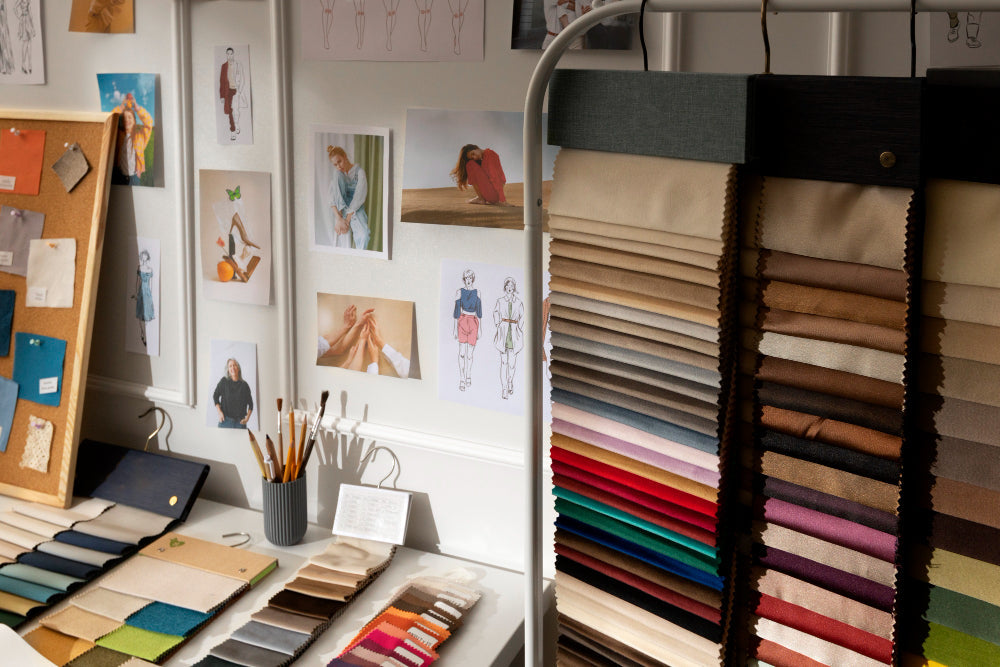
With digital fabric sourcing, AI-powered design tools, and low MOQ manufacturing, the fashion industry around the world is changing quickly. This means that Virtual Fabric Libraries (VFLs) are the way of the future for sourcing textiles. Cloud-based fabric platforms are replacing traditional sourcing, which relied on physical swatches and long sampling processes. These platforms offer instant global access, faster decision-making, and long-term sourcing solutions.
These digital environments let brands try out different fabrics, design virtual clothes, and run production more smoothly. Virtual Fabric Libraries are changing the way fashion companies work by making them faster, more flexible, and less expensive. We will talk about their benefits, technologies, and effects on sourcing in the next piece.
What Are Virtual Fabric Libraries?
High-resolution scans, digital twins, and technical data make up a Virtual Fabric Library, a cloud-based digital tool that lets you view many different fabrics. Instead of static catalogs, these tools let you explore fabrics interactively and data-drivenly.
Key Components of Virtual Fabric Libraries
- Digital Fabric Twins: Physics-based replicas that simulate real fabric behavior.
- High-Resolution Textures: Detailed visualization of weave, grain, and finish.
- Technical Specifications: GSM, composition, shrinkage, stretch, and durability.
- Color Accuracy Systems: Spectral calibration ensuring near-perfect color matching.
- Integration with 3D Tools: Compatibility with CLO 3D, Browzwear, and other platforms.
Because of these features, brands can make informed sourcing decisions without waiting for physical samples, thereby significantly reducing development time.
Evolution of Textile Buying: From Physical to Digital
In the last ten years, buying textiles has changed from a slow, manual process to digital fabric sourcing ecosystems. These ecosystems enable fashion brands to make decisions faster, access fabrics worldwide, and use data to make better, more efficient sourcing decisions.
Traditional Fabric Buying Challenges
- Having to use actual swatches.
- Long periods of time for sampling (2–6 weeks).
- Shipping and transportation costs are very high.
- Limited access to suppliers.
- Not being able to see the goods in real time.
Shift Toward Digital Fabric Sourcing
Virtual sourcing platforms are something that modern fashion brands are using because:
- Making decisions faster.
- Use of foreign suppliers.
- Sample costs have gone down.
- Better agreement with sustainability.
From manual sourcing processes to tech-enabled textile ecosystems, this change is a step forward.

Why Virtual Fabric Libraries Are the Future of Textile Buying
Virtual Fabric Libraries are changing the way textiles are bought by providing speed, cost efficiency, sustainability, and global collaboration. This helps brands keep up with the fast-changing fashion cycles and makes textile buying more accurate and scalable.
1. Faster Time-to-Market
In today's fashion processes, speed is very important.
- Instant access to fabric selections from around the world.
- Design and prototyping in real time.
- Sample wait times were cut from weeks to hours.
This makes it easier for brands to adjust to trends and release new collections more quickly.
2. Cost Optimization for Brands
There are hidden costs associated with buying fabric, such as shipping, sampling, and inventory risks.
Virtual libraries help cut down on:
- Sampling costs by up to 60–80%.
- Logistics expenses.
- Inventory holding costs.
This is especially helpful for small fashion brands and startups that don't have much money to spend.
3. Sustainable Fabric Sourcing
Sustainability is no longer a choice; it's a must.
With Virtual Fabric Libraries, you can:
- Reduction in fabric waste.
- Lower carbon emissions from shipping.
- Access to certified sustainable fabrics.
Global rules can help brands do things like:
- GOTS (organic textiles).
- OEKO-TEX (chemical safety).
- GRS (recycled materials).
4. Global Accessibility & Collaboration
Virtual platforms eliminate location-based restrictions.
- In real time, buyers, designers, and producers can work together.
- Easy for teams around the world to communicate.
- Shorter times for approval.
This is very important for international private-label production and bulk apparel exports.
5. Data-Driven Decision Making
Virtual Fabric Libraries provide specific information to help you source more accurately.
- Performance figures for the fabric.
- Comparisons of costs.
- Transparency from suppliers.
This reduces the risk and improves the result.

Technologies Powering Virtual Fabric Libraries
Virtual Fabric Libraries are powered by cutting-edge technologies such as AI, 3D simulation, cloud platforms, and blockchain. These technologies make it possible to see accurate images of fabrics, source them in real time, and have clear, tech-enabled supply lines for buying textiles today.
AI & Machine Learning
- Predict fabric behavior.
- Recommend materials based on design needs.
- Optimize sourcing decisions.
3D Simulation & Digital Twins
- Realistic fabric draping.
- Virtual garment visualization.
- Accurate fit simulation.
Cloud-Based Platforms
- Centralized fabric databases.
- Real-time inventory updates.
- Seamless collaboration.
Blockchain & Transparency Tools
- Get details on the supply chain.
- Make sure the source is fair.
- Make compliance better.
A fully integrated digital fabric sourcing ecosystem comprises these technologies.
Virtual Fabric Libraries vs Traditional Fabric Sourcing
|
Factor |
Traditional Sourcing |
Virtual Fabric Libraries |
|
Speed |
Weeks |
Instant |
|
Cost |
High |
Reduced |
|
Accessibility |
Limited |
Global |
|
Sustainability |
Low |
High |
|
Flexibility |
Limited |
High |
|
Collaboration |
Slow |
Real-time |
Digital textile sourcing is becoming the industry standard, as this comparison makes very clear.
Role of Fabriclore in Virtual Fabric Libraries & Digital Fabric Sourcing
Fabriclore is becoming a well-known virtual fabric library platform and digital fabric sourcing solution. It connects advanced digital exploration to textile production in the real world. It helps fashion brands seamlessly go from digital fabric selection to bulk manufacturing, thanks to its more than 10 years of experience sourcing, dying, and printing fabrics.
Fabriclore is different from traditional suppliers because it works with modern virtual fabric libraries and gives customers organized access to many types of fabrics, including cotton (poplin, cambric, voile), linen, viscose, rayon, modal blends, denim, satin, and polyester performance fabrics, along with technical information, customization, and swatch validation.
Key Capabilities of Fabriclore
- Access to greige, RFD, dyed, and digitally printed fabrics.
- Low MOQ manufacturing is ideal for startups and scaling brands.
- Advanced custom fabric development (dyeing, digital printing, finishing).
- Fabric swatch sampling before bulk production to reduce risk.
- End-to-end private label clothing manufacturing solutions.
Why Fabriclore Stands Out in Digital Fabric Sourcing
- Tech-enabled platform aligned with virtual fabric library models.
- Strong global fabric sourcing network with mill-direct access.
- Unmatched wholesale pricing with transparent costing.
- Trusted by 500+ global fashion brands and sourcing professionals.
Fabriclore creates a real phygital sourcing ecosystem by mixing digital sourcing efficiency with physical validation. This helps brands get faster development, lower costs, and production that can be scaled up and ready for the future.

How Virtual Fabric Libraries Improve Product Development
Virtual Fabric Libraries speed up the entire apparel product development lifecycle by letting you choose materials, create digital prototypes, and make data-driven decisions more quickly. This cuts down on wait times and improves efficiency from the planning stage all the way through production.
Design Phase
- Faster material selection.
- Virtual prototyping.
- Reduced dependency on physical samples.
Development Phase
- Real-time collaboration.
- Accurate cost estimation.
- Faster iterations.
Production Phase
- Reduced errors.
- Better quality control.
- Improved efficiency.
In turn, this means faster product launches and higher profits.
Implementation Strategy: How to Adopt Virtual Fabric Libraries
A structured, tech-enabled sourcing approach that combines digital and physical validation is needed to employ Virtual Fabric Libraries. This helps brands streamline workflows, reduce risks, and scale manufacturing.
Step-by-Step Process
- Use 3D design tools to teach teams.
- Work with providers who put digital first.
- For the first source, use virtual libraries.
- Only ask for actual samples for final confirmation.
- Bring sourcing and production together.
This method guarantees maximum efficiency and minimal risk.
Challenges of Virtual Fabric Libraries
Virtual Fabric Libraries offer many benefits, but brands need to get used to digital processes and overcome initial challenges to get the most out of digital fabric sourcing and virtual sampling technologies.
- Lack of tactile experience.
- Initial technology investment.
- Learning curve for teams.
But improvements in AI and haptic simulation are quickly getting around these problems.
The Rise of Phygital Textile Sourcing
The textile industry is moving toward a phygital sourcing model that combines digital fabric research with physical validation to accelerate development, improve accuracy, and find more cost-effective ways to make clothes.
Phygital Model
- Digital sourcing for exploration and design.
- Physical sampling for final validation.
Benefits
- Reduced sampling costs.
- Faster development cycles.
- Improved accuracy.
This model is quickly becoming the new standard for fashion sourcing worldwide.
Future Trends in Virtual Fabric Libraries (2026 & Beyond)
With AI-driven sourcing, real-time data, and sustainable innovations, virtual fabric libraries are changing quickly. This helps brands stay competitive in a constantly evolving global fashion and textile environment.
- AI-driven fabric recommendations.
- Virtual try-ons and metaverse fashion.
- Digital product passports (DPP).
- Circular fashion integration.
- Real-time supply chain tracking.
If brands follow these trends, they will have a competitive advantage in global markets.
Benefits for Different Business Types
Startups, established brands, and private label businesses can all benefit from virtual fabric libraries, which allow for flexible sourcing, faster development, and scalable production across a wide range of fashion segments.
For Startups & Designers
- Low MOQ sourcing.
- Reduced financial risk.
- Faster product testing.
For Established Brands
- Scalable sourcing solutions.
- Improved supply chain efficiency.
- Enhanced sustainability compliance.
For Private Label Businesses
- Custom fabric development.
- Integrated manufacturing.
- Faster go-to-market.
Common Mistakes to Avoid in Digital Fabric Sourcing
By avoiding common mistakes in digital fabric sourcing, brands can make better decisions, get better products, and speed up production. This lowers risks and increases the chances of success.
- Relying only on visuals without validation.
- Ignoring fabric specifications.
- Skipping physical sampling entirely.
- Not verifying supplier credibility.
- Overlooking logistics and timelines.
Successful sourcing outcomes are guaranteed if you don't make these mistakes.
Conclusion
Textile shopping will be digital, data-driven, and globally connected in the future. Virtual Fabric Libraries are changing the way fashion brands get their materials. They are making the process faster, smarter, and more environmentally friendly.
There is still a place for standard sourcing, but digital fabric ecosystems are the future. When it comes to speed, cost efficiency, and innovation, brands that use Virtual Fabric Libraries will have a big edge.
Fabriclore is at the forefront of this change by offering custom fabric sourcing, low MOQ manufacturing, and end-to-end apparel production. This helps brands grow quickly in a highly competitive global market.
Virtual Fabric Libraries are not just an option for fashion brands that want to stay ahead; they are the future of finding textiles.
FAQs
1. What Are Virtual Fabric Libraries In Textile Sourcing?
Virtual Fabric Libraries are digital fabric sourcing platforms that let brands look at simulations and full descriptions of fabrics to browse, compare, and choose fabrics online.
They typically include:
- High-resolution fabric visuals and digital twins.
- Technical data (GSM, composition, weave, finish).
- Integration with 3D design tools for virtual prototyping.
- Real-time access to global fabric inventories.
This lets fashion brands make better, faster choices about where to source fabrics without relying solely on physical swatches.
2. How Do Virtual Fabric Libraries Benefit Fashion Brands And Manufacturers?
Modern fashion companies can be much more efficient, save money, and develop new products faster with virtual fabric libraries.
Key benefits include:
- Faster sampling and reduced development timelines.
- Lower sourcing and logistics costs.
- Access to global fabric suppliers on one platform.
- Improved sustainability through reduced material waste.
Because of these benefits, they are ideal for private-label brands, startups, and bulk apparel exporters looking to grow quickly.
3. Are Virtual Fabric Libraries Replacing Traditional Fabric Sourcing?
Virtual Fabric Libraries are changing how textiles are found, but they aren't completely replacing the old ways of doing things. The business world is going toward a hybrid (phygital) sourcing model instead.
How both work together:
- Digital sourcing for exploration, comparison, and prototyping.
- Physical sampling for final validation and quality assurance.
This balanced method ensures that fabric selection is quick, accurate, and less risky.
4. Can Startups And Small Fashion Brands Use Virtual Fabric Libraries Effectively?
Yes. Startups, designers, and small fashion brands can benefit from Virtual Fabric Libraries because they are adaptable and affordable.
Why startups prefer them:
- Low MOQ fabric sourcing options.
- Reduced upfront investment in sampling.
- Faster product testing and iteration.
- Easy access to global fabric collections.
This lets new brands get their lines to market faster while reducing their financial risk.
5. What Is The Future Of Textile Sourcing In The Digital Era?
Textile buying will be digital-first, data-driven, and sustainability-focused in the future, thanks to new technologies and improved global connectivity.
Key trends shaping the future:
- Fabric suggestions and sourcing choices made by AI.
- Samples of digital fabric and virtual fabric libraries.
- Supply lines that are sustainable and easy to track.
- combining the process of buying fabric with the process of making clothes.
When it comes to speed, cost efficiency, and global scalability, brands that use these new ideas will have a big edge over their competitors.
We also happen to be a magnet for suggestions, and would love to catch yours….throw us yours on hello@fabriclore.com
Learn, Create & Grow with us