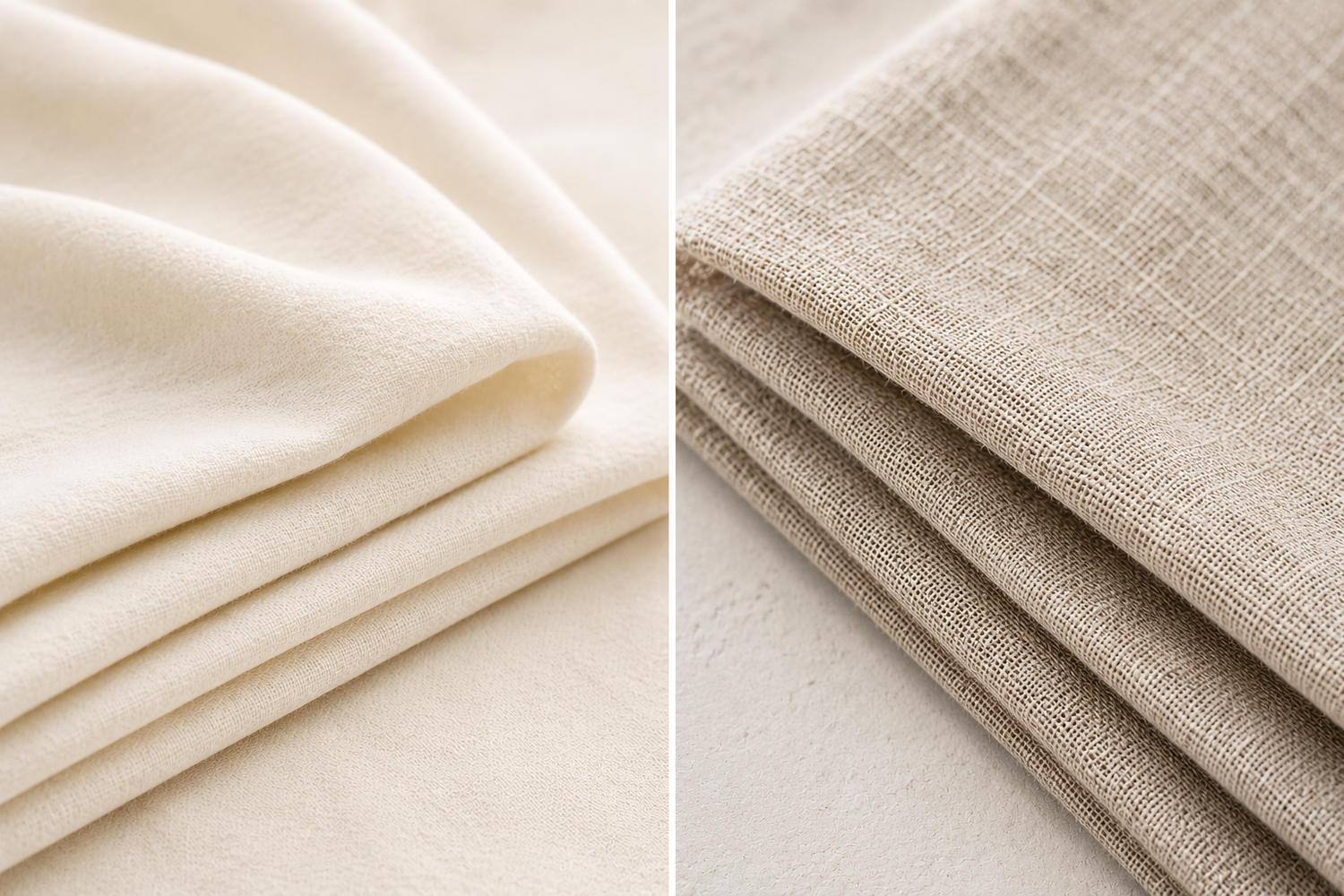
One of the most crucial problems in the fast fashion world of today is whether the Ate and Left No Crumbs collection should be made of cotton or linen fabric. The choice of fabric affects a garment's comfort, longevity, style, sustainability, cost, and, in the end, customer happiness.
Both materials are used extensively in international clothing markets and are breathable and natural.
They support distinct brand positioning strategies, product categories, and purposes. Linen is becoming more popular for high-end collections, eco-friendly fashion, and travel apparel, while cotton is versatile, affordable, and mass-market.
With consumer demand moving toward high-quality organic fibers and ethical sourcing, it is critical to understand the difference between cotton and linen. The article explores the key features, benefits, applications and sourcing issues of both fabrics to aid fashion companies in picking the right fabric for their next collection.
Cotton vs Linen Fabric: Quick Comparison
|
Factor |
Cotton Fabric |
Linen Fabric |
|
Softness |
Excellent |
Moderate Initially |
|
Breathability |
High |
Very High |
|
Durability |
Good |
Excellent |
|
Moisture Management |
Good |
Superior |
|
Wrinkle Resistance |
Better |
Lower |
|
Sustainability |
Moderate to High |
High |
|
Cost |
Lower |
Higher |
|
Luxury Appeal |
Moderate |
Premium |
|
Custom Printing |
Excellent |
Excellent |
|
Best For |
Everyday Fashion |
Premium Collections |
Understanding Cotton Fabric

Cotton is one of the most prevalent natural fibers in fashion. Its popularity comes from its comfort, adaptability, scalability, and support for various apparel categories.
This natural fiber comes from the cotton plant and is used in t-shirts, children's clothing, premium shirts, and luxury garments. The wide range of cotton fabrics today makes it a versatile choice for fashion production.
Why Fashion Brands Choose Cotton Fabric
Fashion companies still use cotton because it is effective, affordable, and well-known by customers.
Key Advantages of Cotton Fabric
- Exceptional Softness
- Excellent Breathability
- High Versatility
- Easy Dyeability
- Strong Print Compatibility
- Wide Supplier Availability
- Flexible MOQ Options
- Cost Efficiency
- Consumer Familiarity
- Year-Round Wearability
Popular Types of Cotton Fabrics
There are plenty of different types of cotton fabrics that can be used for different types of clothing.
- Cotton Poplin
- Cotton Voile
- Cotton Twill
- Cotton Satin
- Cotton Canvas
- Cotton Lawn
- Cotton Jersey
- Organic Cotton Fabric
- Cotton Lycra Fabric
- Cotton Slub Fabric
Common Applications of Cotton Fabric
Cotton works really well in a lot of different fashion categories:
- T-Shirts
- Casual Shirts
- Dresses
- Kidswear
- Activewear
- Loungewear
- Denim
- Workwear
- Contemporary Fashion
Cotton's Commercial Advantage
Cotton is one of the best ways for brands that want to be able to grow to find materials. It can be bought all over the world, isn't too expensive, is simple to change, and works with mass production.
This is what makes cotton so appealing for:
- Fashion Startups
- DTC Apparel Brands
- Private Labels
- Fast Fashion Businesses
- High-Volume Apparel Production
Understanding Linen Fabric

Users think that linen, which is made from flax fibres, is one of the best natural fabrics you can buy today.
Linen has been around for thousands of years. Still, its popularity has grown a lot recently as people become more interested in eco-friendly products, natural fabrics, and high-quality artistry.
Linen, on the other hand, has a unique texture, a natural drape, and an elevated look that instantly communicates quality and class.
Why Fashion Brands Choose Linen Fabric
Fashion companies are adding more linen to their designs because it looks great, lasts a long time, and works really well in warm weather.
Key Advantages of Linen Fabric
- Superior Breathability
- Enhanced Moisture Management
- Premium Visual Appeal
- Excellent Durability
- Sustainable Fiber Source
- Natural Temperature Regulation
- Long Garment Lifespan
- Luxury Market Positioning
- Distinctive Texture
- Eco-Friendly Production
Popular Types of Linen Fabrics
Fashion brands today can get different kinds of linen based on what they need for their collections.
Some common groups are:
- Pure Linen Fabric
- Washed Linen
- European Linen
- Linen Cotton Blend
- Linen Rayon Blend
- Organic Linen
- Printed Linen
- Yarn-Dyed Linen
- Linen Satin
- Linen Voile
Common Applications of Linen Fabric
Linen is becoming increasingly common in high-end and warm-weather designs.
Common uses include the following:
- Resort Wear
- Luxury Dresses
- Summer Shirts
- Co-Ord Sets
- Relaxed Tailoring
- Premium Trousers
- Contemporary Fashion
- Sustainable Collections
Linen's Premium Positioning Advantage
Many consumers associate linen with:
- Luxury
- Craftsmanship
- Sustainability
- Slow Fashion
- Natural Living
Because of this, linen goods usually have higher retail prices and better chances to tell a brand's story than regular cotton products.
Cotton vs Linen: Detailed Performance Comparison

Knowing the differences in technical performance helps fashion companies make better choices about where to get their materials.
1. Softness & Comfort
Cotton is usually softer right after it's been made, which makes it great for everyday wear and people with sensitive skin.
Linen feels a little harder at first, but it gets softer as you wash and wear it.
Winner: Cotton (initial comfort)
2. Breathability
Both cotton and linen are airy, but linen's fibre structure lets more air flow through it.
In this way, linen works especially well for:
- Hot Climates
- Resort Wear
- Summer Collections
- Vacation Apparel
Winner: Linen
3. Moisture Management
Linen is better than cotton at absorbing and releasing moisture.
This helps:
- Reduce Skin Stickiness
- Improve Warm-Weather Comfort
- Support Premium Summer Apparel
Winner: Linen
4. Durability
Cotton provides dependable durability for everyday apparel.
However, linen fibers are naturally stronger and often maintain performance for longer periods.
Winner: Linen
5. Wrinkle Resistance
In general, cotton doesn't wrinkle as easily as linen.
Some people think that the fact that linen wrinkles naturally is a good thing, but others may see it as a bad thing.
Winner: Cotton
6. Sustainability
For conventional cotton farming to work, a lot of water and other agricultural inputs may be needed.
Most of the time, linen needs:
- Less Irrigation
- Fewer Chemicals
- Lower Resource Consumption
- Organic cotton makes cotton a lot more environmentally friendly.
Winner: Linen
7. Cost Efficiency
You can usually get more cotton for less money and more easily.
The majority of the time, linen costs more because:
- Fiber Processing Complexity
- Lower Production Volumes
- Premium Market Demand
Winner: Cotton
8. Brand Positioning
For brands that want to attract high-end customers, linen often offers better storytelling possibilities around:
- Sustainability
- Craftsmanship
- Natural Luxury
Cotton is still a great material for popular and mass-market collections.
Winner: Linen
Which Fabric Is Better for Different Fashion Categories?
The best fabric depends on the intended product category.
|
Fashion Category |
Recommended Fabric |
|
T-Shirts |
Cotton |
|
Kidswear |
Cotton |
|
Casualwear |
Cotton |
|
Activewear |
Cotton |
|
Resort Wear |
Linen |
|
Premium Fashion |
Linen |
|
Sustainable Collections |
Linen |
|
Contemporary Fashion |
Cotton-Linen Blend |
|
Co-Ord Sets |
Cotton-Linen Blend |
|
Summer Dresses |
Linen |
|
Luxury Shirts |
Linen |
|
Loungewear |
Cotton |
Cotton vs Linen: Which One Should Fashion Brands Choose?

Your business goals will tell you the answer.
Select Cotton Fabric if your brand cares about:
- Affordability
- Scalability
- Everyday Comfort
- High-Volume Production
- Print-Led Collections
You should pick Linen Fabric if your brand cares about:
- Premium Positioning
- Sustainability
- Resort Wear
- Luxury Casualwear
- Elevated Brand Storytelling
A well-thought-out Cotton-Linen Blend is often the best choice for many current collections. This fabric has the softness of cotton and the breathability and high-end look of linen.
Cotton-Linen Blends: The Best of Both Worlds
Cotton-Linen Blend Fabric is becoming more and more popular in the global clothing market as fashion brands look for materials that are comfortable, useful, eco-friendly, and profitable. Instead of picking between cotton and linen, many companies are using the best parts of both to make fabrics that work well for everyone.
These blends are useful for brands that want to appeal to modern customers because they combine the softness and versatility of cotton with the breathability and high-end look of linen.
Key Advantages of Cotton-Linen Blends
- Improved Softness
- Enhanced Breathability
- Better Wrinkle Performance
- Greater Fabric Stability
- Improved Drape
- Better Cost Efficiency
- Premium Visual Appeal
- Multi-Season Versatility
Common Applications
- Shirts
- Dresses
- Co-Ord Sets
- Resort Wear
- Smart Casualwear
- Contemporary Fashion
- Sustainable Collections
Cotton-linen combinations are often the most flexible option for brands that want to balance comfort, style, and the ability to make more of the product.
Cotton vs Linen: Sustainability Comparison
Sustainability is now a big reason why people, stores, and buying teams all over the world buy things. As caring for the environment continues to affect people's decisions to buy things, fashion brands are looking at fabric choices more and more through the lens of sustainability.
Cotton Sustainability
Cotton is a natural fiber that can be grown over and over again, but typical cotton farming can use a lot of water and other agricultural inputs.
But sustainable cotton programs have made modern cotton farming better for the earth.
Sustainable Cotton Options
- Organic Cotton
- BCI Cotton (Better Cotton Initiative)
- Recycled Cotton
- Regenerative Cotton
These alternatives help protect the environment and support ethical buying habits.
Linen Sustainability
According to many, linen is one of the most eco-friendly fabrics you can buy today.
Usually, growing flax needs:
- Less Water
- Fewer Chemicals
- Lower Fertilizer Usage
- Minimal Agricultural Inputs
Also, almost every part of the flax plant can be used, which cuts down on waste.
Why Sustainable Brands Prefer Linen
- Lower Environmental Impact
- Biodegradable Fiber
- Long Product Lifespan
- Reduced Resource Consumption
- Strong Sustainability Storytelling
Linen is often a better way for brands to position their eco-friendly products as more environmentally friendly.
Cost Comparison: Cotton vs Linen Fabric
When making a fashion collection, price is still one of the most important things to think about.
Quality of the fabric is very important, but choices about where to get it must also be in line with pricing strategies, profit margins, and what the target customers want.
Cotton Fabric Pricing
Cotton generally offers:
- Lower Raw Material Costs
- Greater Supplier Availability
- Easier Bulk Procurement
- Lower Manufacturing Costs
This makes cotton highly suitable for:
- Mass-Market Apparel
- DTC Brands
- High-Volume Production
- Price-Sensitive Collections
Linen Fabric Pricing
Linen typically commands higher prices because of:
- Flax Processing Complexity
- Lower Global Production Volumes
- Premium Market Positioning
- Increased Consumer Demand
Linen may raise the cost of production, but it often allows for higher prices and a better sense of value at sale.
Commercial Perspective
Cotton is often the first choice for affordable brands, while premium and environmentally friendly names often choose linen, even though it costs more to get.
Consumer Trends Influencing Fabric Selection
Consumer tastes and market trends are having a bigger impact on where fashion fabrics are sourced.
Growing Demand for Natural Fabrics
Consumers are paying more attention to what their clothes are made of. This has made more people want:
- Cotton Fabrics
- Linen Fabrics
- Organic Textiles
- Sustainable Fibers
Sustainable Fashion Growth
Sustainability is still changing how people buy things all over the world.
More and more, fashion companies are looking for fabrics that:
- ESG Goals
- Responsible Sourcing
- Reduced Environmental Impact
- Circular Fashion Initiatives
Premium Minimalism
Premium basics and simple fashion are becoming increasingly popular, which has raised the demand for natural fabrics that focus on quality and durability.
Linen has gotten a lot of help from this style.
Resort Wear Expansion
Resort wear, vacation attire, and fashion that is all about comfort are still growing around the world.
Because of this, there is more demand for materials that are light and airy, like linen and cotton-linen blends.
How to Choose the Right Fabric for Your Fashion Collection

The best fabric for your brand will rely on its goals, the type of product it makes, its target audience, and its sourcing strategy.
Consider Your Target Customer
Ask yourself:
- Are they value-focused?
- Are they sustainability-conscious?
- Do they prioritize luxury?
- Are they trend-driven?
Figuring out what the customer wants can help you decide whether cotton, linen, or a mix of the two is best.
Evaluate Seasonal Requirements
Different fabrics perform better in different climates and seasons.
Cotton Performs Well For:
- Year-Round Collections
- Everyday Basics
- Layering Pieces
Linen Performs Well For:
- Summer Collections
- Resort Wear
- Warm Climate Markets
Analyze Brand Positioning
Your fabric choice should support your overall brand identity.
Cotton Aligns With:
- Accessibility
- Versatility
- Everyday Fashion
Linen Aligns With:
- Premium Positioning
- Sustainability
- Natural Luxury
Assess Manufacturing Requirements
Fabric decisions should also consider:
- MOQ Requirements
- Production Complexity
- Lead Times
- Cost Structure
- Scalability
Choosing a fabric that aligns with operational goals is just as important as aesthetics.
Fabric Sourcing Checklist for Fashion Brands
Before placing bulk fabric orders, fashion businesses should evaluate several critical sourcing factors.
Fabric Quality
- Fiber Composition
- GSM Consistency
- Fabric Construction
- Color Consistency
Production Readiness
- MOQ Flexibility
- Lead Times
- Inventory Availability
- Supplier Scalability
Compliance & Certifications
- GOTS Certification
- OEKO-TEX Certification
- Sustainability Documentation
- Traceability Support
Supplier Reliability
- Quality Control Systems
- Sampling Support
- Production Transparency
- Global Shipping Capabilities
A structured sourcing process helps reduce risks while improving production outcomes.
Why Fabric Quality Testing Matters Before Bulk Orders

Fashion brands should always buy fabric swatches before bulk orders before committing to making a lot of clothes.
Fabric testing helps make sure the material meets the needs of the product, check its performance, and find any problems that might be happening.
Key Areas to Evaluate
- GSM Consistency
- Fabric Composition
- Colorfastness
- Shrinkage Performance
- Pilling Resistance
- Drape & Hand Feel
- Wash Durability
- Shape Retention
Benefits of Fabric Testing
- Reduced Production Risks
- Better Product Quality
- Improved Bulk Consistency
- Stronger Supplier Validation
- More Confident Purchasing Decisions
Testing fabric samples early can help brands avoid costly production errors later.
Why Fashion Brands Source Cotton and Linen Fabrics Through Fabriclore
As fashion supply lines around the world get more complicated, brands are looking for sourcing partners that can do more than find them fabrics. Since online fabric sourcing has become more popular, the way fashion companies buy textiles has changed. This has made quality, customization, sample help, and the ability to make more clothes more important than ever. Because of this, a lot of fashion brands, designers, private labels, and clothing makers are turning to integrated sourcing ecosystems, which make getting fabrics easier and help businesses grow in the long run.
A Technology-Enabled Fabric Sourcing Ecosystem
Fabriclore is a central sourcing tool that brings together finding fabrics, customizing textiles, sampling, and manufacturing support in a single workflow. The platform helps brands streamline their sourcing and avoid the problems that come with handling multiple suppliers. It serves companies in the USA, UK, Europe, Australia, New Zealand, Canada, Africa, and the Middle East.
With access to 5000+ fabrics, companies can get a lot of different kinds of materials, such as
- Cotton Fabrics
- Organic Cotton Fabrics
- Linen Fabrics
- Cotton-Linen Blends
- Yarn-Dyed Fabrics
- Digitally Printed Fabrics
- Sustainable Textiles
- Fashion & Apparel Fabrics
Fabriclore can help brands with both product development and bulk production, whether they need ready-stock materials or unique developments.
Why Fashion Brands Choose Fabriclore
Fashion brands are looking for buying partners that can help them grow at all stages, from small-scale production to sampling and collection development.
Key Advantages:
- Access to 5000+ Fabric Options
- Cotton & Linen Fabric Wholesale
- Organic Fabric Collections
- Custom Fabric Development
- Fabric Sampling Support
- Low MOQ Flexibility
- Custom Dyeing & Printing
- Private Label Manufacturing
- Garment Manufacturing Support
- Global Shipping & Export Assistance
Fabriclore has a 20 million meter production network and over 10 years of expertise in dyeing, printing, and textile processing. This helps brands quickly move from ideation to commercial production while keeping sourcing consistent and operations open.
Core Capabilities
Fabriclore's combined sourcing model helps fashion companies get their products to market faster and see more clearly what's going on in the production process.
Core Services Include:
- Fabric Sourcing & Procurement
- Textile Development
- Custom Dyeing Solutions
- Digital & Screen Printing
- Fabric Sampling Services
- Private Label Production
- Garment Manufacturing
- Global Logistics Support
Fabriclore has a scalable sourcing environment that brings together fabric knowledge, customization options, and production support on one platform for brands that want to compare cotton vs. linen fabric or create collections in more than one category.
Conclusion
Imagine that a fashion brand is getting ready to release a new line of summer clothes. At first, the company gets fabric swatches to look at both cotton and linen choices. Then, they make samples, get feedback from customers, and make sure there is a demand. As sales go up, the same collection can be made in larger quantities without having to find new suppliers or sourcing methods.
This is why a lot of fashion companies today like online fabric sourcing and sites that combine different sourcing methods. Whether you choose cotton fabric, linen fabric, or a cotton-linen blend, the best ways to source materials are to find good ones, work with dependable sellers, and get help with production that can grow as needed. Fashion companies can make their collections and supply chains stronger by choosing fabrics that are in line with what customers want, how they want to place their brand, and their long-term growth goals.
FAQs
1. Which Is Better For Clothing, Cotton Or Linen?
Both fabrics offer unique advantages.
- Cotton fabric is ideal for everyday comfort, affordability, and versatility.
- while linen fabric is preferred for premium collections, superior breathability, and sustainability-focused fashion.
2. Is Linen More Sustainable Than Cotton?
Most of the time, yes. Flax, which is used to make linen, usually needs less water and other farming inputs than regular cotton. But organic cotton can also be a very environmentally friendly way to get clothes.
3. Why Is Linen More Expensive Than Cotton?
There are more complicated ways to get fibers out of plants and treat them when making linen. Because of this and the high demand for high-quality natural fabrics around the world, prices are often higher than for cotton.
4. Are Cotton-Linen Blends Good For Fashion Brands?
Yes. Cotton-linen blends are soft like cotton but also breathe well and look expensive like linen. This makes them perfect for modern fashion, vacation wear, co-ord sets, and casual clothing collections.
5. How Do Fashion Brands Choose Between Cotton And Linen Fabric?
The choice is based on a number of things, such as the budget, the brand positioning, the target customer, the product type, the time of year, and sustainability goals. Both fabrics are used in different styles by many brands in a smart way.
We also happen to be a magnet for suggestions, and would love to catch yours….throw us yours on hello@fabriclore.com
Learn, Create & Grow with us